
Build a Business That Runs Without You: The Seven Pillars of Clockwork Leadership
/0 Comentarios/en Superacion/por JORGE MONTES DE OCAEntrepreneurship often begins with a powerful vision: freedom, impact, growth, and the opportunity to build something meaningful. Yet many founders eventually find themselves trapped in a paradox. They create a business to gain freedom, but end up becoming the most overworked employee inside it.
If you’ve ever felt that your company depends too much on you, that you can’t step away without everything slowing down, or that your team waits for your approval before moving forward, this article is for you.
As a leadership and entrepreneurship coach, I want to guide you through a system designed to transform overwhelmed businesses into organizations that operate with precision, consistency, and autonomy. This system is built on seven essential steps that help you shift from being the engine of your business to becoming its architect.
1. The 4D Mix: The DNA of Entrepreneurial Work
Every entrepreneur operates within four core activities: Doing, Deciding, Delegating, and Designing.
Most founders get stuck in the first one—Doing. They execute tasks endlessly, believing that constant action equals progress. But doing without direction leads to burnout, stagnation, and a business that cannot grow beyond the founder’s capacity.
A healthy business requires a strategic balance of these four activities. The recommended mix is:
- 80% Doing
- 2% Deciding
- 8% Delegating
- 10% Designing
Designing is where true leadership lives. It’s the space where you define goals, create strategies, build systems, and shape the future of your company. When you design, you elevate yourself from operator to visionary.
A founder who only “does” becomes an underpaid employee of their own business. A founder who designs becomes a leader capable of scaling sustainably.
2. Identify Your Queen Bee Role (QBR): The Strategic Heart of the Business
Every business has one critical function that determines its health and long-term success. This function is not a person, a title, or a product—it is a role.
This is known as the Queen Bee Role (QBR).
Just as a hive organizes itself around protecting and serving the queen bee, your business must organize itself around protecting and serving its most essential function.
Your QBR is the activity that:
- Creates the most value for your customers
- Aligns with your unique strengths and those of your team
- Directly impacts the health of the business when neglected
- Must operate at peak performance at all times
Identifying your QBR is an act of strategic clarity. Ask yourself:
- Which function, if slowed down, would harm the business?
- Which activity drives the greatest results?
- What process must be protected above all else?
Once you identify your QBR, you gain a compass that guides every decision.
3. Protect and Serve the QBR: The Non‑Negotiable Priority
Knowing your QBR is not enough—you must protect it relentlessly.
Every team member should understand:
- What the QBR is
- Why it matters
- How their work supports it
- What actions strengthen or weaken it
When the QBR is protected, the business flows.
When it is neglected, the business struggles.
Leadership requires communication, alignment, and discipline. You must ensure that systems, resources, and priorities revolve around the QBR. When this happens:
- Customers receive consistent value
- The team works with clarity
- You stop firefighting and start leading
If everything is a priority, nothing is a priority.
Your QBR is the heartbeat of your business—protect it.
4. Capture Your Systems: From Your Head to a Transferable Structure
Many entrepreneurs believe they lack systems, but the truth is that they already have them—they just live in their heads.
Capturing systems means documenting:
- How tasks are performed
- In what order
- With what tools
- Under what standards
- With what criteria for success
You don’t need to invent new processes. You simply need to extract what already works and make it teachable.
When you capture systems:
- Delegation becomes easier
- Errors decrease
- Quality becomes consistent
- Knowledge becomes transferable
- The business becomes scalable
A business without systems is fragile.
A business with systems is resilient.
5. Balance the Team: The Right People in the Right Roles
A high‑performing business requires a balanced team. This means:
- Understanding each person’s strengths
- Eliminating unnecessary tasks
- Assigning responsibilities based on talent, not habit
- Adjusting roles as the business evolves
- Avoiding overload on any single team member
As a coach, I’ve seen businesses transform simply by aligning people with the roles that best fit their natural abilities.
When the team is balanced:
- Productivity increases
- Morale improves
- Turnover decreases
- Quality rises
- The QBR is strengthened
A business that runs like clockwork needs a team that operates like an orchestra.
6. Commit: Focus Your Power on the Right Customer
Commitment is not about doing more—it’s about doing what matters.
Many businesses fail because they try to serve everyone. They offer too many services, target too many customer types, and stretch themselves thin. This variability destroys efficiency.
Commitment means:
- Identifying your ideal customer
- Defining the specific problem you solve
- Reducing your offerings to the essentials
- Eliminating products or services that don’t align
- Focusing your energy on high‑value impact
When you commit:
- Your message becomes clearer
- Your operations become more efficient
- Your team gains direction
- Your customers receive exceptional service
Saying “no” becomes a strategic advantage.
7. Become a Business That Runs Like Clockwork
The ultimate goal is freedom.
A business that runs like clockwork:
- Operates without your constant involvement
- Produces consistent results
- Grows sustainably
- Allows you to design instead of firefight
- Gives you space to innovate and lead
To achieve this, you need a control dashboard—a tool that allows you to monitor key indicators without micromanaging.
A strong dashboard shows:
- What’s working
- What’s not
- What needs attention
- What can be delegated
- What can be automated
When you lead from strategy instead of urgency, your business becomes scalable, predictable, and liberating.
Conclusion: Leadership Is About Designing, Not Just Doing
Entrepreneurship is not about working harder—it’s about working smarter.
It’s not about being indispensable—it’s about building something that thrives without you.
It’s not about control—it’s about leadership.
The seven steps of the Clockwork system are more than operational tools—they are a mindset shift.
A shift from chaos to clarity, from reaction to intention, from survival to growth.
Apply these principles consistently, and your business will stop depending on you…
so you can finally focus on what truly matters: leading, creating, and expanding your impact.
References
Michalowicz, M. (2018). Clockwork: Design your business to run itself. Portfolio/Penguin.
Sinek, S. (2009). Start with why: How great leaders inspire everyone to take action. Penguin Group.
Drucker, P. (2006). The effective executive: The definitive guide to getting the right things done. HarperCollins.
Covey, S. R. (2004). The 7 habits of highly effective people: Powerful lessons in personal change. Free Press.
Blanchard, K., & Johnson, S. (2015). The new one minute manager. William Morrow.
The 7 Pillars to Build a Business That Runs Without You

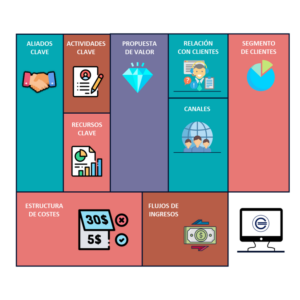
How Will Customers Find You and Stay With You? Mastering Channels and Customer Relationships in the Business Model Canvas