A little bit of Dalí will do you good. Let’s look at some famous people in history who used different ways of thinking to help them solve their problems. One of them was Salvador Dalí, a well-known surrealist painter of the 20th century. He was the very definition of a free and eccentric character.
Salvador Dalí’s eccentric character was reflected in his pets. He was a cat lover, but he chose an ocelot as his furry companion, which he acquired in Colombia in the 1960s. Its name was Babou, and Dalí took it everywhere on a gold chain: to restaurants, he traveled with it on the SS France cruise ship, and they shared a suite at the Palace Hotel.
Dalí used an interesting technique that helped him create his fantastically creative surrealist paintings. He would relax in a chair and let his mind wander, vaguely thinking about something he had previously focused on. He would often hold a key in his hand, moving it just above the floor.
As he began to drift into his dreams, falling asleep, the key would slip from his hand, and the noise would jolt him awake, just in time for him to gather the fuzzy connections and ideas swirling in his mind. Then, he would return to a state of focused concentration, incorporating the new connections he had made while in that fuzzy state.
You might think that’s fine for an artist, but how does this relate to more scientific or mathematical thought processes?
Consider Thomas Edison, one of history’s most brilliant inventors.
Legend has it that Edison would often sit and relax in his chair, holding ball bearings in his hand. He would unwind by freeing his thoughts and mind, though he often ended up thinking about the same things he had been concentrating on earlier, but in a more relaxed way.
When Edison fell asleep, the ball bearing would fall and rattle on the floor, just as it happened with Dalí.
This would awaken Edison, and he would start with the ideas generated in diffuse mode, ready to bring them into focused mode and build upon them.
So, the conclusion is that when you’re learning something new, especially something a bit more difficult, your mind needs to be able to switch between learning modes.
This helps you learn effectively.
This can be somewhat compared to strengthening your muscles by lifting weights.
You would never plan to participate in a weightlifting competition by waiting until the day before to spend the entire day working out like crazy.
I mean, it doesn’t work that way.
To strengthen your muscle structure, you have to do a little work every day, allowing your muscles to grow.
Similarly, to build a neural structure, you have to work a little each day, gradually building a scaffold of neurons to place your thoughts on, a little bit each day. This is the trick.
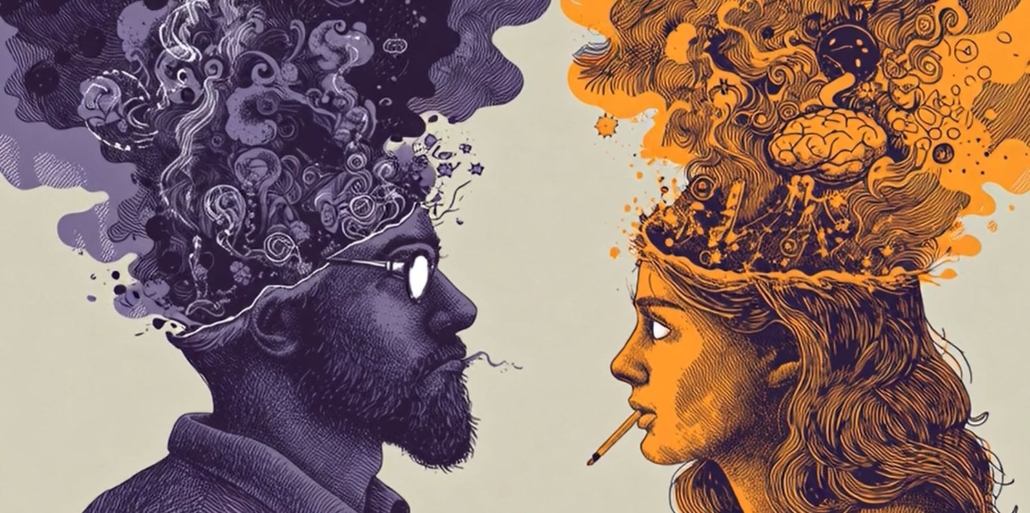
In short, we must consider that using analogies is a powerful learning technique. We learned about the brain’s two different modes of thinking: focused and diffuse. Each helps us learn, but in very different ways.
With all of this in mind, we must consider that learning something difficult can take time. Your brain needs to alternate between these learning styles as it grapples with and assimilates new material.


 Build a Business That Runs Without You: The Seven Pillars of Clockwork Lead...










Dejar un comentario
¿Quieres unirte a la conversación?Siéntete libre de contribuir!