When Success Feels Heavier Than Failure
Starting a business is often described as an exciting adventure. It is a journey filled with innovation, freedom, and the opportunity to create something meaningful. Yet behind every successful entrepreneur is a reality that many people rarely see: sleepless nights, endless uncertainty, financial pressure, and the constant fear of making the wrong decision.
If you are an entrepreneur, chances are you have experienced moments when your mind refuses to rest. You replay conversations, imagine worst-case scenarios, worry about cash flow, customers, competitors, or whether your business will survive another year. Even people outside the business world can relate to this feeling. Worry has become one of the most common emotional burdens of modern life.
The good news is that worry is not a permanent condition. It is a habit of thinking, and like any habit, it can be replaced with healthier ones. Learning to manage your concerns does not mean ignoring problems. Instead, it means developing the mental strength to solve today’s challenges without sacrificing today’s happiness.
Worry Is Not the Same as Responsibility
One of the biggest misconceptions among entrepreneurs is believing that worrying proves commitment. In reality, excessive worry rarely improves decision-making. Instead, it consumes mental energy that could be invested in creativity, leadership, and innovation.
Legendary author Dale Carnegie, in his classic book How to Stop Worrying and Start Living, argued that many worries never become reality. We often suffer more in our imagination than in real life.
Successful entrepreneurs understand an important distinction: responsibility means taking action; worry means remaining mentally trapped without moving forward.
A practical exercise is to ask yourself three questions whenever anxiety appears:
- What exactly am I worried about?
- What is the worst realistic outcome?
- What action can I take today?
This simple framework shifts your mind from emotional reaction to practical problem-solving.
Remember that uncertainty is not your enemy. It is the natural environment where entrepreneurship exists.
Personal Growth Is Your Greatest Competitive Advantage
Many entrepreneurs spend thousands of dollars improving their products while investing very little in improving themselves.
Business success is deeply connected to emotional intelligence, resilience, communication skills, and self-awareness. Your company rarely grows beyond the level of its leader.
Stress is often a symptom rather than the problem itself. It may reveal perfectionism, fear of failure, unrealistic expectations, or the belief that you must control everything.
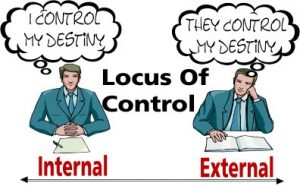
Personal development teaches us a different lesson: control your actions, not every possible outcome.
Healthy habits can significantly reduce chronic worry:
- Establish clear priorities instead of trying to do everything.
- Exercise regularly to reduce stress hormones.
- Sleep enough to improve judgment and emotional regulation.
- Practice gratitude by identifying daily achievements instead of focusing only on unfinished work.
- Build relationships with mentors and trusted colleagues who can offer perspective.
Every hour invested in becoming a better person eventually becomes an investment in becoming a better entrepreneur.
Success Without Happiness Is Not Success
Many people postpone happiness until they reach a specific goal:
«I’ll relax after launching my company.»
«I’ll enjoy life when revenue doubles.»
«I’ll spend time with my family after this busy season.»
Unfortunately, new goals always replace old ones.
Real success is not simply measured by revenue, valuation, or market share. It is also measured by your health, relationships, peace of mind, and sense of purpose.
Research in positive psychology consistently shows that gratitude, meaningful relationships, and purposeful work contribute more to long-term happiness than material achievements alone.
This does not mean lowering your ambitions. It means refusing to sacrifice your well-being while pursuing them.
Celebrate small victories.
Recognize your progress.
Accept that mistakes are part of learning.
The most successful people are not those who never fail. They are those who recover quickly without allowing worry to define their identity.
Turning Concern into Constructive Action
Every entrepreneur faces uncertainty. The difference lies in how they respond.
Instead of asking, «What if everything goes wrong?» ask, «What can I learn regardless of the outcome?»
Instead of focusing on everything outside your control, identify one meaningful action you can complete today.
Small actions gradually replace overwhelming anxiety with confidence.
Build routines that protect your mental health:
- Schedule time to think instead of worrying all day.
- Limit exposure to unnecessary negative information.
- Practice mindfulness or quiet reflection.
- Keep a journal to organize thoughts and reduce mental clutter.
- Celebrate progress instead of perfection.
Over time, these habits create emotional resilience, allowing you to face challenges with clarity rather than fear.
Live Today While Building Tomorrow
Entrepreneurship will always involve uncertainty. There will always be risks, unexpected obstacles, and moments of doubt.
But life is happening now—not after your next funding round, your next promotion, or your next major client.
The businesses that endure are often led by people who understand that calm thinking outperforms anxious thinking. They solve problems one day at a time, continue learning, and refuse to allow fear to steal the joy of the journey.
Success is not the absence of challenges.
It is the ability to move forward despite them.
Final Motivation
Every great achievement began with someone who decided that courage was stronger than fear. Your dreams deserve careful planning, disciplined action, and continuous learning—but they also deserve a healthy, joyful, and balanced version of you. Take one step at a time, focus on what you can control, and remember that enjoying the journey is not a distraction from success—it is one of its greatest rewards.



 World Agriculture Day: Planting the Future with Innovation and Empathy









Dejar un comentario
¿Quieres unirte a la conversación?Siéntete libre de contribuir!