Listado de la etiqueta: Emotion

10 Steps to Build a Successful Project (Including Starting Your Own Business)

Launching a business is, in essence, a project—a temporary endeavor aimed at delivering a unique result. Applying structured project management principles can significantly increase your chances of success. Here are the 10 essential steps to guide your journey, whether you’re launching a startup or managing an internal project.

1. Identify the business need

Every project starts with a reason. Ask yourself: What problem am I solving? What opportunity am I pursuing? This clarity sets the foundation for focus, team alignment, and funding.

2. Define a SMART goal

Your goal must be: Specific, Measurable, Achievable, Relevant, and Time-bound. Choose a project name that reflects its purpose and can be used for branding and internal alignment.

3. Describe the deliverable

What will you deliver at the end? Be it a product, service, or system, having a well-defined deliverable helps measure project success effectively.

4. Identify stakeholders and communication needs

Stakeholders include clients, investors, team members, and even the community. Define their roles, expectations, and how you’ll communicate with them throughout the project.

5. Define the project scope

Clarify what the project will and will not include. This prevents scope creep and keeps the delicate balance between Scope-Time-Cost.

6. Establish assumptions (premises)

These are the conditions we assume to be true during planning. For example, “the market research will validate demand” or “we will receive permits on time”.

7. Recognize constraints

Time, budget, legal frameworks, resource availability—constraints define your playing field. Identify and document them clearly.

8. Identify and assess risks

What could go wrong? How likely is it? What would be the impact? Design mitigation strategies to deal with high-impact or high-probability risks.

9. Document and communicate the project plan

Your project plan should include a timeline, responsibilities, risks, budget, and progress reports. Maintain a project log and update stakeholders regularly.

10. Build and empower your project team

People are your most important asset. Share your vision, foster healthy communication, maintain work-life balance, and build a resilient, positive culture.


🔚 Final Thought

Entrepreneurship is both an art and a discipline. With the right structure, a collaborative team, and a clear plan, your idea can become a reality.

We invite you to join our community, co-create with passionate professionals, and bring your entrepreneurial spirit to life. Let’s build the future together!


📚 References (APA Format)

  • Project Management Institute. (2017). A Guide to the Project Management Body of Knowledge (PMBOK® Guide) (6th ed.). Project Management Institute.
  • Kerzner, H. (2017). Project Management: A Systems Approach to Planning, Scheduling, and Controlling (12th ed.). Wiley.
  • Ries, E. (2011). The Lean Startup: How Today’s Entrepreneurs Use Continuous Innovation to Create Radically Successful Businesses. Crown Business.

10 steps to Create a Successful Project

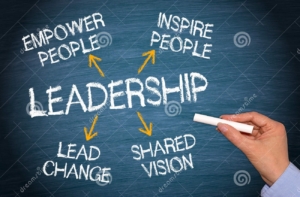
The Main Leadership Styles: A Modern Perspective on Effective Leadership

Leadership has been studied since ancient times, but its understanding and classification have evolved over the years, influenced by changing social, economic, and cultural contexts. Today, in a dynamic and highly competitive organizational environment, leaders are expected to be much more than managers or figures of authority. They are expected to be agents of change, facilitating transformation both within organizations and among the people who comprise them.

This modern approach implies that leadership is not limited to goal achievement or task supervision—it must also focus on the personal and professional development of team members. Only through the internal transformation of people can real and sustainable organizational change be achieved.

Below are the main leadership styles currently recognized, each with its own distinct characteristics, advantages, and relevance depending on the needs of the organization and the leader’s personal profile.

  1. Authentic Leadership

Authentic leadership is based on self-awareness, transparency, and personal integrity. Authentic leaders act in alignment with their values and beliefs and aim to serve with honesty and commitment. Rather than seeking control, they inspire through example.

A key pillar of authentic leadership is fostering the development of competencies among team members. Instead of micromanaging, authentic leaders promote autonomy and responsible decision-making. This creates an atmosphere of trust, where individuals feel valued, heard, and empowered.

In times of uncertainty or transformation, this style of leadership projects confidence and stability, as decisions are made from an ethical foundation and a clear sense of purpose.

  1. Values-Based Leadership

Closely related to authentic leadership, this style places specific emphasis on the ethical and moral framework from which influence is exercised. Values-based leaders rely on personal, social, and organizational principles to guide decisions, behaviors, and priorities.

This kind of leadership legitimizes actions through a commitment to what is right, fair, and necessary for the common good. It strongly impacts organizational culture, promoting environments where responsibility, inclusion, justice, and sustainability are core elements of strategic decision-making.

In an era when consumers, investors, and employees increasingly demand ethical accountability and transparency, values-based leadership is crucial for building trustworthy and long-lasting organizations.

  1. Transformational Leadership

Transformational leadership is among the most valued styles today because it encourages continuous renewal and adaptability in rapidly changing environments. This style focuses on motivating, inspiring, and developing team members to reach their full potential, which directly benefits the organization.

Transformational leadership is not just about structural change; it’s also about transforming people. Leaders in this category support self-actualization, promote innovation, and help teams find deep meaning in their work. The result is greater engagement, creativity, and organizational loyalty.

It is a collective skill, as it builds a shared vision and generates synergy among team members. This style is particularly useful in contexts that require change management, strategic leadership, and future-oriented thinking.

  1. Transactional Leadership

Unlike transformational leadership, transactional leadership is based on a give-and-take relationship between leaders and their followers. It focuses on short-term goal achievement, task supervision, and adherence to established rules and procedures.

This style is effective in settings that require order, discipline, and clarity. Transactional leaders assign specific tasks, reward performance, and apply consequences when expectations aren’t met. While it may appear rigid, it can be highly efficient and necessary, especially when maintaining operational stability and control.

However, its main limitation is that it does not typically foster innovation or long-term personal development. For this reason, it is often most effective when complemented by more human-centered or strategic leadership styles.

Conclusion: Leading with Purpose — A Key for Entrepreneurs

For entrepreneurs, understanding and applying different leadership styles is essential for long-term success and sustainability. In the early stages of a business, it’s common to take on multiple roles, and the leadership style may shift depending on the moment or challenges faced.

However, it’s crucial to develop a clear vision of the kind of leader you want to be, and to build an organizational culture that aligns with your values and guiding principles.

Authentic and values-based leadership can help form a committed team from the outset. As the project evolves, incorporating aspects of transformational leadership will support innovation and adaptability. And when structure and discipline are needed, transactional leadership can provide focus and control.

Leadership is not a one-size-fits-all formula; it is a dynamic skill that requires self-awareness, empathy, ethics, and vision. Great leaders are not born—they are shaped through experience, learning, and the ability to positively transform those around them.

Leadership Actions Success and failure

References (APA Style)

Bass, B. M., & Riggio, R. E. (2006). Transformational Leadership (2nd ed.). Lawrence Erlbaum Associates.

Goleman, D. (2000). Leadership that gets results. Harvard Business Review, 78(2), 78–90.

Northouse, P. G. (2021). Leadership: Theory and Practice (9th ed.). Sage Publications.

George, B. (2003). Authentic Leadership: Rediscovering the Secrets to Creating Lasting Value. Jossey-Bass.

Kouzes, J. M., & Posner, B. Z. (2017). The Leadership Challenge (6th ed.). Wiley.

From Ada Lovelace to the Internet: The Collaborative Legacy of Digital Innovation

In the 21st century, technological innovation is often seen as the product of solitary geniuses working in isolation. Yet, as Walter Isaacson reveals in The Innovators, the greatest advancements of the digital age stemmed not only from individual brilliance but from deep collaboration across disciplines, generations, and institutions. This article explores how key figures like Ada Lovelace, Alan Turing, and J.C.R. Licklider helped shape our digital world—and how teamwork, more than lone genius, has been the driving force behind technological revolutions.

Ada Lovelace: Beyond Numbers

Ada Lovelace, daughter of poet Lord Byron, is recognized as the world’s first computer programmer. In the mid-19th century, she worked with Charles Babbage on his analytical engine—a theoretical computing device. What made Ada exceptional was not just her math skills, but her visionary insight. As Isaacson (2014) explains, Ada foresaw that such a machine could manipulate not only numbers but also music, words, and symbols—planting the seed for modern computing.

In her famous “Note A,” Ada introduced four ideas that would shape the future: the concept of a programmable universal machine, the manipulation of symbolic information, the structure of computer algorithms, and the philosophical question of artificial intelligence. Even Babbage didn’t fully grasp the broader implications of his invention—but Ada did.

Alan Turing and the Birth of the Modern Computer

A century later, Alan Turing would build on Ada’s legacy. He proposed the «universal machine»—a theoretical computer capable of executing any logical operation. During World War II, Turing led a team at Bletchley Park to break the Nazi Enigma code, showcasing the power of collaborative innovation.

Turing also raised the possibility of machine intelligence. His famous “Turing Test” asked whether a machine could imitate human behavior well enough to be indistinguishable from a real person. This test remains a foundation of modern artificial intelligence philosophy (Hodges, 2014).

The Forgotten Women of the ENIAC

In the 1940s, six pioneering women—Jean Jennings Bartik, Marlyn Wescoff, Ruth Lichterman, Betty Snyder, Frances Bilas, and Kay McNulty—were assigned to program the ENIAC, the world’s first general-purpose electronic computer. Initially dismissed because of their gender, they proved that programming was just as crucial as building hardware.

These women used patch cords and switches to reprogram the ENIAC for different tasks, effectively inventing early programming techniques such as subroutines and modular design (Abbate, 2012). Their story reminds us that innovation is not only about hardware—but also about human determination and ingenuity.

Science, Government, and Industry: The Birth of the Internet

One of the most powerful examples of collective innovation came with the birth of the Internet. In his 1945 report Science: The Endless Frontier, Vannevar Bush argued that government funding for basic science would fuel economic progress. This led to the creation of the National Science Foundation and other institutions that funded early computer networks (Bush, 1945).

J.C.R. Licklider, a psychologist and visionary at ARPA, imagined a decentralized network of interactive computers. His ideas laid the foundation for ARPANET, the forerunner of today’s Internet. Other figures like Robert Taylor, Larry Roberts, and Leonard Kleinrock contributed to developing packet-switching and decentralized infrastructure—key elements of the web we use today (Isaacson, 2014).

Counterculture Meets Silicon Valley

In the 1960s and 70s, the San Francisco Bay Area became a hotbed of creative experimentation. Influenced by the counterculture, people like Stewart Brand advocated for computers as tools of personal empowerment, not just corporate or military control. The invention of the microprocessor made it possible to put a computer in every home.

Steve Jobs and Steve Wozniak, deeply influenced by this ethos, founded Apple with the mission of democratizing technology. As Isaacson (2014) explains, the personal computer was not just a product—it was a social revolution built on community, creativity, and idealism.

Conclusion

The Innovators is more than a chronicle of digital technology; it’s a tribute to the power of collaboration. From Ada Lovelace’s poetic algorithms to Licklider’s vision of a human-computer symbiosis, and the human stories behind programming and networks, innovation has always been a team effort. In an age that idolizes the lone genius, Isaacson reminds us: the true revolutionaries work together.

From Ada Lovelace to the Internet The Collaborative Legacy of Digital Innovation

References

Abbate, J. (2012). Recoding gender: Women’s changing participation in computing. MIT Press.

Bush, V. (1945). Science: The endless frontier. United States Government Printing Office.

Hodges, A. (2014). Alan Turing: The enigma. Princeton University Press.

Isaacson, W. (2014). The Innovators: How a Group of Hackers, Geniuses, and Geeks Created the Digital Revolution. Simon & Schuster.

Digital Crisis: From Fear to Technological Mastery

In today’s digital era, technology is not optional—it’s essential. Yet many businesses still view IT as a complex realm reserved for experts. This misconception fuels a silent crisis: failed digital transformations. But what if you could understand technology as simple, logical, and accessible? This article invites you to demystify the digital world and adopt technology as a daily habit essential to successful leadership.

Understanding Technology from the Ground Up

It all starts with recognizing one key truth: computers don’t think—they follow instructions. That’s precisely why you shouldn’t fear them. Learning how they work—from the CPU that processes data to the servers hosting websites—empowers you to make informed decisions. The foundation of any successful digital transformation is a solid grasp of basic concepts like data flow, storage, and processing. You don’t need to become a programmer—just understand how digital tools work.

Making Technology a Habit

Digital success isn’t about having the latest software—it’s about making technology instinctive. When technology becomes part of your daily workflow, you gain independence, streamline operations, and take control of results. Mastering the basics helps any leader manage more effectively. You don’t have to be a tech expert, but understanding how technology supports your goals is critical.

Demystifying Programming and Code

Who said programming is only for geniuses? HTML and CSS, for example, are accessible languages anyone can learn. Creating a basic web page is as easy as writing an email. This marks the beginning of a digital mindset—understanding the language machines use so you can communicate with them. Programming isn’t magic; it’s pure logic. Once you see this, technology loses its intimidation factor.

Digital Transformation: Beyond Technology

One major mistake companies make is assuming digital transformation means installing new platforms. In reality, transformation happens when everyone in the organization uses technology naturally. Many initiatives fail because they lack clarity on the real problems to solve or rely too heavily on consultants without internal understanding. Leading digital change means knowing enough tech to steer projects and make wise decisions.

Technological Leadership: The Real Game-Changer

True organizational change comes from the top. Leaders who don’t understand tech become passive spectators. On the other hand, leaders who grasp the basics can confidently guide their teams, avoid unnecessary costs, and maximize every tool. In the digital age, leadership isn’t optional—it’s essential. Leaders must foster a culture where everyone sees technology as a helpful ally.

Practical Applications and Mistakes to Avoid

Technology solutions don’t have to be expensive or complex. Automating repetitive tasks or using dashboards for data-driven decisions are just some accessible options. But beware of common pitfalls: investing in trendy tools without clear purpose, relying blindly on consultants, or acquiring systems you don’t understand. The only valid transformation is the one that solves real problems with useful, well-understood tools.

Conclusion

The “digital crisis” is not a software issue—it’s a comprehension issue. Overcoming it doesn’t require advanced degrees, just a willingness to learn and lead logically. If you understand how tech works, you can use it to grow. Real digital transformation happens when using technology isn’t a thought—it’s a habit. And you are more than ready to lead it.

Digital Crisis From Fear to Technological Mastery

References 

  • Brynjolfsson, E., & McAfee, A. (2014). The Second Machine Age: Work, Progress, and Prosperity in a Time of Brilliant Technologies. W. W. Norton & Company.

  • Chui, M., Manyika, J., & Miremadi, M. (2016). Where machines could replace humans—and where they can’t (yet). McKinsey & Company. Retrieved from https://www.mckinsey.com

  • Davenport, T. H., & Redman, T. C. (2020). Digital transformation comes down to talent in 4 key areas. Harvard Business Review. Retrieved from https://hbr.org

  • Kotter, J. P. (2012). Leading Change. Harvard Business Review Press.

  • Martínez, J. L. (2022). Digital Transformation for All: Simple Strategies to Lead in the Tech Era. UOC Publishing.

  • Negroponte, N. (1995). Being Digital. Vintage.

  • Prensky, M. (2001). Digital Natives, Digital Immigrants. On the Horizon, 9(5), 1–6. https://doi.org/10.1108/10748120110424816

  • Tapscott, D. (2009). Grown Up Digital: How the Net Generation is Changing Your World. McGraw-Hill.

Añade aquí tu texto de cabecera

Father’s Day: History and Reality in Mexico and the World

Father’s Day is a time to recognize and honor the positive influence of fathers in family life and society. While Mexico observes this celebration on the third Sunday of June, the tradition has a global reach and a deeper social significance.

Origins of Father’s Day

The holiday began in the U.S. in 1909 when Sonora Smart Dodd proposed honoring her father, Henry Jackson Smart, a Civil War veteran who raised six children alone. The first official celebration was held on June 19, 1910, in Spokane, Washington.

In 1924, President Calvin Coolidge supported the idea, and in 1966 President Lyndon B. Johnson officially proclaimed the third Sunday of June as Father’s Day in the U.S.

Global Celebrations

Father’s Day is celebrated on different dates and in various forms around the world:

  • Germany: “Vatertag” is held on May 30 during Ascension Day.

  • Spain, Italy, Portugal: March 19 in honor of Saint Joseph.

  • Brazil: Second Sunday of August.

  • Mexico, Argentina, Chile, Colombia, Peru: Third Sunday of June.

  • Nicaragua: June 23, honoring Carlos Fonseca Amador.

  • Dominican Republic: Last Sunday of July.

Father’s Day in Mexico: A Statistical View

In Mexico, the holiday gained popularity in the 1950s through schools. While it is not as widely celebrated as Mother’s Day, it is increasingly recognized for its importance.

INEGI data (2018) indicates:

  • Over 34.7 million households exist in Mexico.

  • 71.3% are headed by men, while 28.7% are led by women.

  • The average household size is 3.6 people.

  • The average age of male heads of household is 49.8 years.

According to a Parametría poll (2016), only 50% of Mexicans celebrate Father’s Day, compared to 78% who celebrate Mother’s Day. This points to a cultural undervaluation of paternal roles, despite their vital importance.

Other statistics reveal:

  • 2 out of every 100 children live exclusively with their father.

  • In 1 out of 10 single-parent homes, the father is the sole caregiver.

  • 35.6% of men actively participate in household chores (ENUT, 2019).

These figures show a slow but steady shift in the perception and participation of fathers in domestic and emotional roles.

Final Thoughts

Father’s Day is more than a commercial holiday. It’s a moment to appreciate those fathers who nurture, educate, and love unconditionally. It’s also a call to support more engaged, equitable, and present fatherhood in today’s society.

Happy Father’s Day to all dads who dedicate their hearts and time to their families!

Bibliografía / References (Formato APA)

Dad Love, Guidance and Foresight Celebrating His Legacy

Don’t Leave Anything to Chance: Secure Your Future with Life Insurance and Annuities

Prepare for the Unexpected

Life is full of twists and turns. While we can’t predict the future, we can plan for it. One of the most responsible and empowering steps you can take is to ensure that your loved ones are protected—no matter what life throws your way. Life insurance and annuities are two powerful financial tools that can help you build a secure foundation for the future.

Whether it’s ensuring your children’s education, paying off debt, or leaving a legacy for those you care about, these strategies are designed to help you prepare for the unexpected and live with greater peace of mind.


How to Get Started: Build a Strategic Plan

Planning begins with a conversation. Connect with a financial advisor or insurance expert who can help you design a plan tailored to your unique goals. This strategy may include:

  • Paying down existing debt
  • Creating an emergency fund
  • Setting long-term financial goals
  • Choosing the right insurance and annuity products

The objective is not just to cover risks but to create a pathway to financial freedom and security.


What Are Your Goals?

Take time to define both short-term and long-term financial goals. Life insurance and annuities can support a wide variety of objectives:

Big Goals:

  • Buy a home
  • Save for retirement
  • Pay for college or higher education

Small Goals:

  • Create a budget—and stick to it
  • Build consistent savings habits
  • Reduce and eventually eliminate credit card debt

By understanding where you want to go, you’ll be better positioned to select insurance and annuity options that support your vision.


What’s Your Financial Situation?

Before you can plan ahead, you must first understand where you stand today. Review the following aspects of your financial picture:

  • Current income and earning potential
  • Savings and investment balances
  • Monthly expenses and debt obligations
  • Owned assets and their value

A thorough evaluation will help you determine how much coverage you need and what type of annuity product fits your retirement strategy.


Why Life Insurance and Annuities Matter

Life insurance provides financial protection to your beneficiaries in the event of your passing. It helps cover funeral costs, replace lost income, and settle outstanding debts—ensuring your loved ones aren’t left with a financial burden.

Annuities, on the other hand, offer a steady stream of income during retirement. By investing in an annuity, you’re preparing for a future where you don’t outlive your savings—providing peace of mind and financial independence during your golden years.


Final Thought: Make the First Move Today

The most important step is the first one. Don’t wait for a crisis to start planning. Life is unpredictable, but your financial future doesn’t have to be.

Take control. Protect your loved ones. Plan with purpose.

Talk to a licensed advisor today and take that first step toward building a legacy of security and confidence.

Don’t Leave Anything to Chance Secure Your Future with Life Insurance and Annuities

References (APA Style)

American Council of Life Insurers. (2022). Life insurance: A tool for financial security. Retrieved from https://www.acli.com

FINRA. (2023). Annuities: Understanding the basics. Financial Industry Regulatory Authority. Retrieved from https://www.finra.org/investors/insights/annuities

Awaken your inner giant: take control of your life

Have you ever felt out of control, as if life is pulling you along with no clear direction? If so, you’re not alone. According to Tony Robbins in his powerful book Awaken the Giant Within , the key to transforming your life lies in your choices, not your circumstances. Robbins reminds us that we all have immense power within us, a «sleeping giant» waiting to be awakened through decisive actions, empowering beliefs, and conscious emotional states.

Robbins points out that every action begins with a decision. The problem isn’t a lack of knowledge, but a lack of commitment and focus. To improve our lives, we need to master our emotions, relationships, finances, and time. And to do so, the first step is deciding to change. It’s not about hope or luck, but about making concrete decisions, eliminating distractions, and committing to a clear outcome.

The power of pain and pleasure

A central idea in the book is that our decisions are influenced by the pursuit of pleasure and the avoidance of pain. Robbins proposes conditioning the mind to associate pleasure with good habits and pain with negative ones. This creates such powerful emotional associations that our behaviors begin to align with our goals.

This principle also applies to our beliefs: many of them stem from past experiences linked to pain or pleasure. Robbins explains that if we learn to reinterpret these experiences, we can change limiting beliefs that affect our perception of the present and our future decisions.

The process of real change

Through the Neuro-Associative Conditioning (NAC) method, Robbins offers a clear path to lasting change. The process involves identifying negative patterns, interrupting them, and replacing them with new habits reinforced with intense emotions and rewards. This method demonstrates that change doesn’t have to be slow: with the right strategy, it can be rapid and permanent.

Emotion, language and transformation

The emotions we feel daily determine our actions. Robbins emphasizes that to change our lives, we must learn to master our emotions, starting with changing our language. The words we use affect how we perceive our reality. Changing words like «failure» to «learning,» or «problem» to «challenge,» also transforms our way of acting.

The metaphors we use are equally powerful: if you say you’re «in a tunnel with no exit,» your mind will act as if it were real. Change that image to a «bend in the road» and you’ll see how your focus changes too.

Clear goals, positive thoughts

For Robbins, success lies in having clear goals and a defined plan to achieve them. Visualizing these goals every day reinforces our commitment and maintains motivation. However, it’s also vital to enjoy the journey, not just the destination.

Finally, Robbins proposes the «10 Days Without Negative Thoughts» challenge, a practice that seeks to reprogram the mind to focus only on constructive things. If you change your thoughts, you change your life.


Conclusion

The inner giant isn’t something we should seek outside; it already lives within us. It only takes a real, conscious, and focused decision to awaken it. By taking control of our emotions, beliefs, and thoughts, we also take control of our future.


Awaken your inner giant: take control of your life

Bibliography (APA format):

Robbins, A. (1991). Awaken the Giant Within: How to Take Control of Your Mental, Emotional, Physical, and Financial Destiny . Debolsillo Publishing.