Listado de la etiqueta: leadership

Leadership and Communication for Entrepreneurs T1 Understand Before You Lead

This article is Topic 1 of our Series…

«Leadership and Communication»

The human skills every entrepreneur needs to grow

The Psychological Contract: Understand People Before You Try to Lead Them

A person may take a job because of the paycheck.

Another may be looking for growth.

Someone else may want stability, recognition, flexibility, autonomy, or simply the opportunity to feel that their work matters.

A company has a formal contract with its employees. But there is another kind of contract that rarely appears on paper.

It is the psychological contract.

It consists of the expectations, perceptions, and unwritten assumptions people develop about a relationship at work.

And this raises an important question for every entrepreneur and leader:

What does my team believe it can expect from me—and what do I believe I can expect from them?

Many workplace problems don’t begin with a major crisis. They begin when someone feels that the other side failed to deliver something that, although never formally promised, they believed was part of the relationship.

Understanding this human dimension can fundamentally change the way we lead.

What Is the Psychological Contract?

Imagine someone joining a small company.

The formal employment agreement may define the position, salary, schedule, and responsibilities.

But the employee may also think:

«If I do a good job, my manager will recognize my effort.»

«If I have a problem, I can talk to my manager.»

«If I prove myself, I’ll have opportunities to grow.»

«My ideas will be taken seriously.»

«If the company expects commitment from me, it will show commitment to me as well.»

These expectations are part of the psychological contract.

Problems arise when there is a gap between what one person believes was promised and what the other person believes was actually promised.

A business owner may think:

“I gave this person freedom.”

The employee may think:

“I was left on my own without clear direction.”

Both are looking at the same situation from different perspectives.

That is why leadership is not simply about giving instructions.

It is also about making expectations clear.

A straightforward conversation can prevent conflicts that later become much harder to resolve.

Generations Change, but Human Needs Remain

Today’s workplaces often bring together people from several generations.

Each generation has grown up under different social, economic, and technological circumstances. Those experiences can influence how people view work, authority, technology, learning, communication, and work-life balance.

But we need to be careful.

Statements such as:

«Young people are like this.»

or

«Older workers are like that.»

can quickly become stereotypes.

Age may influence a person’s perspective, but it does not completely define who that person is.

Two people from the same generation may have completely different personalities, values, expectations, and communication styles.

That’s why one of the most valuable leadership skills is learning to ask instead of assume.

Instead of thinking:

«This person isn’t committed.»

ask:

“What do you need to do your job more effectively?”

Instead of:

«They don’t take initiative.»

ask:

“What decisions did you think you were empowered to make?”

And instead of:

«They don’t respect my leadership.»

ask:

“Have I clearly explained what I expect and why?”

Those questions change our approach.

We move from judgment to understanding.

And understanding doesn’t mean excusing every behavior.

It means getting the information before reacting.

Communication Doesn’t Begin When We Speak

One of the most common leadership mistakes is believing that communication is simply about delivering information.

Communication also happens through the way we listen, respond, behave, and interact.

Someone may say:

«There’s no problem.»

Yet their tone, facial expression, posture, or lack of engagement may suggest otherwise.

Nonverbal communication should not be treated like a perfect code. A single gesture can have many explanations.

But we can learn to pay attention to the consistency between what people say and how they communicate it.

We also need to learn how to listen.

Listening doesn’t mean staying quiet while waiting for our turn to speak.

It means trying to understand what the other person is saying, what they need, and what information may be difficult for them to express directly.

One simple technique is to ask:

“So, if I understand you correctly, you’re saying…”

Then summarize what you heard.

This reduces misunderstandings and communicates something powerful:

“Your perspective matters.”

For an entrepreneur, this ability is extremely valuable.

A customer can tell us what they need.

An employee can alert us to a problem.

A business partner can point out a risk.

Even someone we disagree with may reveal something we had failed to see.

Listening doesn’t mean agreeing.

It means being willing to learn before responding.

Leadership Begins with Self-Awareness

Understanding other people is difficult if we don’t first understand our own reactions.

We all have experiences that influence how we interpret certain situations.

Perhaps we expect absolute punctuality.

Perhaps we dislike being questioned.

Maybe we interpret silence as a lack of interest.

Maybe we believe admitting a mistake makes us look weak.

But our interpretations aren’t always facts.

A mature leader learns to ask:

  • Am I reacting to what actually happened or to what I think happened?
  • Am I listening or simply defending my position?
  • Did I clearly explain what I expected?
  • Did the other person have the same information I had?
  • Am I evaluating someone’s behavior or labeling the person?
  • What part of this situation can I improve?

These questions require humility.

And humility is one of leadership’s greatest strengths.

An entrepreneur who believes they already know everything eventually stops learning.

Someone who accepts that they can be wrong keeps the door open to growth.

From Understanding to Action

Understanding the psychological contract doesn’t mean turning every workplace relationship into an endless negotiation.

It means creating greater clarity.

Here are five simple practices:

  1. Talk about expectations.
    Don’t expect people to read your mind.
  2. Ask what others expect from you.
    The conversation has to work both ways.
  3. Listen before judging.
    An explanation may reveal information you didn’t have.
  4. Keep your commitments.
    Trust grows when words and actions match.
  5. Revisit the relationship.
    Needs change. What worked last year may need to be adjusted today.

These principles work beyond the workplace.

Families, friendships, partnerships, and professional relationships all contain expectations.

And many conflicts happen not because someone intended to cause harm, but because two people were operating under different assumptions without ever discussing them.

Success Is Also Built Through Relationships

Business success is often measured through revenue, profit, growth, or market share.

Those indicators matter.

But businesses are also built by people.

A company can grow while losing trust.

It can produce excellent financial results while relationships deteriorate.

It can reach its goals while creating an environment where nobody wants to stay.

That’s why an entrepreneur’s development cannot stop at sales, finance, marketing, or strategy.

We also need to learn about people.

Because behind every customer is a person.

Behind every employee is a person.

Behind every business partner is a person.

And behind every business decision is a person who will ultimately have to live with its consequences.

Learning to relate to people more effectively doesn’t just improve business.

It can improve life.

When we learn to listen, understand, ask questions, and communicate expectations clearly, we reduce unnecessary conflict and build healthier relationships.

And that is also a form of success.

Before You Lead Others, Learn to Understand Them

Leadership doesn’t begin when we receive a title.

It begins when we accept responsibility for the influence we have on others.

The psychological contract reminds us that people don’t come to organizations with professional skills alone.

They bring expectations, experiences, values, needs, dreams, and concerns.

We cannot satisfy every expectation.

But we can listen, understand, and establish clear expectations.

That simple shift can transform the way we lead.

Because a leader doesn’t need to have every answer.

A leader needs to be willing to ask better questions.

And perhaps one of the most important is:

“What can I do to help us work and grow better together?”

Think…

Don’t focus on becoming the leader everyone admires. Focus on becoming the leader people can trust.

Leadership begins long before you give an order.

It begins when someone feels they can speak with you, that they will be heard, and that your actions support your words.

Understand people. Understand yourself. Communicate clearly. Then begin to lead.

References

Edmondson, A. C. (2019). The fearless organization: Creating psychological safety in the workplace for learning, innovation, and growth. Wiley.

Goleman, D. (1998). Working with emotional intelligence. Bantam Books.

Northouse, P. G. (2022). Leadership: Theory and practice (9th ed.). SAGE Publications.

Rousseau, D. M. (1995). Psychological contracts in organizations: Understanding written and unwritten agreements. SAGE Publications.

Rousseau, D. M. (2001). Schema, promise and mutuality: The building blocks of the psychological contract. Journal of Occupational and Organizational Psychology, 74(4), 511–541.

Titulo de Video

Leadership and Communication T1 Understanding before leading

Related articles
Leadership Beyond Management: The Entrepreneur’s Guide to Inspiring People and Building Lasting Success

People Follow Leaders, Not Titles

Think about the best leader you have ever worked with. Chances are, what made that person memorable was not their position, authority, or ability to give orders. Instead, it was their ability to inspire confidence, create trust, and help others become better versions of themselves.

In entrepreneurship and business, many people begin their journey believing that success comes from having a great idea, a strong product, or enough capital. While these elements matter, the reality is that businesses grow through people. Teams create products, serve customers, solve problems, and drive innovation. The quality of leadership often determines whether those efforts flourish or fail.

The good news is that leadership is not a mysterious talent reserved for a select few. Leadership is an art that can be learned. With commitment, self-awareness, and practice, anyone can develop the ability to guide others while earning their respect, trust, and full cooperation.

Whether you are launching a startup, managing a growing company, or simply seeking personal growth, understanding the fundamentals of leadership can transform both your professional and personal life.

Leadership Is About Influence, Not Control

One of the most common misconceptions in business is confusing management with leadership. Management focuses on processes, systems, and resources. Leadership focuses on people.

Successful entrepreneurs understand that employees are not simply tasks to be managed. They are individuals with goals, emotions, strengths, and aspirations. Leaders recognize this and work to create an environment where people can perform at their best.

Many managers unknowingly adopt habits from former bosses without questioning whether those approaches are effective. Some become excessively strict, believing authority creates productivity. Others become overly lenient, fearing conflict or wanting to be liked.

Neither extreme produces the best results.

The most effective supervisory style lies between these extremes. Great leaders establish clear expectations while showing genuine care for their team members. They understand human behavior and adapt their approach to motivate different individuals.

Leadership is not about controlling people. It is about helping people succeed.

The Platinum Rule: Understanding What Others Need

Many of us are familiar with the Golden Rule: “Treat others as you would like to be treated.”

Effective leaders go one step further by following the Platinum Rule: “Treat others as they would like to be treated.”

This principle requires empathy, active listening, and genuine curiosity about the people we lead.

Not every employee is motivated by the same factors. Some value public recognition, while others prefer private appreciation. Some seek independence, while others need guidance and mentorship. Some are driven by financial rewards, while others find meaning in professional development and purpose.

Leaders who take the time to understand these differences build stronger relationships and more engaged teams.

One practical way to apply the Platinum Rule is through regular conversations. Ask employees about their goals, challenges, and aspirations. Listen carefully to their responses. When people feel heard, they are more likely to contribute ideas, take initiative, and remain committed to the organization.

Trust is not built through speeches. It is built through consistent actions that demonstrate respect and understanding.

Recognition and Availability: Fuel for Performance

Imagine watering a plant only once and expecting it to thrive forever. Most people would immediately recognize the flaw in that logic.

Yet many organizations make a similar mistake with employee recognition.

An unrecognized task is like an unwatered plant. Productivity, enthusiasm, and engagement gradually wither when effort goes unnoticed.

Recognition does not always require bonuses, promotions, or formal awards. Sometimes a sincere “thank you,” a public acknowledgment, or a conversation highlighting a job well done can have a powerful impact.

People want to know that their contributions matter.

Entrepreneurs and managers should make recognition a regular habit rather than an occasional event. Consistent appreciation reinforces positive behaviors and strengthens workplace culture.

Equally important is availability.

Employees need to know that their leaders are approachable. Being available does not mean solving every problem personally or being accessible every minute of the day. It means creating channels for communication and demonstrating a willingness to listen.

When leaders remain connected to their teams, they gain valuable insights into challenges, opportunities, and emerging issues. More importantly, employees feel supported rather than isolated.

A leader’s presence often provides confidence during uncertainty and motivation during difficult periods.

Personal Development: The Foundation of Success and Happiness

Leadership begins with self-leadership.

Before entrepreneurs can effectively guide others, they must first understand themselves. Personal development is not a luxury reserved for executives; it is a necessity for anyone who wants to grow.

The most respected leaders continuously invest in learning. They read books, seek feedback, develop emotional intelligence, and remain open to new perspectives.

Self-awareness helps leaders recognize their strengths and limitations. Emotional intelligence enables them to navigate relationships more effectively. Lifelong learning keeps them adaptable in an ever-changing business environment.

Interestingly, leadership development is not only linked to business success but also to personal fulfillment.

People who lead with purpose often experience stronger relationships, greater confidence, and a deeper sense of meaning. They understand that success is not measured solely by profits, titles, or company size. True success includes personal growth, positive impact, and the ability to help others succeed.

When leaders focus on developing people instead of merely directing them, they create organizations where both performance and well-being can thrive together.

Leadership Is a Daily Choice

Leadership is not defined by a position on an organizational chart. It is defined by the choices we make every day.

Every conversation, decision, and interaction presents an opportunity to inspire trust, demonstrate empathy, and help others grow. The most successful entrepreneurs understand that sustainable business success is built upon strong human relationships.

By choosing to lead rather than merely manage, balancing firmness with understanding, recognizing contributions, remaining available, and following the Platinum Rule, we can create workplaces where people feel valued and motivated to do their best work.

Leadership is a journey of continuous learning, and every step taken toward becoming a better leader creates a positive ripple effect that extends far beyond the workplace.

Final Reflection

The greatest businesses are not built solely through strategy, technology, or capital. They are built by people who believe in a shared vision and trust the leaders guiding them. Every day is a new opportunity to encourage, inspire, and empower others. When you invest in people, you are not only building a stronger organization—you are helping create a future filled with purpose, growth, and lasting success.

Bibliografia aqui

Entrepreneur’s Guide to Inspiring People

Leading at the Edge of Human Endurance

Inspired by Leadership Lessons of Ernest Shackleton by Dennis N. T. Perkins

Introduction

In 1914, the fearless explorer Ernest Shackleton set sail with a team of sailors and scientists on an ambitious mission: to complete the first land crossing of Antarctica. What followed became one of the most extraordinary survival stories ever recorded. Their ship, the Endurance, was crushed by the relentless pressure of Antarctic ice. Stranded in the frozen waters of the Weddell Sea, the crew faced months of unimaginable hardship, including dangerous open-boat voyages through the stormy Southern Ocean, freezing temperatures, starvation, isolation, and despair.

Yet throughout this harrowing ordeal, Shackleton demonstrated remarkable courage, creativity, resilience, and leadership. Day after day, he guided his men through seemingly impossible circumstances, ensuring that every member of the expedition survived. His leadership remains highly relevant today, especially in a business world characterized by fierce competition, rapid change, uncertainty, and constant demands for innovation. Organizations frequently find themselves operating at the edge of survival, making Shackleton’s lessons more valuable than ever.

Dennis N. T. Perkins’ book Leadership Lessons of Ernest Shackleton examines the expedition through a business lens, extracting ten powerful leadership strategies that can help modern leaders navigate crises, inspire teams, and achieve extraordinary results under pressure.


Strategy 1: Never Lose Sight of the Ultimate Goal—Focus on Short-Term Objectives

When the Endurance was destroyed, Shackleton’s dream of crossing Antarctica vanished instantly. Isolated from the world and with little hope of rescue, he quickly shifted his long-term objective. Instead of completing the expedition, his new mission became bringing every crew member home alive.

Leaders must recognize that changing conditions and unexpected challenges are inevitable. Successful leadership requires the flexibility to redefine goals when circumstances demand it, while maintaining the same commitment and energy dedicated to the original vision.

Business Example: Intel

During the mid-1980s, Intel was primarily known for manufacturing memory chips. However, aggressive competition from Japanese producers severely damaged the company’s profitability. Faced with mounting losses, Intel’s CEO, Andy Grove, made a bold decision: abandon the memory-chip business and focus entirely on microprocessors.

This strategic pivot transformed Intel into one of the world’s most successful technology companies.


Strategy 2: Lead by Example Through Visible and Memorable Actions

During times of uncertainty, visible leadership can determine whether a team succeeds or fails. Shackleton understood the importance of demonstrating commitment through actions rather than words alone.

When the crew had to abandon unnecessary possessions to continue their journey by sled, Shackleton dramatically discarded his own gold coins and a valuable gold cigarette case in front of the men. His message was unmistakable: survival mattered more than status or wealth.

Business Example: Continental Airlines

When Gordon Bethune became CEO of Continental Airlines, the company was crippled by bureaucracy and poor customer service. To symbolize a new culture, Bethune publicly burned the company’s cumbersome policy manual.

The gesture communicated a clear message: stop blindly following rules and start using judgment, creativity, and common sense to serve customers effectively.


Strategy 3: Inspire Optimism and Confidence While Remaining Grounded in Reality

Technical expertise and business acumen are essential leadership qualities. However, the ability to remain optimistic during adversity often distinguishes exceptional leaders from average ones.

Shackleton constantly encouraged his crew to imagine future opportunities, maintaining morale even in desperate circumstances. He understood that hope is not denial of reality—it is the determination to believe that a better future remains possible.

Effective leaders balance realism with optimism, acknowledging challenges while inspiring confidence in the team’s ability to overcome them.


Strategy 4: Take Care of Yourself—Maintain Your Endurance and Let Go of Guilt

Leaders who operate under extreme pressure often neglect their own well-being. Yet sustainable leadership requires physical and mental resilience.

Despite suffering from recurring health problems, Shackleton rarely complained. He recognized that maintaining his strength was essential not only for himself but for the survival of the entire team.

Business Example: Jürgen Schrempp

Former DaimlerChrysler CEO Jürgen Schrempp emphasized personal renewal through exercise, outdoor activities, and disciplined routines. His philosophy was simple:

«Work hard, take a cold shower, and the world looks different.»

Leaders cannot effectively care for others if they fail to care for themselves.


Strategy 5: Reinforce the Message of Unity—We Live or Die Together

Shackleton knew that survival depended on extraordinary teamwork. Individual success meant little if the group failed.

He consistently reinforced a sense of collective identity. Daily gatherings, shared activities, and open discussions strengthened social bonds and fostered mutual trust among the crew.

Business Example

One global financial institution recruited high-performing bankers with lucrative individual compensation packages. While financially attractive, these arrangements encouraged competition rather than collaboration.

As a result, departments operated in silos, and teamwork suffered. The lesson is clear: organizations thrive when employees identify with a common mission rather than solely pursuing personal rewards.


Strategy 6: Minimize Status Differences and Promote Respect

One hallmark of Shackleton’s leadership was his ability to eliminate unnecessary hierarchy. Scientists, doctors, sailors, and officers all shared responsibilities and worked side by side.

He also ensured fairness in the distribution of resources. When there were not enough high-quality sleeping bags for everyone, he refused special treatment and accepted the same conditions as many of his crew members.

Business Example

Organizations naturally require structure and authority. However, employees become disengaged when they perceive an elite class receiving privileges unavailable to everyone else.

Effective leaders create environments where every individual feels respected, valued, and essential to the mission.


Strategy 7: Master Conflict Management

Conflict is unavoidable whenever people work closely together under pressure. Shackleton viewed conflict management as one of his most important responsibilities.

When crew member John Vincent began behaving aggressively toward others, Shackleton acted decisively. He demoted Vincent and made it clear that such behavior would not be tolerated.

Leaders must address problems early before they escalate and damage team cohesion.

Business Application

Ignoring difficult personalities or isolating dissenters often creates larger problems. Instead, effective leaders engage them constructively, providing opportunities to contribute while preventing destructive power struggles.

As the Roman general Scipio advised, always leave opponents a «silver bridge» to retreat across rather than cornering them into desperate resistance.


Strategy 8: Find Reasons to Celebrate and Laugh

Even in the harshest conditions, Shackleton encouraged humor, celebrations, and social activities. Dog races, storytelling, jokes, and practical jokes became essential tools for maintaining morale.

Laughter helped relieve stress, strengthen relationships, and create emotional resilience.

Business Example: Southwest Airlines

Herb Kelleher, the legendary CEO of Southwest Airlines, famously used humor as a leadership tool. He frequently appeared at company events dressed as Elvis Presley or other colorful characters.

This culture of fun encouraged innovation, improved employee engagement, and contributed significantly to the company’s success.


Strategy 9: Be Willing to Take the Big Risk

After reaching Elephant Island, Shackleton knew waiting for rescue was not an option. Instead, he chose to undertake one of the greatest small-boat voyages in history: a 1,300-kilometer journey through some of the world’s most dangerous waters to reach South Georgia Island and organize a rescue mission.

The decision involved enormous risk, but inaction would almost certainly have led to disaster.

Business Example: Egghead.com

Facing severe financial losses, software retailer Egghead.com made the bold decision to close all physical stores and transition entirely to online operations.

While risky, the move reflected a leader’s willingness to confront reality and take decisive action when circumstances demanded it.


Strategy 10: Never Give Up—There Is Always Another Move

The story of the Imperial Trans-Antarctic Expedition is ultimately a story of perseverance. Time after time, the crew faced setbacks that could have ended their journey. Yet they refused to quit.

Shackleton also understood the importance of creativity. Interestingly, some of the expedition’s best ideas came from individuals who were often considered difficult or unconventional.

Business Example: Sun Microsystems

Scott McNealy, former CEO of Sun Microsystems, built a reputation for challenging conventional wisdom. Under his leadership, Sun pioneered networked computing, introduced Java, and developed innovative software technologies that reshaped the technology landscape.

Creative persistence requires flexibility. When one strategy fails, leaders must be willing to adapt, experiment, and continue searching for solutions.


Conclusion

Ernest Shackleton’s Antarctic expedition remains one of history’s greatest leadership case studies. His success was not measured by achieving the original mission, but by his ability to adapt, inspire, unite, and protect his people under the most extreme conditions imaginable.

Today’s leaders may not face Antarctic icebergs, but they do encounter economic uncertainty, technological disruption, organizational change, and intense competition. Shackleton’s ten leadership strategies offer timeless guidance for navigating these challenges.

The ultimate lesson is simple yet profound: great leadership is not about controlling circumstances. It is about inspiring people to move forward together when circumstances seem impossible.

As Shackleton demonstrated, true leaders do not merely survive adversity—they help others find the strength to overcome it.

Bibliografia aqui

Shackleton's Inspirational Leadership

Build a Business That Runs Without You: The Seven Pillars of Clockwork Leadership

Entrepreneurship often begins with a powerful vision: freedom, impact, growth, and the opportunity to build something meaningful. Yet many founders eventually find themselves trapped in a paradox. They create a business to gain freedom, but end up becoming the most overworked employee inside it.
If you’ve ever felt that your company depends too much on you, that you can’t step away without everything slowing down, or that your team waits for your approval before moving forward, this article is for you.

As a leadership and entrepreneurship coach, I want to guide you through a system designed to transform overwhelmed businesses into organizations that operate with precision, consistency, and autonomy. This system is built on seven essential steps that help you shift from being the engine of your business to becoming its architect.


1. The 4D Mix: The DNA of Entrepreneurial Work

Every entrepreneur operates within four core activities: Doing, Deciding, Delegating, and Designing.

Most founders get stuck in the first one—Doing. They execute tasks endlessly, believing that constant action equals progress. But doing without direction leads to burnout, stagnation, and a business that cannot grow beyond the founder’s capacity.

A healthy business requires a strategic balance of these four activities. The recommended mix is:

  • 80% Doing
  • 2% Deciding
  • 8% Delegating
  • 10% Designing

Designing is where true leadership lives. It’s the space where you define goals, create strategies, build systems, and shape the future of your company. When you design, you elevate yourself from operator to visionary.

A founder who only “does” becomes an underpaid employee of their own business. A founder who designs becomes a leader capable of scaling sustainably.


2. Identify Your Queen Bee Role (QBR): The Strategic Heart of the Business

Every business has one critical function that determines its health and long-term success. This function is not a person, a title, or a product—it is a role.
This is known as the Queen Bee Role (QBR).

Just as a hive organizes itself around protecting and serving the queen bee, your business must organize itself around protecting and serving its most essential function.

Your QBR is the activity that:

  • Creates the most value for your customers
  • Aligns with your unique strengths and those of your team
  • Directly impacts the health of the business when neglected
  • Must operate at peak performance at all times

Identifying your QBR is an act of strategic clarity. Ask yourself:

  • Which function, if slowed down, would harm the business?
  • Which activity drives the greatest results?
  • What process must be protected above all else?

Once you identify your QBR, you gain a compass that guides every decision.


3. Protect and Serve the QBR: The Non‑Negotiable Priority

Knowing your QBR is not enough—you must protect it relentlessly.

Every team member should understand:

  • What the QBR is
  • Why it matters
  • How their work supports it
  • What actions strengthen or weaken it

When the QBR is protected, the business flows.
When it is neglected, the business struggles.

Leadership requires communication, alignment, and discipline. You must ensure that systems, resources, and priorities revolve around the QBR. When this happens:

  • Customers receive consistent value
  • The team works with clarity
  • You stop firefighting and start leading

If everything is a priority, nothing is a priority.
Your QBR is the heartbeat of your business—protect it.


4. Capture Your Systems: From Your Head to a Transferable Structure

Many entrepreneurs believe they lack systems, but the truth is that they already have them—they just live in their heads.

Capturing systems means documenting:

  • How tasks are performed
  • In what order
  • With what tools
  • Under what standards
  • With what criteria for success

You don’t need to invent new processes. You simply need to extract what already works and make it teachable.

When you capture systems:

  • Delegation becomes easier
  • Errors decrease
  • Quality becomes consistent
  • Knowledge becomes transferable
  • The business becomes scalable

A business without systems is fragile.
A business with systems is resilient.


5. Balance the Team: The Right People in the Right Roles

A high‑performing business requires a balanced team. This means:

  • Understanding each person’s strengths
  • Eliminating unnecessary tasks
  • Assigning responsibilities based on talent, not habit
  • Adjusting roles as the business evolves
  • Avoiding overload on any single team member

As a coach, I’ve seen businesses transform simply by aligning people with the roles that best fit their natural abilities.
When the team is balanced:

  • Productivity increases
  • Morale improves
  • Turnover decreases
  • Quality rises
  • The QBR is strengthened

A business that runs like clockwork needs a team that operates like an orchestra.


6. Commit: Focus Your Power on the Right Customer

Commitment is not about doing more—it’s about doing what matters.

Many businesses fail because they try to serve everyone. They offer too many services, target too many customer types, and stretch themselves thin. This variability destroys efficiency.

Commitment means:

  • Identifying your ideal customer
  • Defining the specific problem you solve
  • Reducing your offerings to the essentials
  • Eliminating products or services that don’t align
  • Focusing your energy on high‑value impact

When you commit:

  • Your message becomes clearer
  • Your operations become more efficient
  • Your team gains direction
  • Your customers receive exceptional service

Saying “no” becomes a strategic advantage.


7. Become a Business That Runs Like Clockwork

The ultimate goal is freedom.
A business that runs like clockwork:

  • Operates without your constant involvement
  • Produces consistent results
  • Grows sustainably
  • Allows you to design instead of firefight
  • Gives you space to innovate and lead

To achieve this, you need a control dashboard—a tool that allows you to monitor key indicators without micromanaging.

A strong dashboard shows:

  • What’s working
  • What’s not
  • What needs attention
  • What can be delegated
  • What can be automated

When you lead from strategy instead of urgency, your business becomes scalable, predictable, and liberating.


Conclusion: Leadership Is About Designing, Not Just Doing

Entrepreneurship is not about working harder—it’s about working smarter.
It’s not about being indispensable—it’s about building something that thrives without you.
It’s not about control—it’s about leadership.

The seven steps of the Clockwork system are more than operational tools—they are a mindset shift.
A shift from chaos to clarity, from reaction to intention, from survival to growth.


Apply these principles consistently, and your business will stop depending on you…
so you can finally focus on what truly matters: leading, creating, and expanding your impact.

References

Michalowicz, M. (2018). Clockwork: Design your business to run itself. Portfolio/Penguin.
Sinek, S. (2009). Start with why: How great leaders inspire everyone to take action. Penguin Group.
Drucker, P. (2006). The effective executive: The definitive guide to getting the right things done. HarperCollins.
Covey, S. R. (2004). The 7 habits of highly effective people: Powerful lessons in personal change. Free Press.
Blanchard, K., & Johnson, S. (2015). The new one minute manager. William Morrow.

The 7 Pillars to Build a Business That Runs Without You

The Silent Language of Leadership . The Body Language that Complements the Leader’s Face

In the first part of this topic ( The Silent Language of Leadership ), we explored how the face—the eyes, mouth, eyebrows, and chin—functions as an emotional map, revealing our intentions, emotions, and leadership style. We saw that even when we try to control what we show, microexpressions and facial gestures convey key information that others instinctively pick up on. This understanding is the foundation of effective nonverbal communication, but it isn’t the whole story.

A leader’s influence is also built through their entire body. Hands, gestures, posture, and the way they move project confidence, openness, authority, or vulnerability. While the face communicates emotions, body language extends, amplifies, and sometimes contradicts what we express verbally. A conscious leader understands that every movement, however small it may seem, reinforces or weakens their message.

In this second part, we’ll delve into the use of hands, gestures, and body posture as extensions of the face and strategic leadership tools. We’ll discover how small adjustments in our movements and positioning can build trust, motivate a team, and solidify our authority without words.

Because leadership is not just what we say or what we show with our face: it’s how every part of our body speaks in unison to convey clarity, coherence, and presence.

Hands and Gestures: The Extension of the Leader’s Intention

The hands are perhaps the most expressive part of the body after the face. Every movement, every position, and every gesture conveys information about our emotions, our intentions, and our confidence. In leadership and business, knowing how to use your hands consciously can reinforce a message, build connection with the team, or project authority without words.

An open gesture, such as showing the palms of your hands, communicates honesty, transparency, and a willingness to engage in dialogue. Conversely, crossing your arms or hiding your hands can convey defensiveness, emotional closure, or a lack of confidence. In negotiations or presentations, the position and movement of your hands can influence how others perceive your credibility and clarity of thought.

Gestures also function as an emotional and verbal rhythm. Accompanying words with measured movements makes the message more convincing and memorable. For example, a leader who emphasizes key points with a controlled gesture reinforces the importance of the information, while excessive or nervous gestures can be distracting and create a sense of disorganization or insecurity.

Furthermore, our hands reveal emotions we sometimes try to hide. Playing with a pen, repeatedly touching our face, or clenching our hands can be signs of tension, anxiety, or doubt. Detecting these gestures in others allows a leader to adjust their communication and response to foster empathy and trust.

In the practice of conscious leadership, learning to control and observe hand gestures becomes a strategic tool: not only to project confidence and consistency, but also to read the emotional state of those around us. When hands are used intentionally, they become a channel of communication that complements the face and enhances the leader’s influence.

Body Posture: The Leader’s Complete Presence

Body posture is the most complete manifestation of our emotional state and leadership level. While the face and hands communicate specific emotions and gestures, the way we hold our body projects confidence, authority, openness, or tension immediately and instinctively. A leader who understands how to use their posture knows how to convey confidence and control a team’s energy even before uttering a word.

An upright posture, with relaxed shoulders and a slightly open chest, projects confidence and authority. In contrast, slouching or crossing one’s arms can be perceived as insecurity, disinterest, or resistance. Body orientation toward the listener also communicates attention and willingness: leaning slightly forward shows interest, while leaning back can be interpreted as distance or distrust.

Body balance, both static and dynamic, is equally crucial. Walking with a firm, measured stride, maintaining a stable center of gravity, and avoiding nervous movements conveys emotional control and professionalism. In high-impact presentations or meetings, posture becomes a silent authority that reinforces the verbal message and facial expressions.

Posture also serves as a reflection of inner consistency. A leader whose posture is consistent with their speech and facial expression conveys credibility and trust. Conversely, inconsistencies—such as a positive message accompanied by a tense or closed-off body—generate distrust or confusion within the team. Alignment between mind, face, and body is the foundation of authentic and persuasive leadership.

Finally, posture not only communicates with others but also influences the leader’s own emotional state. Studies in behavioral psychology have shown that maintaining an open and upright posture can increase feelings of confidence, reduce stress, and improve decision-making ability. In other words, how you carry yourself affects both your external influence and your internal control.

Mastering body posture, therefore, is learning to project leadership in a holistic way: coherent, powerful, and empathetic. It is the silent tool that allows the face, eyes, mouth, eyebrows, hands, and all gestures to work together to convey presence, confidence, and authority.

Holistic Leadership Through Nonverbal Language

Throughout this blog, we’ve explored how nonverbal communication is the backbone of effective leadership. We began with the face: the face, eyes, mouth, eyebrows, and chin reveal emotions, intentions, and levels of authority. We learned that microexpressions reveal what words can’t always communicate and that a conscious leader can project authenticity, consistency, and emotional control through these signals.

Next, we delve into the hands and gestures, which act as extensions of thought and intention. Each controlled movement reinforces credibility, while unconscious gestures can betray tension or insecurity. Finally, we analyze body posture, which projects presence, confidence, and openness, and serves as a framework for all elements of nonverbal communication to work in harmony.

Together, face, eyes, mouth, eyebrows, chin, hands, and posture form a comprehensive communication system. A leader who masters this language not only conveys clarity and authority but also builds relationships based on trust and empathy. Nonverbal communication allows for silent yet powerful influence, motivation, and guidance, complementing words and reinforcing the message.

Authentic leadership, then, is not limited to what is said; it is reflected in every gesture, every glance, and every posture. Learning to read and project these signals is learning to lead with presence, consistency, and humanity. Let us remember that a leader is not only measured by their decisions, but also by the way their body language speaks before, during, and after every interaction.

Bibliography (APA)

Darwin, C. (1872). The expression of the emotions in man and animals. John Murray.

Ekman, P. (2003). Emotions revealed: Recognizing faces and feelings to improve communication and emotional life. Times Books.

Goleman, D. (1995). Emotional intelligence. Bantam Books.

Navarro, J., & Karlins , M. (2008). What every BODY is saying: An ex-FBI agent’s guide to speed-reading people. Harper Collins.

Pease, A., & Pease, B. (2004). The definitive book of body language. Bantam Books

Leadership and Nonverbal Communication

The Silent Language of Leadership: How Nonverbal Communication Defines Your Influence.

In the world of business and leadership, nonverbal communication is not a minor detail: it is the invisible soul of all human interaction. Every movement, every gesture, and every glance conveys more than words can express. As a leadership coach and business consultant, I have observed that the most influential leaders not only master their discourse but are also adept at reading and projecting emotions without uttering a word.

Emotions drive the world. They are the energy behind the decisions, agreements, and relationships that shape our professional and personal lives. When we observe someone, the first thing we try to decipher is their emotional state: their facial expression, the direction of their gaze, the position of their chin, the tension in their hands, or the rhythm of their breathing. Our brain instinctively interprets these signals as indicators of trust, security, or vulnerability.

However, while the face is the primary mirror of our emotions, it’s also the channel we try hardest to control. We fake smiles, suppress gestures, and soften expressions to maintain a professional image or avoid showing vulnerability. But the body always finds a way to reveal what the face tries to hide. A foot that moves insistently, a hand playing with a pen, or a subtle change in posture can betray a repressed emotional state.

Paul Ekman, one of the leading researchers in nonverbal communication, identified six universal basic emotions: fear, sadness, joy, anger, disgust, and surprise. These emotions are as old as our species itself. Charles Darwin had already observed this in 1872, noting that mammals shared similar expressions in response to equivalent stimuli. In essence, our biology speaks for us, even if we try to silence it.

For those who lead teams, negotiate agreements, or inspire others, understanding this silent language is a strategic advantage. Nonverbal communication is the bridge between emotion and action; it lends credibility to the message and coherence to the leader’s presence. In the following sections, we will explore each part of the body—the face, hands, posture, eyes, and voice—as pieces of the same emotional map that reveals more than we imagine.

Mastering this art not only improves how you communicate with others, but also how you connect with yourself. Because leadership isn’t just about talking; it’s about learning to listen to what your body says when words fail you.

The Face: The Visible Map of Emotions

The face is undoubtedly the primary stage for our emotions. Every facial muscle, every contraction or relaxation, transmits information that the human brain interprets almost automatically. In barely a fraction of a second, we can perceive if someone is happy, uncomfortable, annoyed, or surprised, without them needing to utter a single word. Therefore, facial expression becomes the first channel of connection between people, an immediate reflection of their internal emotional state.

As a leadership coach and business consultant, I’ve observed that many leaders underestimate the power of their face as a tool of influence. However, the way you look, smile, or frown can create trust or distance, motivate or intimidate, open doors or close them. In business environments, where strategic communication is essential, facial expression can be the difference between achieving a successful negotiation and provoking emotional resistance in others.

Paul Ekman, a pioneer in the study of universal emotions, identified six basic facial expressions shared by all cultures: fear, sadness, joy, anger, disgust, and surprise. These expressions are not learned; they are innate. They are automatic, biological, and profoundly human. Even so, the face is also the channel we can best control. That’s why some people are known as » poker» people. Face : Individuals capable of maintaining a neutral expression even in the face of intense emotions. But this control has its limits.

Emotions always find a way out. Even if we try to keep our face still, our body will reveal what we feel in other ways: more rapid breathing, a slight tremor in the jaw, a gaze that avoids eye contact, or blinking faster than normal. These microexpressions , which last only a fraction of a second, can betray fear, insecurity, or distrust, even when a smile suggests otherwise.

In leadership, learning to read facial expressions—both your own and others’—is a powerful skill. It allows you to detect authenticity in a conversation, perceive the emotion behind an opinion, and respond with empathy or firmness depending on the situation. A leader who masters facial language not only communicates better; they also inspire, connect, and guide with emotional intelligence.

On the other hand, consciously controlling one’s own expressions is also part of emotional self-control. It’s not about pretending, but about managing how we project our emotions so as not to spread anxiety, anger, or discouragement to the team. In moments of pressure, maintaining a calm demeanor, a steady gaze, and a genuine smile can stabilize an entire group.

Ultimately, the face not only expresses what we feel, but also shapes what we communicate and the impact we have on others. In the following sections, we’ll explore how each part of the face—the eyes, mouth, eyebrows, and chin—acts as a distinct window into our emotional world. Because understanding the face is the first step toward leading with authenticity, empathy, and presence.

The Eyes and the Gaze: The Window to Emotional Leadership

They say the eyes are the window to the soul, but in leadership they are much more than that: they reflect intention. A look has the power to connect, motivate, or destabilize, even before a single word is spoken. In a business environment, where decisions, emotions, and trust are constantly intertwined, the eyes become a powerful channel of nonverbal communication that can make the difference between inspiring and intimidating.

From neuroscience, we know that the eyes are the organ most sensitive to emotions. Pupils dilate in response to interest, wonder, or attraction, and constrict in response to rejection or threat. A leader who maintains eye contact conveys confidence, presence, and emotional control; one who avoids or looks away communicates insecurity, disinterest, or even dishonesty. Therefore, the gaze reveals not only emotions but also priorities and levels of attention.

Paul Ekman and other researchers of nonverbal communication emphasize that eye contact serves a dual purpose: it both projects and receives emotional information. Sustained eye contact can reinforce credibility and empathy, while an averted gaze can break the emotional connection with the other person. However, the intensity and duration of this eye contact must be appropriate to the context. In business, staring for too long can be perceived as a form of dominance or challenge, while looking too briefly can be interpreted as disinterest or weakness.

A good leader knows how to use their gaze as a tool for emotional balance. During a difficult conversation, a firm, calm stare can ease tension. In a presentation, maintaining eye contact with the audience fosters trust and rapport. In a negotiation, observing the other person’s microexpressions —a rapid blink, a lateral deviation, a sudden dilation of the pupils—can reveal what words try to conceal.

But eye contact doesn’t just communicate outward; it also reflects a leader’s internal state. When a manager maintains a calm and clear gaze, they convey stability and self-control. Conversely, a lost or tense gaze reveals confusion or anxiety, which can emotionally affect their team. Remember that emotional leadership is largely built on consistency: that the eyes say the same thing as the voice and that the body language supports the message.

In leadership skills training, eye contact has become an essential tool. Learning to observe consciously and look with intention is an act of empathy and mindful leadership. Eye contact can be a guiding light, a barrier that creates distance, or a bridge that unites. It all depends on how the leader chooses to use it.

The next time you speak with your team, your client, or your partner, pay attention not only to what their words say, but also to what their eyes reveal. And before you deliver a message, make sure your gaze supports it. Because, ultimately, leading is also about learning to look with purpose.

The Mouth and the Smile: The Subtle Power of Empathy and Credibility

In nonverbal leadership communication, the mouth plays a central role. It’s the meeting point between emotion and intention, between what we feel and what we choose to show. Through it, we articulate not only words but also gestures that convey openness, empathy, or tension. A smile, a slight lip tightening, or a downturned corner of the mouth can completely change the meaning of a conversation or the emotional climate of a team.

From an emotional perspective, the smile is one of the most universal and powerful gestures. Paul Ekman identified different types of smiles, including the genuine smile—also known as the Duchenne smile —and the social or forced smile. The difference lies in authenticity: the genuine smile involves not only the muscles of the mouth but also those of the eyes. When a smile is real, the pupils light up, the corners of the eyes crinkle slightly, and the entire face softens. This expression conveys sincerity and generates immediate trust.

Conversely, a fake or strained smile can be perceived as an attempt at manipulation or dissimulation. In the business world, where trust is the foundation of any lasting relationship, the authenticity of a smile has strategic value. Teams follow leaders who radiate emotional consistency: those whose facial expressions match their words and actions.

The mouth is also an indicator of emotional control. Biting, pursing, or tightly clenching the lips are signs of restraint, anxiety, or repressed frustration. A conscious leader learns to recognize these gestures in themselves and others, adjusting their communication to be more empathetic and effective. For example, if you notice a colleague pursing their lips or displaying a strained smile during a meeting, they are likely disagreeing or uncomfortable, even if they don’t express it verbally. This observation gives you the opportunity to intervene tactfully and understandingly before the tension escalates.

In negotiations, a smile can be a powerful tool for emotional persuasion. A friendly and relaxed expression facilitates dialogue, reduces resistance, and fosters openness. However, it’s crucial to understand the cultural context and the situation: excessive or inappropriate smiling can convey insecurity or a lack of seriousness. Therefore, a smile should be used as a strategy for emotional leadership, not as a mask.

The mouth also reflects our emotional disposition toward others. A serene smile invites collaboration; tense lips or a rigid jaw project defensiveness or judgment. When the face relaxes, communication flows; when it tenses, the relationship is blocked.

In leadership, learning to smile with purpose isn’t about faking optimism, but rather about conveying emotional stability. A genuine smile can transform a tense atmosphere, inspire confidence in difficult times, and motivate a team that needs encouragement. It’s a silent reminder that authentic leadership is built on human connection, not imposition.

Because a sincere smile not only communicates joy, but also confidence, humility, and empathy: the true pillars of leadership that leaves a mark.

Eyebrows and Chin: Authority, Doubt, and Decision in the Leader’s Face

On the face, the eyebrows and chin function as emotional punctuation marks: they signal the intention, energy, and direction of the message. They are seemingly subtle details, but with an enormous impact on the perception of authority, empathy, and leadership. While the eyebrows act as the expressive frame of thought, the chin reflects firmness, pride, or vulnerability depending on its position. Together, they are the language of the emotional posture that the leader projects to the world.

Eyebrows are one of the most mobile features of the human face and, therefore, one of the most revealing. A slight raise can communicate surprise, interest, or openness; conversely, furrowed brows can express doubt, anger, or concentration. Paul Ekman demonstrated that eyebrow movement is an essential part of microexpressions , those unconscious reactions that betray our emotions before the rational brain intervenes.

For a leader, learning to read and control eyebrow movements is a strategic skill. Raising them slightly during a conversation shows attentiveness and openness, while keeping them rigid or tense can create distance or a sense of judgment. On the other hand, constantly frowning can signal stress or discontent, even when the verbal message is positive. In meetings or negotiations, eyebrow gestures can reinforce empathy or deactivate the emotional connection if they are not used consciously.

The chin, for its part, is the axis of authority and self-confidence. In nonverbal communication, its position conveys much more than it seems. A high chin projects pride, determination, and dominance, but if exaggerated, it can be perceived as arrogance or defiance. Conversely, a chin that is too low can reflect submissiveness, doubt, or insecurity. The key is to keep it balanced: neither haughty nor withdrawn, but in a position that reflects serenity and self-control.

During a presentation or a key conversation, a leader who maintains a steady chin and a steady gaze conveys confidence and clarity of purpose. Conversely, a nervous chin movement, a downward gesture, or a clenched jaw can reveal inner tension or a lack of confidence. In leadership terms, the chin is like the anchor of credibility: when it’s balanced, the entire body language aligns.

Both eyebrows and chin also act as indicators of emotional energy. Gently raised eyebrows accompanied by a relaxed chin communicate openness and a willingness to engage in dialogue. In contrast, furrowed brows with a rigid chin often indicate opposition or emotional closure. An emotionally intelligent leader learns to use these gestures to direct the energy of a meeting: to boost team morale, smooth over a negotiation, or reinforce their presence when firmness is required.

Leadership, in essence, is a dance between authority and empathy, between firmness and sensitivity. And that dance often begins with the face. Knowing how your eyebrows move and how you position your chin is not merely an aesthetic detail, but a tool for emotional influence.

Because true leadership isn’t imposed: it’s communicated. And sometimes, a raised eyebrow or a firm chin is enough to inspire respect, trust, and connection.

Towards the Comprehensive Communication of the Leader

So far, we’ve explored how the face—the eyes, mouth, eyebrows, and chin—becomes an emotional map that reveals our intentions, emotions, and leadership style. Every gesture, every microexpression , and every movement conveys messages that can strengthen or weaken our influence on the team, clients, or in any professional setting.

But nonverbal communication goes far beyond the face. The entire body speaks: our hands, arms, posture, and the way we move project confidence, openness, tension, or leadership. In the second part of this blog, we’ll delve deeper into how our hands, gestures, and body posture complement and amplify what we already communicate with our face, and how mastering these elements can transform your presence, credibility, and influence.

Prepare to discover how to turn every move into a strategic leadership tool, and how to learn to read others with the same accuracy with which you project your emotions.

Bibliography (APA)

Darwin, C. (1872). The expression of the emotions in man and animals. John Murray.
Ekman, P. (2003). Emotions revealed: Recognizing faces and feelings to improve communication and emotional life. Times Books.
Goleman, D. (1995). Emotional intelligence. Bantam Books.
Navarro, J., & Karlins , M. (2008). What every BODY is saying: An ex-FBI agent’s guide to speed-reading people. Harper Collins.

Leadership and Nonverbal Communication

Locus of Control and Entrepreneurship: Whose Success Depends?

Have you heard of locus of control and its influence on personality?

According to psychologist Rotter, locus of control is a widely used topic in psychology and affects an individual’s perspective and the way they interact with their environment. Rotter, in 1966, proposed «locus of control» as a personality trait in his Social Learning Theory.

«If the person perceives the event as contingent on their behavior or their own relatively permanent characteristics, this has been called a belief in internal control.» Conversely, «when a reinforcement is perceived as following some personal action, but not being entirely contingent on it, it is typically perceived, in our culture, as the result of luck, and in this sense, it has been called a belief in external control.»

—Rotter, 1966

What is locus of control?

According to Rotter’s Social Learning Theory, which preceded Albert Bandura’s, human behavior occurs through a continuous interaction between cognitive, behavioral, and environmental determinants. Therefore, a person’s perception of control or lack of control over the events that occur around them is important for the course of their own life.

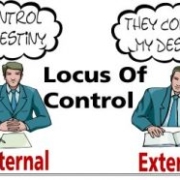
Locus of control is a relatively stable personality variable that represents the attribution a person makes about whether or not the effort they expend is contingent on their behavior. There are two extremes of the continuum: internal locus of control and external locus of control.

Internal locus of control occurs when an individual perceives that a specific reinforcing event is contingent on their own behavior. That is, the person perceives that what has happened externally is due to their behavior, and they have control over the external consequences. For example, a person with an internal locus of control attributes their happiness to themselves. If they want to be happy, they can work on it.

External locus of control occurs when an individual perceives that an external event has occurred independently of their behavior. Therefore, the individual associates the event with chance, luck, or destiny. For example, a person with an external locus of control attributes their happiness to another person or the situation.

Locus of Control and Personal Development

This concept is important because if a person believes that what happens around them is beyond their control, they may not act to change it. For example, if a person believes they have no control over the election of the political party that will govern their country, they may do nothing to change it, not even exercising their right to vote. On the other hand, if a person believes their vote will be important in the election of a new government, they may be motivated to change the political landscape and may even protest.

The feeling of not being able to control an event often creates a state of paralysis that prevents people from achieving their goals.

Internal locus of control is also an important aspect of personal development, as a person with an internal locus of control believes in their capabilities in the face of external events and knows that by putting in the best effort they will go far.

The literature presents a series of behavioral traits attributed to successful entrepreneurs, but one of the most important is Internal Locus of Control.

We have already seen the difference between internal locus of control and external locus of control, and that this implies that I, as a person, attribute my success and failure to my own actions, to my own initiatives. This is called internal locus of control, while external locus of control implies that I, as a person, attribute the results I have in life to luck, to fate, to other external factors, and to my actions.

So you can already imagine that a successful entrepreneur, a businessman, is a person with a high internal locus of control; a person who takes responsibility for their success and failure.

Other Characteristics of an Entrepreneur

Another characteristic that’s important to mention has to do with initiative. We say the world is full of good intentions, but truly, those who carry them out are those who can be called entrepreneurs. It’s like innovation: you can have many ideas and even inventions, but implementing them, getting the market to accept them, is only then innovation. So, implementing your ideas, getting the market to accept them, is what will truly define you as an entrepreneur.

Not everyone is qualified to be an entrepreneur; launching a project requires specific personal and professional characteristics. Being an entrepreneur also means having the motivation and financial means to succeed.

Generally speaking, in addition to the internal locus of control, an entrepreneur should possess the following qualities:

Creativity and innovation
Clarity of ideas
Ability to confront and assume risks
Ability to adapt to new situations
Knowing how to prioritize
Ability to communicate and socialize
Tenacity and persistence
Flexibility and ability to adapt to circumstances
Optimism

Mistaken Beliefs.

Believing that everything that happens to us is a product of chance, of others, of our destiny, of decisions we made in the past that we can no longer change; that we have to accept whatever happens to us or live frustrated, believing that the rest of the world is to blame for us not achieving our goals—these are mistakes that are as common as they are disastrous.

Being responsible for your decisions.

On the other hand, nothing is more mature and reassuring than a responsible person capable of taking responsibility for their actions and their consequences.

Someone capable of saying, «I was wrong,» «I’m sorry,» or, on the other hand, «I achieved this with great effort,» «I deserve this because I worked for it,» for example, is a person who conveys maturity, wisdom, and, very importantly, calm to others.

As a general rule, we tend to assume our successes as our own responsibility, but our failures as something that is the fault of others (remember the «I wasn’t lucky vs. I got it»?), although it is also very common to find people who, either due to a lack of self-esteem or because they confuse the concept of humility, never acknowledge or take credit for success, even if it is the result of many hours of work.

Have you ever wondered who is really responsible for your success?

In this video, we explore the concept of «locus of control» and how it influences entrepreneurship. You’ll learn the difference between internal and external locus of control through everyday examples and how this concept can be the key to transforming your life and business

Who determines your success? Discover the Locus of Control

Successful entrepreneurs take responsibility for their decisions and seek out opportunities, rather than waiting for luck to grace them. Are you ready to take control of your destiny?

Share this video if it’s inspired you and join the conversation about psychology and entrepreneurship.

Source:

From the course «Learning How to Learn,» by McMaster University & University of California, San Diego