
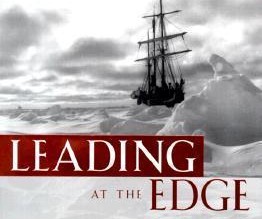
Leading at the Edge of Human Endurance
/0 Comentarios/en infisegroup/por JORGE MONTES DE OCAInspired by Leadership Lessons of Ernest Shackleton by Dennis N. T. Perkins
Introduction
In 1914, the fearless explorer Ernest Shackleton set sail with a team of sailors and scientists on an ambitious mission: to complete the first land crossing of Antarctica. What followed became one of the most extraordinary survival stories ever recorded. Their ship, the Endurance, was crushed by the relentless pressure of Antarctic ice. Stranded in the frozen waters of the Weddell Sea, the crew faced months of unimaginable hardship, including dangerous open-boat voyages through the stormy Southern Ocean, freezing temperatures, starvation, isolation, and despair.
Yet throughout this harrowing ordeal, Shackleton demonstrated remarkable courage, creativity, resilience, and leadership. Day after day, he guided his men through seemingly impossible circumstances, ensuring that every member of the expedition survived. His leadership remains highly relevant today, especially in a business world characterized by fierce competition, rapid change, uncertainty, and constant demands for innovation. Organizations frequently find themselves operating at the edge of survival, making Shackleton’s lessons more valuable than ever.
Dennis N. T. Perkins’ book Leadership Lessons of Ernest Shackleton examines the expedition through a business lens, extracting ten powerful leadership strategies that can help modern leaders navigate crises, inspire teams, and achieve extraordinary results under pressure.
Strategy 1: Never Lose Sight of the Ultimate Goal—Focus on Short-Term Objectives
When the Endurance was destroyed, Shackleton’s dream of crossing Antarctica vanished instantly. Isolated from the world and with little hope of rescue, he quickly shifted his long-term objective. Instead of completing the expedition, his new mission became bringing every crew member home alive.
Leaders must recognize that changing conditions and unexpected challenges are inevitable. Successful leadership requires the flexibility to redefine goals when circumstances demand it, while maintaining the same commitment and energy dedicated to the original vision.
Business Example: Intel
During the mid-1980s, Intel was primarily known for manufacturing memory chips. However, aggressive competition from Japanese producers severely damaged the company’s profitability. Faced with mounting losses, Intel’s CEO, Andy Grove, made a bold decision: abandon the memory-chip business and focus entirely on microprocessors.
This strategic pivot transformed Intel into one of the world’s most successful technology companies.
Strategy 2: Lead by Example Through Visible and Memorable Actions
During times of uncertainty, visible leadership can determine whether a team succeeds or fails. Shackleton understood the importance of demonstrating commitment through actions rather than words alone.
When the crew had to abandon unnecessary possessions to continue their journey by sled, Shackleton dramatically discarded his own gold coins and a valuable gold cigarette case in front of the men. His message was unmistakable: survival mattered more than status or wealth.
Business Example: Continental Airlines
When Gordon Bethune became CEO of Continental Airlines, the company was crippled by bureaucracy and poor customer service. To symbolize a new culture, Bethune publicly burned the company’s cumbersome policy manual.
The gesture communicated a clear message: stop blindly following rules and start using judgment, creativity, and common sense to serve customers effectively.
Strategy 3: Inspire Optimism and Confidence While Remaining Grounded in Reality
Technical expertise and business acumen are essential leadership qualities. However, the ability to remain optimistic during adversity often distinguishes exceptional leaders from average ones.
Shackleton constantly encouraged his crew to imagine future opportunities, maintaining morale even in desperate circumstances. He understood that hope is not denial of reality—it is the determination to believe that a better future remains possible.
Effective leaders balance realism with optimism, acknowledging challenges while inspiring confidence in the team’s ability to overcome them.
Strategy 4: Take Care of Yourself—Maintain Your Endurance and Let Go of Guilt
Leaders who operate under extreme pressure often neglect their own well-being. Yet sustainable leadership requires physical and mental resilience.
Despite suffering from recurring health problems, Shackleton rarely complained. He recognized that maintaining his strength was essential not only for himself but for the survival of the entire team.
Business Example: Jürgen Schrempp
Former DaimlerChrysler CEO Jürgen Schrempp emphasized personal renewal through exercise, outdoor activities, and disciplined routines. His philosophy was simple:
«Work hard, take a cold shower, and the world looks different.»
Leaders cannot effectively care for others if they fail to care for themselves.
Strategy 5: Reinforce the Message of Unity—We Live or Die Together
Shackleton knew that survival depended on extraordinary teamwork. Individual success meant little if the group failed.
He consistently reinforced a sense of collective identity. Daily gatherings, shared activities, and open discussions strengthened social bonds and fostered mutual trust among the crew.
Business Example
One global financial institution recruited high-performing bankers with lucrative individual compensation packages. While financially attractive, these arrangements encouraged competition rather than collaboration.
As a result, departments operated in silos, and teamwork suffered. The lesson is clear: organizations thrive when employees identify with a common mission rather than solely pursuing personal rewards.
Strategy 6: Minimize Status Differences and Promote Respect
One hallmark of Shackleton’s leadership was his ability to eliminate unnecessary hierarchy. Scientists, doctors, sailors, and officers all shared responsibilities and worked side by side.
He also ensured fairness in the distribution of resources. When there were not enough high-quality sleeping bags for everyone, he refused special treatment and accepted the same conditions as many of his crew members.
Business Example
Organizations naturally require structure and authority. However, employees become disengaged when they perceive an elite class receiving privileges unavailable to everyone else.
Effective leaders create environments where every individual feels respected, valued, and essential to the mission.
Strategy 7: Master Conflict Management
Conflict is unavoidable whenever people work closely together under pressure. Shackleton viewed conflict management as one of his most important responsibilities.
When crew member John Vincent began behaving aggressively toward others, Shackleton acted decisively. He demoted Vincent and made it clear that such behavior would not be tolerated.
Leaders must address problems early before they escalate and damage team cohesion.
Business Application
Ignoring difficult personalities or isolating dissenters often creates larger problems. Instead, effective leaders engage them constructively, providing opportunities to contribute while preventing destructive power struggles.
As the Roman general Scipio advised, always leave opponents a «silver bridge» to retreat across rather than cornering them into desperate resistance.
Strategy 8: Find Reasons to Celebrate and Laugh
Even in the harshest conditions, Shackleton encouraged humor, celebrations, and social activities. Dog races, storytelling, jokes, and practical jokes became essential tools for maintaining morale.
Laughter helped relieve stress, strengthen relationships, and create emotional resilience.
Business Example: Southwest Airlines
Herb Kelleher, the legendary CEO of Southwest Airlines, famously used humor as a leadership tool. He frequently appeared at company events dressed as Elvis Presley or other colorful characters.
This culture of fun encouraged innovation, improved employee engagement, and contributed significantly to the company’s success.
Strategy 9: Be Willing to Take the Big Risk
After reaching Elephant Island, Shackleton knew waiting for rescue was not an option. Instead, he chose to undertake one of the greatest small-boat voyages in history: a 1,300-kilometer journey through some of the world’s most dangerous waters to reach South Georgia Island and organize a rescue mission.
The decision involved enormous risk, but inaction would almost certainly have led to disaster.
Business Example: Egghead.com
Facing severe financial losses, software retailer Egghead.com made the bold decision to close all physical stores and transition entirely to online operations.
While risky, the move reflected a leader’s willingness to confront reality and take decisive action when circumstances demanded it.
Strategy 10: Never Give Up—There Is Always Another Move
The story of the Imperial Trans-Antarctic Expedition is ultimately a story of perseverance. Time after time, the crew faced setbacks that could have ended their journey. Yet they refused to quit.
Shackleton also understood the importance of creativity. Interestingly, some of the expedition’s best ideas came from individuals who were often considered difficult or unconventional.
Business Example: Sun Microsystems
Scott McNealy, former CEO of Sun Microsystems, built a reputation for challenging conventional wisdom. Under his leadership, Sun pioneered networked computing, introduced Java, and developed innovative software technologies that reshaped the technology landscape.
Creative persistence requires flexibility. When one strategy fails, leaders must be willing to adapt, experiment, and continue searching for solutions.
Conclusion
Ernest Shackleton’s Antarctic expedition remains one of history’s greatest leadership case studies. His success was not measured by achieving the original mission, but by his ability to adapt, inspire, unite, and protect his people under the most extreme conditions imaginable.
Today’s leaders may not face Antarctic icebergs, but they do encounter economic uncertainty, technological disruption, organizational change, and intense competition. Shackleton’s ten leadership strategies offer timeless guidance for navigating these challenges.
The ultimate lesson is simple yet profound: great leadership is not about controlling circumstances. It is about inspiring people to move forward together when circumstances seem impossible.
As Shackleton demonstrated, true leaders do not merely survive adversity—they help others find the strength to overcome it.
Bibliografia aqui
Shackleton's Inspirational Leadership

The Silent Language of Leadership: How Nonverbal Communication Defines Your Influence.









Dejar un comentario
¿Quieres unirte a la conversación?Siéntete libre de contribuir!