Entradas de] JORGE MONTES DE OCA

The Silent Language of Leadership . The Body Language that Complements the Leader’s Face

In the first part of this topic ( The Silent Language of Leadership ), we explored how the face—the eyes, mouth, eyebrows, and chin—functions as an emotional map, revealing our intentions, emotions, and leadership style. We saw that even when we try to control what we show, microexpressions and facial gestures convey key information that others instinctively pick up on. This understanding is the foundation of effective nonverbal communication, but it isn’t the whole story.

A leader’s influence is also built through their entire body. Hands, gestures, posture, and the way they move project confidence, openness, authority, or vulnerability. While the face communicates emotions, body language extends, amplifies, and sometimes contradicts what we express verbally. A conscious leader understands that every movement, however small it may seem, reinforces or weakens their message.

In this second part, we’ll delve into the use of hands, gestures, and body posture as extensions of the face and strategic leadership tools. We’ll discover how small adjustments in our movements and positioning can build trust, motivate a team, and solidify our authority without words.

Because leadership is not just what we say or what we show with our face: it’s how every part of our body speaks in unison to convey clarity, coherence, and presence.

Hands and Gestures: The Extension of the Leader’s Intention

The hands are perhaps the most expressive part of the body after the face. Every movement, every position, and every gesture conveys information about our emotions, our intentions, and our confidence. In leadership and business, knowing how to use your hands consciously can reinforce a message, build connection with the team, or project authority without words.

An open gesture, such as showing the palms of your hands, communicates honesty, transparency, and a willingness to engage in dialogue. Conversely, crossing your arms or hiding your hands can convey defensiveness, emotional closure, or a lack of confidence. In negotiations or presentations, the position and movement of your hands can influence how others perceive your credibility and clarity of thought.

Gestures also function as an emotional and verbal rhythm. Accompanying words with measured movements makes the message more convincing and memorable. For example, a leader who emphasizes key points with a controlled gesture reinforces the importance of the information, while excessive or nervous gestures can be distracting and create a sense of disorganization or insecurity.

Furthermore, our hands reveal emotions we sometimes try to hide. Playing with a pen, repeatedly touching our face, or clenching our hands can be signs of tension, anxiety, or doubt. Detecting these gestures in others allows a leader to adjust their communication and response to foster empathy and trust.

In the practice of conscious leadership, learning to control and observe hand gestures becomes a strategic tool: not only to project confidence and consistency, but also to read the emotional state of those around us. When hands are used intentionally, they become a channel of communication that complements the face and enhances the leader’s influence.

Body Posture: The Leader’s Complete Presence

Body posture is the most complete manifestation of our emotional state and leadership level. While the face and hands communicate specific emotions and gestures, the way we hold our body projects confidence, authority, openness, or tension immediately and instinctively. A leader who understands how to use their posture knows how to convey confidence and control a team’s energy even before uttering a word.

An upright posture, with relaxed shoulders and a slightly open chest, projects confidence and authority. In contrast, slouching or crossing one’s arms can be perceived as insecurity, disinterest, or resistance. Body orientation toward the listener also communicates attention and willingness: leaning slightly forward shows interest, while leaning back can be interpreted as distance or distrust.

Body balance, both static and dynamic, is equally crucial. Walking with a firm, measured stride, maintaining a stable center of gravity, and avoiding nervous movements conveys emotional control and professionalism. In high-impact presentations or meetings, posture becomes a silent authority that reinforces the verbal message and facial expressions.

Posture also serves as a reflection of inner consistency. A leader whose posture is consistent with their speech and facial expression conveys credibility and trust. Conversely, inconsistencies—such as a positive message accompanied by a tense or closed-off body—generate distrust or confusion within the team. Alignment between mind, face, and body is the foundation of authentic and persuasive leadership.

Finally, posture not only communicates with others but also influences the leader’s own emotional state. Studies in behavioral psychology have shown that maintaining an open and upright posture can increase feelings of confidence, reduce stress, and improve decision-making ability. In other words, how you carry yourself affects both your external influence and your internal control.

Mastering body posture, therefore, is learning to project leadership in a holistic way: coherent, powerful, and empathetic. It is the silent tool that allows the face, eyes, mouth, eyebrows, hands, and all gestures to work together to convey presence, confidence, and authority.

Holistic Leadership Through Nonverbal Language

Throughout this blog, we’ve explored how nonverbal communication is the backbone of effective leadership. We began with the face: the face, eyes, mouth, eyebrows, and chin reveal emotions, intentions, and levels of authority. We learned that microexpressions reveal what words can’t always communicate and that a conscious leader can project authenticity, consistency, and emotional control through these signals.

Next, we delve into the hands and gestures, which act as extensions of thought and intention. Each controlled movement reinforces credibility, while unconscious gestures can betray tension or insecurity. Finally, we analyze body posture, which projects presence, confidence, and openness, and serves as a framework for all elements of nonverbal communication to work in harmony.

Together, face, eyes, mouth, eyebrows, chin, hands, and posture form a comprehensive communication system. A leader who masters this language not only conveys clarity and authority but also builds relationships based on trust and empathy. Nonverbal communication allows for silent yet powerful influence, motivation, and guidance, complementing words and reinforcing the message.

Authentic leadership, then, is not limited to what is said; it is reflected in every gesture, every glance, and every posture. Learning to read and project these signals is learning to lead with presence, consistency, and humanity. Let us remember that a leader is not only measured by their decisions, but also by the way their body language speaks before, during, and after every interaction.

Bibliography (APA)

Darwin, C. (1872). The expression of the emotions in man and animals. John Murray.

Ekman, P. (2003). Emotions revealed: Recognizing faces and feelings to improve communication and emotional life. Times Books.

Goleman, D. (1995). Emotional intelligence. Bantam Books.

Navarro, J., & Karlins , M. (2008). What every BODY is saying: An ex-FBI agent’s guide to speed-reading people. Harper Collins.

Pease, A., & Pease, B. (2004). The definitive book of body language. Bantam Books

Leadership and Nonverbal Communication

The Silent Language of Leadership: How Nonverbal Communication Defines Your Influence.

In the world of business and leadership, nonverbal communication is not a minor detail: it is the invisible soul of all human interaction. Every movement, every gesture, and every glance conveys more than words can express. As a leadership coach and business consultant, I have observed that the most influential leaders not only master their discourse but are also adept at reading and projecting emotions without uttering a word.

Emotions drive the world. They are the energy behind the decisions, agreements, and relationships that shape our professional and personal lives. When we observe someone, the first thing we try to decipher is their emotional state: their facial expression, the direction of their gaze, the position of their chin, the tension in their hands, or the rhythm of their breathing. Our brain instinctively interprets these signals as indicators of trust, security, or vulnerability.

However, while the face is the primary mirror of our emotions, it’s also the channel we try hardest to control. We fake smiles, suppress gestures, and soften expressions to maintain a professional image or avoid showing vulnerability. But the body always finds a way to reveal what the face tries to hide. A foot that moves insistently, a hand playing with a pen, or a subtle change in posture can betray a repressed emotional state.

Paul Ekman, one of the leading researchers in nonverbal communication, identified six universal basic emotions: fear, sadness, joy, anger, disgust, and surprise. These emotions are as old as our species itself. Charles Darwin had already observed this in 1872, noting that mammals shared similar expressions in response to equivalent stimuli. In essence, our biology speaks for us, even if we try to silence it.

For those who lead teams, negotiate agreements, or inspire others, understanding this silent language is a strategic advantage. Nonverbal communication is the bridge between emotion and action; it lends credibility to the message and coherence to the leader’s presence. In the following sections, we will explore each part of the body—the face, hands, posture, eyes, and voice—as pieces of the same emotional map that reveals more than we imagine.

Mastering this art not only improves how you communicate with others, but also how you connect with yourself. Because leadership isn’t just about talking; it’s about learning to listen to what your body says when words fail you.

The Face: The Visible Map of Emotions

The face is undoubtedly the primary stage for our emotions. Every facial muscle, every contraction or relaxation, transmits information that the human brain interprets almost automatically. In barely a fraction of a second, we can perceive if someone is happy, uncomfortable, annoyed, or surprised, without them needing to utter a single word. Therefore, facial expression becomes the first channel of connection between people, an immediate reflection of their internal emotional state.

As a leadership coach and business consultant, I’ve observed that many leaders underestimate the power of their face as a tool of influence. However, the way you look, smile, or frown can create trust or distance, motivate or intimidate, open doors or close them. In business environments, where strategic communication is essential, facial expression can be the difference between achieving a successful negotiation and provoking emotional resistance in others.

Paul Ekman, a pioneer in the study of universal emotions, identified six basic facial expressions shared by all cultures: fear, sadness, joy, anger, disgust, and surprise. These expressions are not learned; they are innate. They are automatic, biological, and profoundly human. Even so, the face is also the channel we can best control. That’s why some people are known as » poker» people. Face : Individuals capable of maintaining a neutral expression even in the face of intense emotions. But this control has its limits.

Emotions always find a way out. Even if we try to keep our face still, our body will reveal what we feel in other ways: more rapid breathing, a slight tremor in the jaw, a gaze that avoids eye contact, or blinking faster than normal. These microexpressions , which last only a fraction of a second, can betray fear, insecurity, or distrust, even when a smile suggests otherwise.

In leadership, learning to read facial expressions—both your own and others’—is a powerful skill. It allows you to detect authenticity in a conversation, perceive the emotion behind an opinion, and respond with empathy or firmness depending on the situation. A leader who masters facial language not only communicates better; they also inspire, connect, and guide with emotional intelligence.

On the other hand, consciously controlling one’s own expressions is also part of emotional self-control. It’s not about pretending, but about managing how we project our emotions so as not to spread anxiety, anger, or discouragement to the team. In moments of pressure, maintaining a calm demeanor, a steady gaze, and a genuine smile can stabilize an entire group.

Ultimately, the face not only expresses what we feel, but also shapes what we communicate and the impact we have on others. In the following sections, we’ll explore how each part of the face—the eyes, mouth, eyebrows, and chin—acts as a distinct window into our emotional world. Because understanding the face is the first step toward leading with authenticity, empathy, and presence.

The Eyes and the Gaze: The Window to Emotional Leadership

They say the eyes are the window to the soul, but in leadership they are much more than that: they reflect intention. A look has the power to connect, motivate, or destabilize, even before a single word is spoken. In a business environment, where decisions, emotions, and trust are constantly intertwined, the eyes become a powerful channel of nonverbal communication that can make the difference between inspiring and intimidating.

From neuroscience, we know that the eyes are the organ most sensitive to emotions. Pupils dilate in response to interest, wonder, or attraction, and constrict in response to rejection or threat. A leader who maintains eye contact conveys confidence, presence, and emotional control; one who avoids or looks away communicates insecurity, disinterest, or even dishonesty. Therefore, the gaze reveals not only emotions but also priorities and levels of attention.

Paul Ekman and other researchers of nonverbal communication emphasize that eye contact serves a dual purpose: it both projects and receives emotional information. Sustained eye contact can reinforce credibility and empathy, while an averted gaze can break the emotional connection with the other person. However, the intensity and duration of this eye contact must be appropriate to the context. In business, staring for too long can be perceived as a form of dominance or challenge, while looking too briefly can be interpreted as disinterest or weakness.

A good leader knows how to use their gaze as a tool for emotional balance. During a difficult conversation, a firm, calm stare can ease tension. In a presentation, maintaining eye contact with the audience fosters trust and rapport. In a negotiation, observing the other person’s microexpressions —a rapid blink, a lateral deviation, a sudden dilation of the pupils—can reveal what words try to conceal.

But eye contact doesn’t just communicate outward; it also reflects a leader’s internal state. When a manager maintains a calm and clear gaze, they convey stability and self-control. Conversely, a lost or tense gaze reveals confusion or anxiety, which can emotionally affect their team. Remember that emotional leadership is largely built on consistency: that the eyes say the same thing as the voice and that the body language supports the message.

In leadership skills training, eye contact has become an essential tool. Learning to observe consciously and look with intention is an act of empathy and mindful leadership. Eye contact can be a guiding light, a barrier that creates distance, or a bridge that unites. It all depends on how the leader chooses to use it.

The next time you speak with your team, your client, or your partner, pay attention not only to what their words say, but also to what their eyes reveal. And before you deliver a message, make sure your gaze supports it. Because, ultimately, leading is also about learning to look with purpose.

The Mouth and the Smile: The Subtle Power of Empathy and Credibility

In nonverbal leadership communication, the mouth plays a central role. It’s the meeting point between emotion and intention, between what we feel and what we choose to show. Through it, we articulate not only words but also gestures that convey openness, empathy, or tension. A smile, a slight lip tightening, or a downturned corner of the mouth can completely change the meaning of a conversation or the emotional climate of a team.

From an emotional perspective, the smile is one of the most universal and powerful gestures. Paul Ekman identified different types of smiles, including the genuine smile—also known as the Duchenne smile —and the social or forced smile. The difference lies in authenticity: the genuine smile involves not only the muscles of the mouth but also those of the eyes. When a smile is real, the pupils light up, the corners of the eyes crinkle slightly, and the entire face softens. This expression conveys sincerity and generates immediate trust.

Conversely, a fake or strained smile can be perceived as an attempt at manipulation or dissimulation. In the business world, where trust is the foundation of any lasting relationship, the authenticity of a smile has strategic value. Teams follow leaders who radiate emotional consistency: those whose facial expressions match their words and actions.

The mouth is also an indicator of emotional control. Biting, pursing, or tightly clenching the lips are signs of restraint, anxiety, or repressed frustration. A conscious leader learns to recognize these gestures in themselves and others, adjusting their communication to be more empathetic and effective. For example, if you notice a colleague pursing their lips or displaying a strained smile during a meeting, they are likely disagreeing or uncomfortable, even if they don’t express it verbally. This observation gives you the opportunity to intervene tactfully and understandingly before the tension escalates.

In negotiations, a smile can be a powerful tool for emotional persuasion. A friendly and relaxed expression facilitates dialogue, reduces resistance, and fosters openness. However, it’s crucial to understand the cultural context and the situation: excessive or inappropriate smiling can convey insecurity or a lack of seriousness. Therefore, a smile should be used as a strategy for emotional leadership, not as a mask.

The mouth also reflects our emotional disposition toward others. A serene smile invites collaboration; tense lips or a rigid jaw project defensiveness or judgment. When the face relaxes, communication flows; when it tenses, the relationship is blocked.

In leadership, learning to smile with purpose isn’t about faking optimism, but rather about conveying emotional stability. A genuine smile can transform a tense atmosphere, inspire confidence in difficult times, and motivate a team that needs encouragement. It’s a silent reminder that authentic leadership is built on human connection, not imposition.

Because a sincere smile not only communicates joy, but also confidence, humility, and empathy: the true pillars of leadership that leaves a mark.

Eyebrows and Chin: Authority, Doubt, and Decision in the Leader’s Face

On the face, the eyebrows and chin function as emotional punctuation marks: they signal the intention, energy, and direction of the message. They are seemingly subtle details, but with an enormous impact on the perception of authority, empathy, and leadership. While the eyebrows act as the expressive frame of thought, the chin reflects firmness, pride, or vulnerability depending on its position. Together, they are the language of the emotional posture that the leader projects to the world.

Eyebrows are one of the most mobile features of the human face and, therefore, one of the most revealing. A slight raise can communicate surprise, interest, or openness; conversely, furrowed brows can express doubt, anger, or concentration. Paul Ekman demonstrated that eyebrow movement is an essential part of microexpressions , those unconscious reactions that betray our emotions before the rational brain intervenes.

For a leader, learning to read and control eyebrow movements is a strategic skill. Raising them slightly during a conversation shows attentiveness and openness, while keeping them rigid or tense can create distance or a sense of judgment. On the other hand, constantly frowning can signal stress or discontent, even when the verbal message is positive. In meetings or negotiations, eyebrow gestures can reinforce empathy or deactivate the emotional connection if they are not used consciously.

The chin, for its part, is the axis of authority and self-confidence. In nonverbal communication, its position conveys much more than it seems. A high chin projects pride, determination, and dominance, but if exaggerated, it can be perceived as arrogance or defiance. Conversely, a chin that is too low can reflect submissiveness, doubt, or insecurity. The key is to keep it balanced: neither haughty nor withdrawn, but in a position that reflects serenity and self-control.

During a presentation or a key conversation, a leader who maintains a steady chin and a steady gaze conveys confidence and clarity of purpose. Conversely, a nervous chin movement, a downward gesture, or a clenched jaw can reveal inner tension or a lack of confidence. In leadership terms, the chin is like the anchor of credibility: when it’s balanced, the entire body language aligns.

Both eyebrows and chin also act as indicators of emotional energy. Gently raised eyebrows accompanied by a relaxed chin communicate openness and a willingness to engage in dialogue. In contrast, furrowed brows with a rigid chin often indicate opposition or emotional closure. An emotionally intelligent leader learns to use these gestures to direct the energy of a meeting: to boost team morale, smooth over a negotiation, or reinforce their presence when firmness is required.

Leadership, in essence, is a dance between authority and empathy, between firmness and sensitivity. And that dance often begins with the face. Knowing how your eyebrows move and how you position your chin is not merely an aesthetic detail, but a tool for emotional influence.

Because true leadership isn’t imposed: it’s communicated. And sometimes, a raised eyebrow or a firm chin is enough to inspire respect, trust, and connection.

Towards the Comprehensive Communication of the Leader

So far, we’ve explored how the face—the eyes, mouth, eyebrows, and chin—becomes an emotional map that reveals our intentions, emotions, and leadership style. Every gesture, every microexpression , and every movement conveys messages that can strengthen or weaken our influence on the team, clients, or in any professional setting.

But nonverbal communication goes far beyond the face. The entire body speaks: our hands, arms, posture, and the way we move project confidence, openness, tension, or leadership. In the second part of this blog, we’ll delve deeper into how our hands, gestures, and body posture complement and amplify what we already communicate with our face, and how mastering these elements can transform your presence, credibility, and influence.

Prepare to discover how to turn every move into a strategic leadership tool, and how to learn to read others with the same accuracy with which you project your emotions.

Bibliography (APA)

Darwin, C. (1872). The expression of the emotions in man and animals. John Murray.
Ekman, P. (2003). Emotions revealed: Recognizing faces and feelings to improve communication and emotional life. Times Books.
Goleman, D. (1995). Emotional intelligence. Bantam Books.
Navarro, J., & Karlins , M. (2008). What every BODY is saying: An ex-FBI agent’s guide to speed-reading people. Harper Collins.

Leadership and Nonverbal Communication

Between Order and Chaos: 12 Rules to Lead Your Life with Purpose

In both business and personal development, the search for balance between order and chaos is not a luxury — it’s a necessity. Clinical psychologist Jordan Peterson (2018), in his acclaimed work 12 Rules for Life: An Antidote to Chaos, invites us on a profound journey that merges science, psychology, and philosophy to uncover what it truly means to live with fulfillment. His principles are not just guidelines for personal growth — they are leadership lessons for those who aspire to lead with clarity, integrity, and purpose.

1. Stand up straight with your shoulders back

Your posture reflects your mindset. Standing tall symbolizes taking responsibility for your role in life. When you project confidence, you inspire respect and activate a feedback loop that strengthens your leadership presence.

2. Treat yourself like someone you are responsible for helping

Many leaders care deeply for their teams but neglect themselves. However, a burned-out leader cannot inspire. Treat yourself with the same discipline and compassion you would offer others — you are your greatest resource.

3. Make friends with people who want the best for you

Leadership thrives in healthy environments. Surround yourself with people who challenge you to grow, not those who drain your potential. A strong network elevates your standards and amplifies your success.

4. Compare yourself to who you were yesterday, not to who someone else is today

Growth is personal, not comparative. The most effective leaders focus on progress, not perfection. Ask yourself: Am I better than I was yesterday? If the answer is yes, you’re on the right path.

5. Do not let your children—or your team—do anything that makes you dislike them

Boundaries are acts of leadership. In business, this means setting clear standards and correcting destructive behavior early. Leading with discipline and empathy builds trust and resilience.

6. Set your house in perfect order before you criticize the world

True authority comes from example. Before judging others, evaluate your own actions. Leadership begins with self-mastery and integrity.

7. Pursue what is meaningful, not what is expedient

The easy path rarely leads to greatness. Seek meaning in your actions, not convenience. Purpose-driven leadership creates value that lasts beyond immediate rewards.

8. Tell the truth—or, at least, don’t lie

Integrity is the cornerstone of leadership. Speak truth even when it’s uncomfortable. Honesty strengthens trust and frees you from the burden of pretense.

9. Assume that the person you are listening to might know something you don’t

Great leaders listen to learn, not just to respond. Every dialogue is an opportunity for insight. Curiosity fuels innovation and wisdom.

10. Be precise in your speech

Precision eliminates confusion. Clear communication aligns teams, defines strategy, and turns vision into results.

11. Do not bother children when they are skateboarding

Growth requires risk. Encourage experimentation and calculated failure — they are the foundation of innovation. Overprotection breeds weakness; trust builds strength.

12. Pet a cat when you encounter one on the street

Even in tough times, beauty exists in the smallest moments. Appreciation keeps you grounded and resilient. Gratitude, in leadership and in life, is a quiet form of power.

Final Reflection from the Coach

As a business leader, your success won’t be measured by your titles but by the order you create within yourself and the inspiration you spark in others. Peterson’s rules are not commandments — they’re tools to bring meaning into chaos.
Remember: to lead is not to control; it’s to inspire, serve, and uplift.

🌿 Every day you choose growth, chaos recedes — and purpose advances.

References

Peterson, J. B. (2018). 12 Rules for Life: An Antidote to Chaos. Random House Canada.

12 Rules to Lead with Purpose

Financial Education – The Art of Making Smart Money Decisions

In today’s complex world, financial education is more than just learning how to invest; it’s about gaining freedom, peace of mind, and control over your time.
As a financial and insurance advisor, my goal is to help people understand that money is not about status—it’s about stability, options, and purpose.

1. Humility and compassion in finances

When things go well, be humble; when they go wrong, show compassion. Money reveals character and tests our emotional balance. Accepting risk and luck as part of life allows you to focus on what you can truly control: your discipline and long-term perspective.

2. Less ego, more wealth

Real wealth is not what you see—it’s what you keep. Saving is not about income; it’s about self-control. Every time you resist an unnecessary expense, you are buying future freedom.

3. Manage your money to sleep well at night

Ask yourself: Does this decision help me sleep at night? The best investors are not those who earn the most, but those who stay consistent and patient over time.

4. Accept that not everything will work

Failure is part of the process. Some investments will fail, but what matters is your overall portfolio. Success in finance requires resilience and perspective.

5. Use money to buy time, not things

The true goal of money is freedom—the ability to do what you want, when you want, with whom you want. Financial planning and smart insurance give you that control.

6. Be kind, not flashy

No one admires your possessions as much as you do. Respect and admiration are earned through humility and generosity, not luxury.

7. Save for no reason at all

Unassigned savings protect you from life’s surprises. Saving is your invisible shield against uncertainty.

8. The price of success

Every goal has a cost—risk, patience, doubt. Don’t avoid them; see them as the price of growth. Financial success rewards consistency and resilience.

9. Avoid extremes and define your own game

Everyone plays a different financial game. Define your own rules, your goals, and your pace. Your money should serve your life, not rule it.


10. Closing thought


Financial freedom begins with daily discipline and long-term vision. Save, invest, protect your assets, and remember: it’s not about having more money—it’s about having more peace.

Bibliography

  • Housel, M. (2020). The Psychology of Money: Timeless lessons on wealth, greed, and happiness. Harriman House.

  • Covey, S. R. (1989). The 7 Habits of Highly Effective People. Free Press.

  • Robbins, T. (1991). Awaken the Giant Within. Free Press.

  • Kahneman, D. (2011). Thinking, Fast and Slow. Farrar, Straus and Giroux.

Financial Education: The Art of Smart Decisions

The Stock Market in Mexico and the United States

What Is the Stock Market?

The stock market is the system that enables the issuance, placement, distribution, and trading of financial securities. In simple terms, it’s the marketplace where companies, governments, and investors meet—some seeking funding, and others looking to earn returns on their investments.

In every stock market, there are two main players:

  • Issuers – corporations or government entities that raise capital by issuing securities such as stocks or bonds.

  • Investors – individuals or institutions who buy those securities, seeking profit through dividends, interest, or price appreciation.

The stock market serves as a bridge that channels savings into productive investment, allowing companies to grow while giving investors the opportunity to participate in that growth.


The Stock Market in Mexico

The Mexican stock market is regulated by the Securities Market Law and supervised by the National Banking and Securities Commission (CNBV). Its primary trading platform is the Mexican Stock Exchange (BMV), with the Institutional Stock Exchange (BIVA) also operating since 2018.

According to the BMV, this market “channels savings toward productive investment through transparent and competitive mechanisms.” For companies, it provides access to capital without relying solely on bank loans. For investors, it offers portfolio diversification and a way to participate in the country’s economic growth.

Key Instruments in Mexico

  • Stocks (Acciones) – represent ownership shares in a company.

  • Bonds or Notes (Bonos u Obligaciones) – debt instruments that pay periodic interest.

  • Securities Certificates (Certificados Bursátiles) – medium- or long-term debt instruments.

  • CKDs and CERPIs – investment vehicles focused on infrastructure, energy, or innovation projects.

These securities are issued in series or in bulk and may be acquired by both institutional and individual investors.

Why It Matters for Entrepreneurs and Business Owners

For entrepreneurs, understanding this market is key to exploring how to fund business growth through the issuance of debt or equity. For established companies, being listed on the stock exchange enhances their reputation, improves transparency, and attracts domestic and foreign investors.

Mexico’s Market Characteristics

The Mexican capital market is relatively smaller and less liquid than the U.S. market but offers a stable regulatory environment and growing opportunities for medium and large enterprises. Reforms to the Securities Market Law (2024) aim to make listings more accessible to small and mid-sized firms.


The Stock Market in the United States

The U.S. stock market is the largest and most liquid in the world. It includes the New York Stock Exchange (NYSE) and NASDAQ, both regulated by the U.S. Securities and Exchange Commission (SEC).

Its primary role is the same—connecting companies that need capital with investors seeking profitable opportunities—but its depth and global influence make it a reference model for capital markets worldwide.

Main Instruments in the U.S.

  • Common Stocks – provide ownership and voting rights.

  • Corporate Bonds – debt instruments issued by corporations with fixed or variable yields.

  • ETFs and Mutual Funds – pooled investment vehicles for diversification.

  • Options and Futures – derivatives used for hedging or speculative strategies.

The U.S. market’s high liquidity and strict regulation make it attractive but demanding. Transparency, accurate reporting, and compliance are fundamental for success.

Importance for Businesses and Entrepreneurs

For business owners, issuing securities in the U.S. means access to a vast investor base and higher visibility. However, it also involves stricter reporting, governance, and disclosure requirements. For investors, it represents a broad landscape of instruments and industries with global reach.


Comparison: Mexico vs. the United States

Aspect Mexico United States
Regulation Supervised by CNBV under the Securities Market Law. Regulated by SEC under multiple federal laws.
Liquidity Lower trading volume, stable local environment. Highest liquidity and depth worldwide.
Accessibility Focused on medium and large companies. Broad access, but costly and heavily regulated.
Opportunities Ideal for national or regional expansion. Offers global exposure and investor reach.

Both markets share the same purpose: to channel savings into productive investment. They differ, however, in scale, liquidity, and regulation. A Mexican entrepreneur might begin locally with the BMV and later consider a cross-border listing in the U.S. as the business grows.


Practical Recommendations

1. Plan with a Long-Term Vision

Before issuing or investing, define your objectives—whether growth, expansion, or diversification.

2. Strengthen Transparency

Investor confidence relies on consistent, accurate, and timely information.

3. Seek Professional Advice

A qualified financial or legal advisor with capital markets experience can help avoid costly mistakes.

4. Diversify

Spread your investments across different instruments, industries, or even countries to mitigate risk.


Conclusion

Whether in Mexico or the United States, the stock market is a powerful platform for economic development, innovation, and business expansion. Understanding how it operates is not only valuable for investors but essential for every entrepreneur and executive seeking long-term growth, credibility, and financial sustainability.

By leveraging the opportunities each market offers—and managing their differences wisely—businesses can access capital, build trust, and expand their vision beyond borders.

References

Bolsa Mexicana de Valores. (n.d.). Acerca de la BMV. Retrieved from https://www.bmv.com.mx/es/grupo-bmv/acerca-de

Cámara de Diputados. (2024). Ley del Mercado de Valores. Diario Oficial de la Federación. Retrieved from https://www.diputados.gob.mx/LeyesBiblio/pdf/LMV.pdf

Investopedia. (n.d.). What Is the Stock Market and How Does It Work? Retrieved from https://www.investopedia.com/terms/s/stockmarket.asp

U.S. Securities and Exchange Commission (SEC). (n.d.). Investor.gov – Introduction to Investing. Retrieved from https://www.investor.gov

Saxo Bank. (n.d.). A Guide to Investing in U.S. Equities. Retrieved from https://www.home.saxo/learn/guides/equities/us-equities-guide

BBVA México. (n.d.). Mercado de Capitales. Retrieved from https://www.bbva.mx

The Stock Market

Don’t Break the Chain: The Simple Path to Lasting Habits

Building a new habit can feel like an uphill battle. We crave results, yet we underestimate the quiet power of small, consistent actions. That’s where a simple but brilliant method comes in — “Don’t Break the Chain”, also known as The Seinfeld Strategy.

What Is “Don’t Break the Chain”?

The concept is straightforward: pick one meaningful habit —writing, exercising, learning— and commit to doing it daily. Each day you complete your task, mark an X on your calendar.
Soon, those X’s form a visual chain of progress. And once you see it growing, you won’t want to break it. That visible streak becomes your motivation —a symbol of consistency and discipline.
You’ll find that the magic lies not in intensity, but in continuity.

Where It Comes From

While comedian Jerry Seinfeld has claimed he never officially coined the idea, the story that popularized it comes from software developer Brad Isaac. In the early 1990s, Isaac asked Seinfeld for advice on how to become a better comedian. Seinfeld replied:

“Write every day. And don’t break the chain.”
Isaac later shared this story on Lifehacker (2007), and the concept spread worldwide, becoming a timeless productivity principle.

Why It Works

Human brains love visible progress. Seeing a chain of completed days releases dopamine, reinforcing the behavior and making you want to continue. Your brain starts associating effort with reward, and the chain becomes your motivation.
No fancy apps, no complex systems —just a calendar, a marker, and your daily commitment.

How to Start

  1. Define your goal. Be specific —for example, “read 10 pages a day.”

  2. Get a physical calendar. Keep it somewhere visible.

  3. Mark every completed day. Use a big red X.

  4. Protect your chain. If you miss a day, start again, but don’t quit.

Over time, this simple act shapes identity. You’re no longer “trying” to build a habit —you’ve become someone who keeps promises to themselves.

“You don’t have to be perfect every day. You just have to keep going.”


Big change doesn’t come from giant leaps —it comes from a chain of consistent steps.”

References

  • Isaac, B. (2007, January 10). Jerry Seinfeld’s Productivity Secret: Don’t Break the Chain. Lifehacker. https://lifehacker.com/281626/jerry-seinfelds-productivity-secret

  • Seinfeld, J. (1990s). Interview anecdote shared by Brad Isaac. [Referenced in Lifehacker, 2007].

  • Clear, J. (2018). Atomic Habits: An Easy & Proven Way to Build Good Habits & Break Bad Ones. Avery.

Don’t Break the Chain

Visualizing Your Business Model – The Business Model Canvas

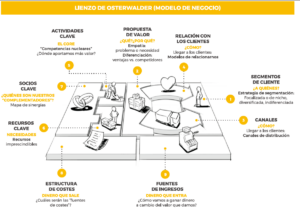
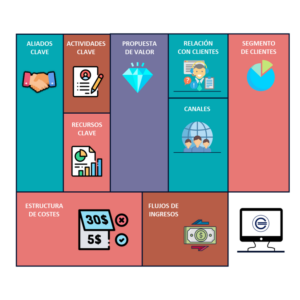
El modelo Canvas te permite concentrarte en tu modelo de negocio segmento por segmento.

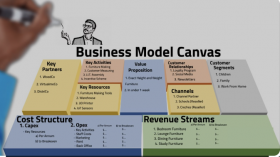
The 9 Elements of the Business Model Canvas.

The starting point for a good discussion about developing a business model is having a shared understanding of what a business model is.

Alex Osterwalder and Yves Pigneur, authors of the best-selling book «Business Model Generation,» define a business model as «the reason why an organization creates, delivers, and captures value.» So, to reiterate, a business model is the reason why an organization creates, delivers, and captures value.

Alex and Yves believe that a business model can be best described through nine basic building blocks, which illustrate the logic of how a company intends to acquire customers and generate revenue. This is why they invented the Business Model Canvas.

1. Customer Segments.

For building block 1, the business model experts at Cavas recommend starting with customer segments. So we’ll need to identify and define our customer segments. Typically, there are between five and seven segments.

2. Value Proposition.

In building block number 2, value propositions, we must determine what value we can create to deliver what will be most important to our chosen customer segment.

How compelling is your value proposition? Why do your customers consume your product? Why do they buy it?

The value proposition is the core of a company’s reason for being and is how you satisfy customer needs.

3. Channels.

In block 3, the question is which channels we will use, and for this, we need to determine how we will communicate and deliver the value propositions to our customer segment.

How are your products or services promoted, sold, and delivered? Why? Are they working?

4. Customer Relationships.

In Block 4, Customer Relationships, we must critically identify how we can build better, more authentic relationships with customers and strategic partners that lead to deep trust and loyalty.

How do you interact with the customer throughout their journey?

5. Revenue Streams.

Block 5, Revenue Streams, focuses on capturing the value we create and deliver. How do we generate a reasonable amount of revenue for our efforts?

How does your value proposition generate revenue?

6. Key Resources.

Block 6, Key Resources, focuses on the assets we need to deliver our value propositions. Key resources are typically divided into four categories: physical, human, intellectual, and financial.

What unique strategic assets does my business possess to compete?

7. Key Activities.

Next, in Block 7, are the key activities, which are the most important actions the company takes to operate successfully. Activities typically include operations, production, sales and marketing, and financial management.

What unique strategies does your business have for delivering its value proposition to the customer?

8. Key Partnerships.

Section 8 comprises Key Partnerships, which are very important and, in many ways, have become the cornerstone of most business models. Alliances typically include strategic alliances between non-competing companies, joint ventures, or, more recently, the co-creation of value with customers.

What activities can the company discontinue to focus on its key activities?

Creating alliances with partners is important for both startups and established organizations.

9. Cost Structure.

Finally, section 9, but certainly not least, is the cost structure. For this, we will need to identify all the costs involved in creating and delivering the customer value proposition that we promise in our business model.

What are the company’s main cost drivers? How do they relate to revenue?

By understanding your cost structure, you’ll know the minimum sales volume required to generate a profit. The cost structure considers economies of scale, fixed costs, variable costs, and profit.

The Starbucks Business Model Canvas, for example, places particular emphasis on different activities related to the company’s performance over the years. As we can see, expansion into new markets is ranked first among the key activities, while the coffee experience is recognized as the primary aspect of the value proposition.

Coca-Cola, on the other hand, focuses much of its Business Model Canvas on product distribution and the…

Bibliografia:

Sistema Universitario de Georgia. (sf). Del curso; «Model Business Canvas: una herramienta para emprendedores e innovadores»

Visualizing Your Business Model – The Business Model Canvas

World Diabetes Day — A Global Call for Awareness and Prevention

World Diabetes Day: History and Global Impact

World Diabetes Day is observed every year on November 14th, commemorating the birthday of Sir Frederick Banting, who co-discovered insulin in 1921 along with Charles Best. The International Diabetes Federation (IDF) and the World Health Organization (WHO) established this day in 1991 in response to the growing concern over the global rise of diabetes. It became an official United Nations Day in 2006, emphasizing diabetes as not only a health issue but a social, economic, and developmental challenge (WHO, 2024).

Understanding Diabetes and Its Global Reach

Diabetes mellitus is a chronic disease characterized by elevated blood glucose levels resulting from defects in insulin production or its utilization. According to the World Health Organization (2024), over 540 million adults worldwide are living with diabetes, and this number is expected to rise to 783 million by 2045 if no effective preventive measures are taken.

Diabetes in Mexico and the United States

In Mexico, diabetes is one of the leading causes of death. The National Institute of Public Health (INSP, 2023) reported that around 14 million adults live with diabetes, representing nearly 14% of the adult population. Moreover, nearly half of them are unaware of their condition, increasing the risk of complications such as kidney failure, vision loss, and cardiovascular disease.

In the United States, the Centers for Disease Control and Prevention (CDC, 2024) estimates that 38.4 million people, or 11.6% of the U.S. population, have diabetes, with an additional 97 million adults in a prediabetic state. The financial impact is also alarming, with $413 billion spent annually on direct medical costs and lost productivity (ADA, 2024).

Raising Awareness and Promoting Prevention

World Diabetes Day serves as a reminder of the importance of early diagnosis, healthy lifestyle choices, and regular screenings. Campaigns around the world encourage physical activity, balanced nutrition, and education about risk factors such as obesity, poor diet, and sedentary behavior.

However, diabetes prevention and management require more than individual effort—it demands public health policies, community support, and financial preparedness.

Financial Planning and Life Insurance: Protecting Health and Future

Chronic diseases like diabetes not only affect physical well-being but also have significant financial consequences. Medical expenses, long-term treatments, and work absences can severely impact family stability. Therefore, life and health insurance are essential tools for protection.

Having an insurance plan ensures access to timely medical attention, coverage for expensive treatments, and financial security for loved ones in case of unforeseen complications. Integrating financial planning with health awareness allows individuals to live with greater peace of mind, focusing on prevention and quality of life instead of fear and uncertainty.

References

  • American Diabetes Association (ADA). (2024). Statistics about diabetes. Retrieved from https://www.diabetes.org

  • Centers for Disease Control and Prevention (CDC). (2024). National Diabetes Statistics Report. U.S. Department of Health and Human Services.

  • International Diabetes Federation (IDF). (2024). IDF Diabetes Atlas (11th ed.). Retrieved from https://idf.org

  • Instituto Nacional de Salud Pública (INSP). (2023). Encuesta Nacional de Salud y Nutrición (ENSANUT). Gobierno de México.

  • World Health Organization (WHO). (2024). Global report on diabetes. Retrieved from https://www.who.int

World Diabetes Day: Protecting Health and Future

Project Control: The Strategic Compass for Project Managers

Understanding Control in Project Management

In project management, control is not merely a procedural step—it’s the backbone that ensures objectives are achieved as planned.
Control can be defined as “the process of monitoring activities to ensure they are accomplished as planned and correcting any significant deviations.”

Without control, even the most detailed project plan becomes a wish list. A strong control system allows project managers to evaluate performance, detect variances early, and take corrective action to keep the project aligned with its goals.

An effective control system does more than track progress—it ensures that every activity contributes directly to achieving the organization’s objectives. As management theory states, the real measure of control effectiveness is how well it helps managers meet organizational goals.


Why Control Matters for Project Managers

For project managers, control is both a discipline and a safeguard. Its importance lies in ensuring that strategy turns into tangible results. Some of the key reasons control is indispensable include:

  • Performance Comparison: Control provides a structured way to compare actual performance with what was planned. Without this, managers cannot assess whether progress is on track.

  • Deviation Detection: It helps identify cost overruns, schedule delays, and quality issues before they escalate into major problems.

  • Strategic Alignment: Control mechanisms ensure that every task remains connected to the broader strategic objectives of the organization.

  • Risk Mitigation: Early detection of deviations allows for preventive and corrective measures, reducing the impact of uncertainty and risks.

  • Transparency and Communication: Reliable control data fosters trust and clear communication among stakeholders, enabling informed decision-making.

In short, control transforms uncertainty into actionable insight. It’s what allows managers to steer projects proactively rather than reactively.


Key Methodologies and Tools for Effective Control

Modern project management offers various methodologies and tools to establish strong control mechanisms. The choice depends on the project’s nature, scope, and complexity:

  • Earned Value Management (EVM): Integrates scope, time, and cost to assess project performance and predict future trends.

  • Work Breakdown Structure (WBS): Divides the project into manageable components, allowing control at multiple levels.

  • Gantt Charts and Kanban Boards: Offer visual tracking of timelines, dependencies, and workflow.

  • Critical Path Method (CPM): Identifies key activities that directly impact the project’s completion date.

  • Risk, Change, and Quality Control: Beyond scope and schedule, effective control extends to quality assurance, stakeholder engagement, and change management.

Successful project managers often blend these tools—choosing the right mix that aligns with their organization’s culture and project dynamics.


The Eight Key Steps of Project Control

Implementing a robust control system requires following a structured process. The following steps outline a practical roadmap for project managers:

  1. Define Standards and Baselines: Establish clear performance expectations in scope, schedule, cost, and quality. Without a baseline, there’s no benchmark for comparison.

  2. Monitor Actual Performance: Collect real-time data on progress, costs, resources, and quality metrics.

  3. Compare Actual vs. Planned Results: Identify any discrepancies between expected and actual outcomes.

  4. Analyze Deviations: Determine root causes—planning errors, execution gaps, unforeseen risks, or uncontrolled changes.

  5. Take Corrective or Preventive Actions: Implement measures to realign the project—reallocate resources, adjust schedules, or negotiate scope changes.

  6. Adjust the Control System: A good control system evolves; adapt it to changing project contexts or agile environments.

  7. Communicate Results and Adjustments: Keep stakeholders informed about progress, risks, and mitigation plans to maintain transparency.

  8. Review and Learn: At project closure, document lessons learned and assess control effectiveness to improve future performance.

These steps ensure that control remains dynamic, data-driven, and aligned with strategic priorities.


Conclusion: Control as a Leadership Practice

For project managers, control is not about surveillance—it’s about steering.
When applied with insight and consistency, control transforms management from routine oversight into a leadership tool that ensures value creation.

An effective control system is one that enables goal achievement, not one that merely reports deviations. So the key question every project manager should ask is:

“Does my control system truly help me achieve the project’s and the organization’s objectives?”

If the answer is yes, control becomes not a constraint—but your most powerful lever for success.

References 

Mastering Control: The Art of Keeping Projects on Track

Day of the Dead: Origins, Traditions, and Its Passage to the United States

The Day of the Dead (Día de los Muertos) is a living tradition that honors deceased relatives through altars, offerings, rituals, and public festivities. Although popularly portrayed as ancient and monolithic, the celebration is the result of centuries of cultural adaptation — an enduring syncretism between pre-Hispanic practices and Catholic rites introduced during the colonial period. inah.gob.mx+1

Pre-Hispanic roots and early rituals
Scholars trace elements of the holiday’s symbolic universe to Mesoamerican cultures — especially to Nahua/Aztec practices — where death was integrated into cyclical cosmologies and rituals dedicated to deities associated with the dead (for example, Mictecacihuatl, sometimes called the “Lady of the Dead”). Practices such as offerings, skull imagery, and month-long commemorations of the deceased existed long before the Spanish conquest, though they varied widely by region and community. HISTORY+1

Colonial syncretism: Catholic calendar and adaptation
With the arrival of the Spaniards and Catholic evangelization, indigenous rituals were reframed and often merged with All Saints’ Day (Nov 1) and All Souls’ Day (Nov 2). Over time the indigenous commemorations were shortened and re-dated in many regions, producing the two-day popular form widely recognized today. Rather than erasing indigenous meaning entirely, this fusion produced a resilient cultural practice that incorporates both notions of mourning and joyful remembrance. inah.gob.mx+1

Key elements and their meanings
Common features of contemporary altars (ofrendas) — photographs of the deceased, candles, copal or incense, pan de muerto, salt, water, papel picado, sugar skulls, and cempasúchil (marigold) flowers — function as sensory guides intended to welcome visiting souls and to connect the living with memory and community. Several items (flowers to guide, candles to light the way, food to nourish) have symbolic explanations that mix indigenous cosmovision and later folk interpretations. Smithsonian Magazine+1

Regional variation in Mexico
Día de los Muertos is not uniform across Mexico: in some regions it is an elaborate multi-day set of rituals; in others it remains intimate and family-centered. Oaxacan cemeteries, Michoacán’s island ceremonies, central Mexican barrio altars, and northern variations each show local histories and meanings. The UNESCO designation recognizes this “indigenous festivity dedicated to the dead” as a living, diverse practice. UNESCO ICH+1

The tradition in the United States
Migration and transnational ties have carried Day of the Dead practices into the United States, where Mexican and Indigenous communities — and increasingly multicultural audiences — celebrate through altars, parades, public art, and community events. U.S. expressions often adapt imagery and rhythm to local contexts (public parades, “community altares,” educational events, art installations), while debates about commercialization and cultural appropriation have grown as the celebration becomes more visible in mainstream culture. Institutions such as the Library of Congress and Smithsonian museums document and analyze this cultural transfer. The Library of Congress+1


Contemporary meanings and global visibility
The Day of the Dead’s global resonance — amplified by media, museums, and festivals — highlights both Mexico’s cultural diplomacy and the contestations that arise when sacred family practices become public spectacles. For practitioners, the holiday remains foremost an act of remembrance and continuity across generations; for observers, it can also serve as an entry point to learning about Mexico’s plural past. UNESCO’s listing underscores the festival’s value as intangible cultural heritage, emphasizing local custodianship and the need to respect living practices.

Bibliografia

(If you want a full APA bibliography with DOI entries for academic journal articles or additional scholarly books, I can expand this list and format each entry precisely.)

Day of the Dead: a living tradition