Entradas de] JORGE MONTES DE OCA

WORLD BRAIN DAY Protecting Our Greatest Asset

Protecting Our Greatest Asset: Understanding Brain Health, Potential, and Well-Being

The Organ That Makes Us Who We Are

Imagine for a moment that you could insure the most valuable asset you possess. Many people would think of their home, their business, their savings, or their family’s financial future. Yet there is an asset that makes all of those things possible: the human brain.

Every thought, dream, memory, decision, and relationship begins within this remarkable organ. It helps us learn, create, solve problems, experience emotions, and connect with others. Despite its importance, many people devote more attention to maintaining their vehicles or electronic devices than to caring for their brain health.

As we recognize World Brain Day, we are reminded of the importance of understanding the incredible potential of the human brain, becoming aware of the risks that can affect it, and taking practical steps to protect one of the most important foundations of our quality of life. Just as we have previously discussed protecting our families through insurance, savings, and financial planning, it is equally important to protect the health that allows us to enjoy those resources and opportunities.

The Extraordinary Potential of the Human Brain

The human brain is one of the most complex structures known to science. Although it weighs only a few pounds, it contains billions of nerve cells that communicate through intricate networks, allowing us to think, learn, adapt, and innovate.

One of its most remarkable characteristics is its ability to change throughout life. This phenomenon, known as neuroplasticity, allows the brain to form new connections, learn new skills, and adapt to new circumstances. Whether someone is learning a language, developing professional expertise, or mastering a hobby, the brain continues to evolve.

This ability highlights an important lesson for personal and professional development: growth does not stop with age. Continuous learning, curiosity, and intellectual engagement help maintain cognitive function while opening doors to new opportunities.

For business leaders, entrepreneurs, and professionals, the brain is the engine behind creativity, strategic thinking, decision-making, and innovation. Investing in mental development is therefore not only a health decision but also a personal and professional investment.

Understanding Brain Risks and Common Neurological Diseases

While the brain possesses extraordinary capabilities, it can also be affected by various conditions that impact quality of life, independence, and overall well-being.

Some of the most common neurological conditions include Alzheimer’s disease and other forms of dementia, which affect memory and cognitive abilities. Parkinson’s disease impacts movement and coordination. Stroke can occur when blood flow to part of the brain is interrupted, potentially causing significant physical and cognitive challenges.

Epilepsy, migraines, traumatic brain injuries, and multiple sclerosis are additional conditions that affect millions of individuals worldwide. Mental health conditions such as depression and anxiety, while often discussed separately, are also closely connected to brain function and overall neurological health.

It is important to recognize that not every neurological condition can be prevented. However, awareness, early detection, medical attention, and healthy lifestyle choices can often improve outcomes and quality of life.

Rather than creating fear, understanding these risks empowers individuals and families to make informed decisions regarding prevention, healthcare, and long-term planning.

Brain Health, Disability, and the Importance of Inclusion

World Brain Day also encourages reflection on the experiences of individuals living with neurological conditions and disabilities.

A neurological disability does not define a person’s value, intelligence, or potential. Many individuals facing cognitive or physical challenges continue to make meaningful contributions to their families, workplaces, and communities.

Creating inclusive environments benefits everyone. Schools, businesses, healthcare systems, and communities that embrace accessibility and support allow individuals with neurological conditions to participate more fully in society.

Compassion, understanding, and education help reduce stigma and encourage earlier diagnosis and treatment. When society focuses on capabilities rather than limitations, opportunities for growth and participation expand significantly.

As leaders, employers, educators, and community members, we all have a role to play in promoting inclusion and supporting those affected by neurological conditions.

Personal Development, Success, and Happiness Through Brain Care

Success and happiness are often associated with external achievements, but both are deeply connected to brain health.

Healthy cognitive function supports emotional resilience, sound decision-making, productivity, creativity, and meaningful relationships. Taking care of the brain is therefore an investment in overall well-being.

Simple habits can make a meaningful difference. Regular physical activity supports blood flow to the brain. Quality sleep allows the brain to recover and process information. Balanced nutrition provides essential nutrients. Lifelong learning keeps the mind engaged. Social connections support emotional health, while stress management contributes to mental balance.

Just as financial planning involves making consistent choices over time, brain health is built through daily habits and intentional decisions. Small actions practiced consistently can contribute to long-term well-being.

Protecting brain health is not solely about avoiding illness; it is about maximizing potential, maintaining independence, and improving quality of life throughout the years.

Caring for the Mind That Shapes Our Future

World Brain Day offers an opportunity to appreciate the remarkable organ that influences every aspect of our lives. The brain enables us to learn, lead, innovate, love, and contribute to society.

By understanding neurological risks, promoting awareness, supporting inclusion, and adopting healthy habits, we take meaningful steps toward protecting one of our most valuable assets.

Just as financial security helps prepare us for life’s uncertainties, brain health preparation helps us preserve the abilities that allow us to pursue our goals, support our families, and enjoy life’s experiences.

Reflection

Your brain is the source of your ideas, your dreams, your resilience, and your capacity to create a better future. Every healthy choice, every new lesson learned, every meaningful conversation, and every effort to care for your well-being is an investment in your greatest asset. Protect it, challenge it, nurture it, and allow it to continue unlocking possibilities throughout your life.

References

Alzheimer’s Association. (2024). Alzheimer’s disease facts and figures.

World Federation of Neurology. (2024). World Brain Day resources.

World Health Organization. (2024). Neurological disorders: Public health challenges.

National Institute of Neurological Disorders and Stroke. (2024). Brain basics and neurological conditions.

Centers for Disease Control and Prevention. (2024). Healthy brain initiative.

World brain day

Understanding Financial Risk: Protecting Your Future While Building Your Dreams

Why Risk Matters More Than We Often Realize

Imagine spending years working hard, saving money, and making sacrifices to build a better future for yourself and your family. You finally decide to invest, hoping your money will grow and help you achieve important goals such as retirement, education, a home, or financial independence. Then, unexpectedly, markets fluctuate, inflation rises, currencies lose value, or an investment performs below expectations.

Experiences like these remind us that investing is not only about seeking returns; it is also about understanding and managing risk. Financial risk is a natural part of every investment decision. The good news is that risk does not have to be feared. When understood properly, it becomes a tool that helps us make better decisions and build a stronger financial future.

In a previous discussion, we explored the financial and securities system and how it connects investors with opportunities. Now, it is time to focus on one of the most important elements of investing: financial risk and how to align investment decisions with your personal goals, values, and tolerance for uncertainty.

Understanding Market and Credit Risk

Financial risk comes in many forms, but two of the most common are market risk and credit risk.

Market risk refers to the possibility that the value of an investment may fluctuate due to changes in economic conditions, interest rates, inflation, political events, consumer confidence, or global developments. Stocks, bonds, investment funds, and even real estate can be affected by market movements.

For example, an investor may purchase shares of a company expecting growth. However, economic uncertainty or changes in industry conditions may temporarily reduce the value of those shares. This does not necessarily mean the investment was a mistake; rather, it reflects the reality that markets move over time.

Credit risk, on the other hand, relates to the possibility that a borrower may fail to meet their financial obligations. When investing in bonds, debt instruments, or lending arrangements, investors rely on the ability of governments, companies, or individuals to repay what they owe. The lower the borrower’s ability to pay, the greater the credit risk.

Understanding these risks helps investors avoid making decisions based solely on emotions or short-term market events.

The Hidden Factors That Influence Investment Success

Many people focus exclusively on potential returns, but successful investing requires considering several interconnected factors.

Purchasing Power and Inflation

One of the greatest long-term financial risks is not always losing money—it can be losing purchasing power.

Inflation gradually increases the cost of goods and services. If your investments grow at a rate lower than inflation, your money may buy less in the future even if your account balance appears larger.

For this reason, investors should evaluate whether their investments have the potential to preserve or increase real purchasing power over time.

Profitability and Risk

There is a fundamental relationship between risk and return. Generally, investments that offer higher potential returns also involve higher levels of uncertainty.

This does not mean investors should always seek the highest returns available. Instead, they should seek an appropriate balance between potential growth and their ability to tolerate fluctuations.

The most suitable investment is not necessarily the one with the highest expected return, but the one that aligns with an individual’s goals and comfort level.

Profitability and Liquidity

Liquidity refers to how quickly an investment can be converted into cash without significantly affecting its value.

Some investments may offer attractive returns but require investors to commit funds for extended periods. Others provide easier access to money but may generate lower returns.

Finding the right balance between profitability and liquidity is essential, particularly when planning for emergencies, short-term objectives, or unexpected opportunities.

Devaluation and Currency Risk

In a global economy, currency movements can affect the value of investments and savings.

When a currency loses value relative to others, imported goods become more expensive, and purchasing power may decline. Investors should understand how currency fluctuations may influence their financial plans, especially when investing internationally or holding assets linked to foreign markets.

Opportunity Cost

Every financial decision involves a trade-off.

Opportunity cost represents the benefits that could have been gained from choosing an alternative option. For example, keeping all savings in a low-yield account may feel safe, but it may also limit long-term growth opportunities.

Evaluating opportunity costs helps investors think strategically rather than reactively.

Knowing Yourself: The Key to Risk Tolerance

Perhaps the most overlooked aspect of investing is self-awareness.

Risk tolerance refers to an individual’s ability and willingness to accept fluctuations in investment value. Some people remain calm during market volatility, while others experience significant stress when investments decline.

Neither approach is right or wrong. The important thing is to understand your personal comfort level and invest accordingly.

Factors that influence risk tolerance include:

  • Age and investment horizon.
  • Financial responsibilities.
  • Income stability.
  • Personal goals.
  • Previous investment experience.
  • Emotional response to uncertainty.

Investing beyond your comfort zone can lead to emotional decisions that undermine long-term success. Conversely, avoiding all risk may prevent your money from growing enough to meet future needs.

A thoughtful investment strategy recognizes both financial realities and human emotions.

Personal Growth, Financial Success, and Lasting Well-Being

Financial education is ultimately a form of personal development.

Learning about risk helps individuals become more confident, disciplined, and intentional in their decision-making. It encourages patience, long-term thinking, and a greater understanding of how daily choices influence future outcomes.

True financial success is not measured solely by wealth accumulation. It also includes peace of mind, freedom to pursue meaningful goals, and the ability to support the people and causes that matter most.

The most successful investors are often not those who predict markets perfectly, but those who remain committed to a well-designed plan, continue learning, and adapt responsibly to changing circumstances.

Conclusion

Financial risk is not an obstacle to success—it is a reality that accompanies every meaningful opportunity. By understanding market risk, credit risk, inflation, purchasing power, liquidity, devaluation, diversification, and opportunity cost, individuals can make more informed decisions and build greater confidence in their financial journey.

The future will always contain uncertainty, but knowledge transforms uncertainty into preparation. Every step taken to improve financial understanding is an investment in yourself, your family, and your dreams. The goal is not to eliminate risk entirely, but to manage it wisely so that your money works alongside your aspirations and supports a life of purpose, growth, and fulfillment.

References

Bodie, Z., Kane, A., & Marcus, A. J. (2024). Investments (13th ed.). McGraw-Hill Education.

Madura, J. (2023). Financial markets and institutions (14th ed.). Cengage Learning.

Mishkin, F. S., & Eakins, S. G. (2024). Financial markets and institutions (10th ed.). Pearson.

Reilly, F. K., & Brown, K. C. (2021). Investment analysis and portfolio management (11th ed.). Cengage Learning.

Ross, S. A., Westerfield, R. W., Jordan, B. D., Lim, J., & Tan, R. (2022). Fundamentals of corporate finance (5th ed.). McGraw-Hill Education.

Financial Education: The Art of Smart Decisions

Father’s Day: The Quiet Strength That Builds Secure Children

«What if the greatest gift a father gives is not what he buys… but the security he creates through his presence?»

Every year, Father’s Day reminds us to celebrate fathers, but its real meaning goes far beyond cards and gifts. Fatherhood is one of the most powerful influences on a child’s emotional growth, confidence, and future resilience.

Modern fatherhood is changing in remarkable ways.

In the United States, 93.7% of fathers with children under 18 participate in the workforce, showing the ongoing commitment fathers make to providing for their families. Additionally, 66.3% of married-couple households with children have both parents employed, reflecting the growing teamwork in parenting today.

But fatherhood is no longer defined only by financial provision.

Research consistently shows that involved fathers contribute to better emotional regulation, stronger academic outcomes, and greater autonomy in children. Children with engaged fathers are more likely to develop confidence, resilience, and healthier relationships later in life.

Why?

Because fathers often teach through action.

They model problem-solving.
They demonstrate persistence.
They show children what responsibility looks like in real life.

A father who calmly handles setbacks teaches emotional regulation.
A father who plans financially teaches long-term thinking.
A father who shows up consistently teaches security.

And in today’s world, that kind of consistency matters more than ever.

Financial planning is also a form of love.

Many people think life insurance is only about death. It isn’t.

It is about preserving stability for the people who depend on you. It protects education plans, family housing, daily expenses, and emotional peace during difficult moments.

Savings matter too.

When fathers create emergency funds, retirement plans, or educational investments, they’re not simply managing money—they’re building autonomy for future generations.

Children raised in financially stable homes often develop healthier relationships with money, lower anxiety around uncertainty, and greater resilience as adults.

But fatherhood isn’t about perfection.

No father gets everything right.

The most powerful fathers are not flawless; they are present.

They apologize when needed.
They learn.
They grow.

And through that process, they teach something invaluable: resilience is not never failing—it is rising again with love and purpose.

This is what makes secure children.

Not wealth alone.
Not status.
Not perfect parenting.

But consistency, emotional presence, and thoughtful preparation.

On this Father’s Day, celebrate the fathers who quietly create stability every single day.

The dads who wake up early.
The dads who listen.
The dads who plan for tomorrow while still showing up today.

Because real fatherhood is not measured by what a man owns.

It is measured by the security he creates in the hearts of those he loves.

✨ The strongest legacy a father leaves is not money, but resilience, emotional regulation, and secure children who know they were deeply loved.

References

History and reality of Father's Day

International Anti-Bullying Day: Breaking the Silence and Building Safer Schools

Every child deserves to walk into school feeling safe, respected, and free to learn without fear. Yet millions of students around the world experience a different reality: repeated teasing, exclusion, humiliation, threats, or physical and online aggression. That is bullying, and its effects can follow a person for years.

That is why International Anti-Bullying Day is far more than a symbolic date. It is a global call for awareness, empathy, and action. It reminds us that behind every case is a child who needs support, a worried family, and a community that shares responsibility.

Modern society often speaks about innovation, growth, and progress. But no progress is complete if children grow up in fear. Protecting their emotional well-being is also building the future.


Bullying: A Social Problem That Affects Everyone

For many years, bullying was dismissed as “just kids being kids.” Today, we know better.

Bullying can lead to:

  • Anxiety and depression
  • Poor academic performance
  • School avoidance
  • Low self-esteem
  • Social isolation
  • Trust issues
  • Future aggressive behavior
  • Higher dropout risk

This does not only harm the victim. It affects classmates, teachers, families, and society as a whole.

When a child loses confidence, the world loses potential. When cruelty becomes normal, communities grow weaker.

International Anti-Bullying Day reminds us that early action can change lives.


The Future of Education Requires Empathy

We now live in a digital world where bullying does not always end after school. It can continue through social media, group chats, and online gaming.

That is why modern education must teach not only academic subjects, but also human skills such as:

  • Emotional intelligence
  • Peaceful conflict resolution
  • Respectful communication
  • Healthy digital behavior
  • Inclusion
  • Empathy

The future workplace will need leaders who can collaborate, listen, and solve problems. Those skills begin in childhood.

A child who learns respect today becomes a stronger adult tomorrow.


What Each of Us Can Do

Change does not belong only to institutions. It belongs to all of us.

Parents

  • Listen without judgment
  • Notice behavior changes
  • Teach respect at home
  • Seek help when needed

Teachers

  • Identify warning signs early
  • Intervene fairly and firmly
  • Build inclusive classrooms

Students

  • Do not laugh at cruelty
  • Include those who feel alone
  • Report serious situations
  • Defend kindness

Society

  • Speak openly about bullying
  • Support school campaigns
  • Promote youth mental health

Every action matters.


The Power of Example

Children learn more from what they see than from what they hear.

If they watch adults insult, shame, or discriminate, they may repeat those behaviors.

If they watch adults:

  • Speak calmly
  • Correct respectfully
  • Listen with empathy
  • Solve conflict peacefully

they learn that true strength is emotional maturity.


Conclusion

International Anti-Bullying Day should not remain a one-day campaign. It should become a daily commitment.

Every classroom can be a place of growth. Every family can be a safe space. Every community can be part of the solution.

Never underestimate the power of one kind word, one timely intervention, or one honest conversation.

Closing

Let us build a generation that uses its voice to defend, not to harm. A generation that sees differences as strength, not targets. A generation that understands kindness is also courage. Change begins today—with us. Because when we protect one child, we protect the future of all.

Bibliography 

Espelage, D. L., & Swearer, S. M. (2011). Bullying in North American schools (2nd ed.). Routledge.
Olweus, D. (1993). Bullying at school: What we know and what we can do. Blackwell Publishing.
UNESCO. (2019). Behind the numbers: Ending school violence and bullying. UNESCO Publishing.
World Health Organization. (2020). School violence and youth mental health. WHO.
Bandura, A. (1977). Social learning theory. Prentice Hall

International Anti-Bullying Day

The Business Model Canvas: Turning Ideas into Real Businesses

Introducción

Muchas personas sueñan con emprender. Algunas buscan libertad financiera. Otras desean resolver problemas, crear algo útil o construir una vida con mayor independencia.

Pero entre la inspiración y la realidad suele aparecer una pregunta difícil:

¿Por dónde empiezo?

Esa duda es normal. Todo emprendedor la vive. Lo importante no es tener todas las respuestas, sino contar con una guía clara.

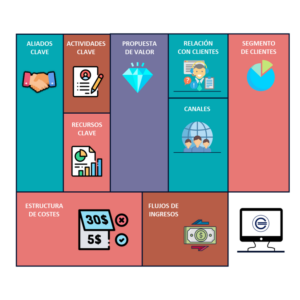
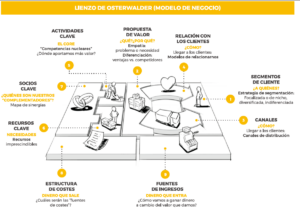
Una de las herramientas más útiles para lograrlo es el Business Model Canvas, que permite entender cómo un negocio crea valor, entrega valor y genera ingresos.


1. Empieza con el Cliente

Todo negocio comienza con personas.

Por eso el primer paso es identificar los segmentos de clientes que más se beneficiarán de tu propuesta.

Muchos emprendedores intentan venderle a todos. Sin embargo, suele ser mejor empezar con uno:

  • ¿Quién tiene el problema más urgente?
  • ¿Quién puede pagar hoy?
  • ¿Quién valorará más tu solución?

El enfoque genera avance.


2. Propuesta de Valor: Por Qué Te Eligen

La propuesta de valor explica por qué un cliente te escogería.

Puede ser:

  • Más rápido
  • Más fácil
  • Más económico
  • Más confiable
  • Más personalizado
  • Más innovador

Las personas no compran productos: compran resultados.


3. Canales y Relaciones

Los canales son la forma en que llegas al cliente:

  • Redes sociales
  • Tienda en línea
  • Punto físico
  • Referidos
  • Alianzas

Las relaciones con clientes crean confianza:

  • Atención personalizada
  • Automatización
  • Comunidad
  • Membresías
  • Seguimiento postventa

Conseguir clientes importa. Conservarlos importa más.


4. Ingresos, Recursos, Actividades y Alianzas

Los ingresos pueden ser:

  • Venta única
  • Suscripción
  • Membresía
  • Contratos recurrentes

Los recursos clave incluyen:

  • Herramientas
  • Marca
  • Equipo humano
  • Capital

Las actividades clave incluyen:

  • Marketing
  • Ventas
  • Producción
  • Servicio

Las alianzas estratégicas aceleran el crecimiento.

Innovar rara vez es un esfuerzo solitario.


Conclusión

El Business Model Canvas convierte la incertidumbre en claridad.

Cuando entiendes al cliente, defines valor y organizas recursos, una idea deja de ser sueño y empieza a ser negocio.

The Business Model Canvas: A Tool for Entrepreneurs and Innovators

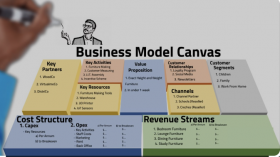
¿Quieres iniciar tu propio negocio? ¿Eres emprendedor y deseas acelerar el crecimiento rentable mejorando tu modelo de negocio? ¿Eres intraemprendedor dentro de una organización con una nueva idea capaz de hacer sonreír a tus clientes y llorar a tus competidores? Si es así, el Business Model Canvas es el mejor lugar para comenzar.

Bibliografia aqui

Cap 6 Canvas - Telling your Story

Labor Day: The Value of Work, Dignity, and the Future We Must Protect

Behind every city skyline, every school, every hospital, every road, and every business, there are workers. Hands that built, minds that solved, hearts that persevered. Yet many of the rights people now consider normal—reasonable schedules, safer workplaces, paid leave, fair wages, and time to rest—were not always guaranteed.

Labor Day is more than a holiday or a long weekend. It is a reminder that progress often comes through sacrifice, organization, courage, and the belief that human dignity should never be optional.

In both Mexico and the United States, labor history includes struggle, reform, and resilience. Today, as technology and artificial intelligence reshape the economy, Labor Day also invites a new question:

How do we protect people while embracing progress?


1. Why Labor Day Exists: The Problems That Sparked Change

In the late 19th and early 20th centuries, many workers in North America faced difficult conditions:

  • Extremely long workdays, often 10 to 16 hours
  • Child labor
  • Unsafe factories and mines
  • Low wages
  • No paid vacation
  • No health protections
  • Little job security
  • Few rights to organize collectively

In the United States

Industrial expansion created wealth, but many workers faced dangerous environments and exhausting schedules. Labor movements pushed for the 8-hour workday, workplace protections, and collective bargaining rights.

In Mexico

Workers also faced inequality, exploitation, and limited legal protections. Social demands during and after the Mexican Revolution helped shape stronger labor rights in the Constitution of 1917, including important worker protections.

Labor Day exists because previous generations insisted that productivity should not come at the cost of dignity.


2. Comparing Achievements: Mexico and the United States

Both countries made major progress, though through different systems and timelines.

Mexico

Mexico has historically recognized several labor protections in federal law, including:

  • Mandatory profit sharing in many cases
  • Paid vacation rights
  • Christmas bonus (aguinaldo)
  • Social security systems
  • Severance rules in many dismissals
  • Constitutional labor protections

United States

The U.S. developed protections through legislation and employer systems, such as:

  • Minimum wage laws
  • Overtime pay rules
  • Occupational safety standards
  • Anti-discrimination laws
  • Family and medical leave protections
  • Retirement plans through public and private systems

Reflection

Neither country is perfect. Both continue debating wages, informal work, healthcare access, gig work, union rights, and work-life balance.

Still, the broader lesson is powerful:

When workers are treated fairly, societies become more stable, productive, and hopeful.


3. The Arrival of AI: Risks and Opportunities for Workers

Artificial intelligence is transforming industries quickly. It can improve productivity, reduce repetitive tasks, and create new services. But it also creates concerns.

Risks

  • Automation of repetitive office and factory jobs
  • Pressure on wages in some sectors
  • Skill gaps for workers without digital training
  • Surveillance or excessive monitoring
  • Unequal benefits concentrated in a few companies

Opportunities

  • New careers in data, tech support, design, AI oversight, and education
  • Better tools for small businesses and entrepreneurs
  • Faster learning and productivity for workers
  • Safer operations in hazardous environments

The key issue is not AI alone—it is how society manages the transition.

Workers need:

  • Reskilling opportunities
  • Lifelong learning
  • Fair policies
  • Human-centered leadership
  • Ethical technology standards

Progress should upgrade people, not discard them.


4. What We Can Do Personally: Growth, Success, and Happiness

Labor Day is also personal. It asks us to reflect on our own relationship with work.

As Workers

  • Keep learning new skills
  • Protect mental and physical health
  • Understand workplace rights
  • Build professionalism and adaptability

As Leaders or Employers

  • Treat people with respect
  • Reward effort fairly
  • Create safe and healthy environments
  • Use technology responsibly

As Citizens

  • Support policies that encourage opportunity and dignity
  • Value all forms of honest work
  • Avoid measuring worth only by income or title

Success is not only salary. Happiness also includes balance, meaning, growth, and being respected.

A society that honors work should also honor the worker.


Conclusion

Labor Day reminds us that rights many people enjoy today were earned through persistence and solidarity. It also reminds us that each generation faces new challenges.

Yesterday it was unsafe factories and extreme hours. Today it may be inequality, burnout, and technological disruption.

The goal remains the same:

Build economies where progress includes people.

Whether in Mexico, the United States, or anywhere else, work should create opportunity—not erase dignity.

Bibliography (APA)

International Labour Organization. (2024). World employment and social outlook. ILO.
OECD. (2024). Employment outlook. OECD Publishing.
Secretaría del Trabajo y Previsión Social. (2024). Marco laboral en México. Gobierno de México.
U.S. Department of Labor. (2024). History of Labor Day. United States Government.
World Economic Forum. (2024). The future of jobs report. WEF.

Labor Day

World Family Day: The Home Where Society Begins

Before a child knows the world, they know a home. Before they understand laws, politics, or economics, they learn love, limits, trust, language, and behavior through family life. For many people, family is the first school, the first support system, and the first place where hope is formed.

Yet not every family experiences peace or stability. Some live under stress, separation, addiction, violence, economic hardship, or emotional distance. When families struggle, communities often feel the impact through school problems, mental health challenges, loneliness, violence, and juvenile delinquency.

That is why World Family Day is more than a symbolic date. It is an invitation to reflect on how families shape the future of society. Strong families help build safer neighborhoods, healthier economies, and more compassionate generations.

Whether traditional, blended, single-parent, adoptive, multigenerational, or chosen families, the message is the same: when families are supported, society grows stronger.


1. Why Families Matter for Social and Economic Progress

Families are where many life skills begin:

  • Communication
  • Respect
  • Responsibility
  • Emotional regulation
  • Cooperation
  • Work ethic
  • Care for others

These qualities are not only personal virtues—they are economic and social assets. Children who grow in stable, supportive environments are often better prepared for education, employment, and healthy relationships.

Families also support society in practical ways:

  • Caring for children and elders
  • Sharing resources during difficult times
  • Encouraging education
  • Providing emotional resilience
  • Reducing isolation

When families function well, public systems face less pressure. Schools, healthcare systems, and justice systems often perform better when homes provide stability.

This does not mean families must be perfect. It means connection, consistency, and care matter deeply.


2. Social Problems in Mexico and the USA: Different Contexts, Shared Challenges

Mexico and the United States have different histories and systems, yet many family-related challenges overlap.

In Mexico

Some common concerns include:

  • Economic inequality and informal employment
  • Migration that separates family members
  • Domestic violence
  • School dropout in vulnerable communities
  • Youth recruitment by criminal groups in some regions
  • Limited mental health support in many areas

Many families work incredibly hard under pressure, often balancing multiple jobs while trying to protect children and preserve unity.

In the United States

Some common concerns include:

  • Family fragmentation and social isolation
  • Substance abuse crises in some communities
  • Youth anxiety, depression, and loneliness
  • Gun violence affecting families and schools
  • Housing affordability stress
  • Overwork and limited time for family connection

Despite differences, both countries face a shared question:

How do we help families remain emotionally strong in a rapidly changing world?


3. How Society Is Changing—and What Families Need Now

Modern life brings opportunities, but also new pressures.

Major Changes Affecting Families

  • More screen time and digital distraction
  • Faster lifestyles and less shared time
  • Economic uncertainty
  • Increased mental health stress
  • Diverse family structures
  • Greater mobility and migration
  • Social media comparison culture

Children today may have more technology than previous generations, but not always more guidance. Parents may have more tools, but less time.

This is why intentional family culture matters more than ever.

Families do not need luxury. They need:

  • Presence
  • Listening
  • Boundaries
  • Shared values
  • Encouragement
  • Time together
  • Safe emotional spaces

A dinner conversation, a bedtime talk, a calm correction, or a sincere apology can shape a child more than expensive gifts.


4. What We Can Do Personally: Building Stronger Homes and Futures

World Family Day is not only for governments or institutions. It begins with everyday choices.

At Home

  • Listen without interrupting
  • Create routines and shared meals
  • Reduce shouting and increase dialogue
  • Set limits with kindness
  • Celebrate effort, not only results
  • Ask children how they feel

As Individuals

  • Heal our own emotional wounds
  • Learn communication skills
  • Seek help when needed
  • Become dependable adults
  • Model respect and honesty

In Communities

  • Support mentoring programs
  • Volunteer in schools or youth centers
  • Encourage sports, arts, and learning spaces
  • Help families under stress without judgment

Strong societies are built through millions of small acts of care.

Success is not only career achievement. Happiness is also having a place where you feel seen, safe, and valued.


Conclusion

World Family Day reminds us that the future of any nation is quietly shaped in kitchens, living rooms, school pickups, bedtime talks, and difficult conversations handled with love.

Not every family begins with ideal conditions. Some carry pain across generations. But healing is possible. New patterns can begin with one person choosing patience, responsibility, and care.

Let this day be a reminder:

When we strengthen families, we strengthen children. When we strengthen children, we strengthen the world.

Bibliography 

Amato, P. R. (2014). The consequences of divorce for adults and children. Journal of Marriage and Family, 62(4), 1269–1287.
Bronfenbrenner, U. (1979). The ecology of human development. Harvard University Press.
UNICEF. (2023). Family-friendly policies and child well-being. UNICEF.
United Nations. (2024). International Day of Families: Background and themes. United Nations.
World Health Organization. (2023). Violence prevention and family well-being. WHO.

World Family Day

Nanotechnology: A Small Tool with Big Potential in Agriculture

Introduction

Imagine a future where farmers can protect their crops, reduce waste, and deliver safer food to our tables—all thanks to particles so small they are invisible to the human eye. Nanotechnology, often seen as futuristic, is already opening doors to a more sustainable and secure food system. As agronomists and consumers, we must understand its potential, not with fear, but with empathy and innovation.


Precision Agriculture and Smart Farming

Nanotechnology enables precision agriculture, where nanosensors monitor soil moisture, nutrient levels, and plant health in real time.

  • Farmers can apply water and fertilizers only when needed, saving resources.

  • Nanosensors detect early signs of disease, allowing preventive action before crops are lost. This means healthier plants, lower costs, and more resilient harvests.


Nanoparticles for Plant Health and Growth

Metallic nanoparticles like copper, zinc, iron, and silver have shown positive physiological effects on plants:

  • Copper and zinc strengthen plant defenses against pathogens.

  • Iron nanoparticles improve photosynthesis and nutrient absorption.

  • Silver nanoparticles act as antimicrobial agents, reducing postharvest losses. Carbon-based nanomaterials also enhance root development and stress tolerance. These innovations can help farmers achieve higher yields with fewer chemical inputs.


Food Safety and Longer Shelf Life

Nanotechnology is not limited to the field—it extends to our kitchens.

  • Nanocoatings on packaging can slow down spoilage, keeping fruits and vegetables fresh longer.

  • Antimicrobial films with silver or carbon nanoparticles prevent contamination.

  • Smart packaging with nanosensors can alert consumers when food is no longer safe. This reduces food waste and ensures safer meals for families worldwide.


Nanofertilizers, Nanopesticides, and Genetic Improvement

Traditional fertilizers and pesticides often harm the environment. Nanotechnology offers alternatives:

  • Nanofertilizers release nutrients slowly and efficiently, reducing runoff.

  • Nanopesticides target pests precisely, minimizing collateral damage to beneficial insects.

  • Nanotechnology can even assist in plant genetic improvement, delivering DNA or RNA molecules directly into cells for faster, safer breeding. These tools empower farmers to innovate responsibly.


Conclusion

Nanotechnology is not a magic solution, but a powerful ally. Its promise lies in empathy—helping farmers, protecting consumers, and caring for the planet. By embracing innovation with responsibility, we can build an agricultural future that is productive, safe, and sustainable.


References (APA format)

  • Chen, H., Weiss, J., & Shah, I. D. (2006). Nanotechnology in food science: Functionality, safety, and regulatory issues. Journal of Food Science, 71(9), R107–R116.

  • Rai, M., Ingle, A. P., & Gupta, I. (2015). Nanotechnology for agriculture: Crop production, protection, and food safety. Applied Microbiology and Biotechnology, 99(22), 9921–9936.

  • Servin, A., & White, J. C. (2016). Nanotechnology in agriculture: Next steps for responsible use. Environmental Science: Nano, 3(3), 494–499.

Encabezado de Video aqui

How Will Customers Find You and Stay With You? Mastering Channels and Customer Relationships in the Business Model Canvas

Introduction

Many businesses fail not because their product is bad, but because customers never discover it—or they buy once and never return. This can be painful for entrepreneurs who invest time, money, and hope into something meaningful.

A great idea needs more than quality. It needs visibility, trust, and connection. That is why two of the most powerful parts of the Business Model Canvas are Channels and Customer Relationships.

These blocks help answer practical questions: How will people find us? How will we serve them? Why will they come back? They also push founders to observe the world around them: What regulations are coming? How is society changing? Who are our competitors, and what are they doing well?

When understood correctly, these blocks turn a business into a living relationship with the market.


## 1. Channels: How Your Value Reaches the Customer

Channels are the ways a company communicates with customers and delivers its value proposition. Even the best product can struggle if the wrong channel is used.

Common channels include:

  • Website or online store
  • Social media
  • Email marketing
  • Retail stores
  • Distributors
  • Mobile apps
  • Events and networking
  • Partnerships and affiliates

Good channels perform five tasks:

  1. Create awareness
  2. Help customers evaluate your offer
  3. Make purchasing easy
  4. Deliver the product or service
  5. Provide after-sales support

For example:

  • A handmade brand may grow through Instagram and marketplaces.
  • A consulting firm may rely on LinkedIn and referrals.
  • A food business may need delivery apps and local presence.

The goal is not to be everywhere. It is to be where your customers already are.


## 2. Customer Relationships: Why They Return and Recommend You

Customer relationships define how you interact with people before, during, and after the sale.

Types of relationships include:

  • Personal assistance
  • Self-service
  • Automated service
  • Communities
  • Membership programs
  • Dedicated account management
  • Co-creation (customers help improve products)

Strong relationships build loyalty, reduce marketing costs, and create trust.

Ask yourself:

  • How quickly do we respond?
  • Do customers feel heard?
  • Is buying simple and pleasant?
  • Do we stay connected after purchase?

A first sale creates income. A second sale creates stability.

In many industries, kindness and consistency are competitive advantages.


## 3. What Regulations Are Coming? How Is Society Changing?

Smart entrepreneurs do not only study customers—they study the future.

Regulations and social trends influence channels and relationships more each year. Depending on the country and industry, common changes include:

Emerging Regulations

  • Data privacy rules
  • Consumer transparency requirements
  • Digital invoicing and tax compliance
  • Sustainability reporting
  • Accessibility standards for websites and services

Social Changes

  • Customers expect faster responses
  • More people prefer online purchasing
  • Trust in reviews and communities is growing
  • Buyers value ethical and sustainable brands
  • Personalization is becoming normal

So when someone asks, “What regulations are coming? How is this society changing, Carl?” the real lesson is this:

Businesses must stay curious, adaptable, and informed.

Companies that listen early adjust faster.


## 4. Who Are Your Competitors? What Advantages Do They Have?

Competitors are not enemies—they are teachers.

Study three things:

Their Channels

Where do they attract attention? Social media? Stores? Partnerships?

Their Relationships

Do they offer faster service, stronger communities, subscriptions, loyalty rewards?

Their Business Model Advantages

  • Lower costs
  • Better convenience
  • Stronger brand recognition
  • Better technology
  • Better customer experience
  • Faster delivery
  • More trust

Then ask:

  • What do they do well?
  • Where are customers still frustrated?
  • How can we be different instead of copying?

Success often comes not from being bigger—but from being more relevant.


Conclusion

Channels and Customer Relationships remind us that businesses grow through connection, not only transactions.

Your product may be excellent—but if people cannot find you, trust you, or remember you, growth becomes difficult.

Ask yourself today:

Where will customers meet us? How will they feel when they do?

That answer can transform a startup into a brand people choose again and again.

Bibliography (APA)

Blank, S., & Dorf, B. (2020). The startup owner’s manual. K&S Ranch.
Osterwalder, A., & Pigneur, Y. (2010). Business model generation. Wiley.
Ries, E. (2011). The lean startup. Crown Business.
Kotler, P., & Keller, K. (2016). Marketing management (15th ed.). Pearson.

Cap 5 Canvas - Proving It

World Autism Awareness Day: Empathy, Planning, and the Power of Understanding

Seeing the World Through a Different Lens

Imagine navigating a world that feels louder, brighter, and more unpredictable than it does for others. For millions of individuals living with Autism Spectrum Disorder (ASD), this is part of everyday life.

Recognized every April 2nd as World Autism Awareness Day, this day is not just about awareness—it is about understanding, inclusion, and action. As a financial and life insurance advisor, I’ve seen firsthand how empathy combined with proper planning can transform uncertainty into stability and opportunity.


Health and Emotional Well-Being: The Foundation of Stability

Autism is not a limitation—it is a different way of experiencing the world. However, individuals on the spectrum may face challenges related to communication, sensory processing, or social interaction.

Families often benefit from early intervention, therapies, and consistent routines. Emotional well-being improves significantly when environments are supportive and predictable.

Empathy plays a central role here. Understanding that behaviors often communicate unmet needs allows families and communities to respond with patience instead of frustration.


Financial Planning: Building Security for the Long Term

One of the most overlooked aspects of autism support is financial planning. Caring for a loved one with ASD often involves long-term commitments, including healthcare, specialized education, and assisted living.

Tools such as life insurance, education funds, and structured savings plans can help families prepare for the future. A well-designed life insurance policy, for instance, can ensure that dependents are financially protected even in the absence of a primary caregiver.

The goal is not complexity—it is clarity. Simple, consistent financial habits can provide peace of mind and protect what matters most.


Self-Improvement and Inclusion: Growth for Everyone

Autism awareness is not only about those diagnosed—it is about all of us. It challenges society to become more inclusive, patient, and adaptable.

For individuals, learning about autism fosters emotional intelligence. For organizations, it opens doors to diverse talent, as many individuals with ASD bring unique strengths such as attention to detail, creativity, and analytical thinking.

Personal growth begins when we shift from judgment to curiosity.


Success and Happiness: Redefining What Matters

Success should not be measured by conformity but by well-being and fulfillment. Many individuals with autism lead meaningful, productive lives when given the right support systems.

Families who embrace both emotional and financial preparedness often report greater peace and resilience. Happiness, in this context, comes from acceptance, planning, and connection.


Awareness That Leads to Action

World Autism Awareness Day reminds us that understanding is the first step—but action is what creates change.

By combining empathy with practical tools like financial planning and protection strategies, we can build a more inclusive and secure future for everyone.

Because true awareness is not just about seeing differences—it’s about supporting them with intention.

Bibliography 

  • American Psychiatric Association. (2022). Diagnostic and statistical manual of mental disorders (5th ed., text rev.).
  • World Health Organization. (2023). Autism spectrum disorders.
  • United Nations. (2024). World Autism Awareness Day.
  • Autism Speaks. (2023). What is Autism?
  • National Institute of Mental Health. (2022). Autism Spectrum Disorder.

Encabezado de Video aqui