Financial Intelligence for Entrepreneurs:

How to Use the Profit and Loss Statement to Make Better Business Decisions

In entrepreneurship, many decisions are driven by instinct, experience, or urgency. But as a business grows—or struggles—intuition alone is no longer enough. At that point, financial intelligence becomes a critical skill for survival and sustainable growth.

Financial intelligence does not mean becoming an accountant. It means understanding what the numbers are saying, how they are built, and how to use them to make better decisions. One of the most important—and misunderstood—financial reports is the profit and loss statement, also known as the income statement.

Why the Profit and Loss Statement Matters

The P&L shows how well your business performed over a specific period. Unlike the balance sheet, which is a snapshot in time, this report tells a story:

  • How money came in

  • Where it went

  • What actually remained as profit

Entrepreneurs who don’t understand this report often:

  • Confuse revenue with profitability

  • Scale without cost control

  • Make decisions based on cash, not performance

The Structure of the Profit and Loss Statement

Every income statement follows three core sections: revenue, costs and expenses, and profit.


1. Revenue: More Than Just Sales

Revenue reflects money generated from products or services. But a key question is: when is a sale truly recognized?

In long-term contracts, subscriptions, or staged deliveries, revenue recognition involves management judgment. This flexibility can be legitimate—but also misleading if misunderstood.

👉 Entrepreneur tip: Don’t just look at sales numbers. Ask how and when revenue is recognized.


2. Costs and Expenses: Where Profit Is Won or Lost

Cost of Goods Sold (COGS)

Direct costs related to production or service delivery:

  • Materials

  • Direct labor

  • Production costs

What’s included here affects margins and must be applied consistently.

Operating Expenses

All other costs required to run the business:

  • Sales and marketing

  • Administration

  • Rent, systems, depreciation

This section reveals whether the business structure is efficient—or bloated.


3. Profit Levels That Matter

Gross Profit

Shows core business profitability.

Operating Profit (EBIT)

Measures performance from core operations, before financing and taxes.

Net Profit

The bottom line. The true result of strategy, discipline, and execution.


Final Thought

Financial intelligence is about leading with numbers, not reacting to them. The profit and loss statement is not just a report—it’s a management tool.

👉 Entrepreneurs who understand their P&L stop guessing and start leading.

Bibliography

  • Brigham, E. F., & Ehrhardt, M. C. (2020). Financial Management: Theory & Practice. Cengage Learning.

  • Fraser, L. M., & Ormiston, A. (2016). Understanding Financial Statements. Pearson Education.

  • Harvard Business School Publishing. (2014). Financial Intelligence for Entrepreneurs. Harvard Business Review Press.

  • Stickney, C. P., Weil, R. L., Schipper, K., & Francis, J. (2019). Financial Accounting: An Introduction to Concepts, Methods, and Uses. Cengage Learning.

Profit and Loss Statement – Practical example

The Stock Market in Mexico and the United States

What Is the Stock Market?

The stock market is the system that enables the issuance, placement, distribution, and trading of financial securities. In simple terms, it’s the marketplace where companies, governments, and investors meet—some seeking funding, and others looking to earn returns on their investments.

In every stock market, there are two main players:

  • Issuers – corporations or government entities that raise capital by issuing securities such as stocks or bonds.

  • Investors – individuals or institutions who buy those securities, seeking profit through dividends, interest, or price appreciation.

The stock market serves as a bridge that channels savings into productive investment, allowing companies to grow while giving investors the opportunity to participate in that growth.


The Stock Market in Mexico

The Mexican stock market is regulated by the Securities Market Law and supervised by the National Banking and Securities Commission (CNBV). Its primary trading platform is the Mexican Stock Exchange (BMV), with the Institutional Stock Exchange (BIVA) also operating since 2018.

According to the BMV, this market “channels savings toward productive investment through transparent and competitive mechanisms.” For companies, it provides access to capital without relying solely on bank loans. For investors, it offers portfolio diversification and a way to participate in the country’s economic growth.

Key Instruments in Mexico

  • Stocks (Acciones) – represent ownership shares in a company.

  • Bonds or Notes (Bonos u Obligaciones) – debt instruments that pay periodic interest.

  • Securities Certificates (Certificados Bursátiles) – medium- or long-term debt instruments.

  • CKDs and CERPIs – investment vehicles focused on infrastructure, energy, or innovation projects.

These securities are issued in series or in bulk and may be acquired by both institutional and individual investors.

Why It Matters for Entrepreneurs and Business Owners

For entrepreneurs, understanding this market is key to exploring how to fund business growth through the issuance of debt or equity. For established companies, being listed on the stock exchange enhances their reputation, improves transparency, and attracts domestic and foreign investors.

Mexico’s Market Characteristics

The Mexican capital market is relatively smaller and less liquid than the U.S. market but offers a stable regulatory environment and growing opportunities for medium and large enterprises. Reforms to the Securities Market Law (2024) aim to make listings more accessible to small and mid-sized firms.


The Stock Market in the United States

The U.S. stock market is the largest and most liquid in the world. It includes the New York Stock Exchange (NYSE) and NASDAQ, both regulated by the U.S. Securities and Exchange Commission (SEC).

Its primary role is the same—connecting companies that need capital with investors seeking profitable opportunities—but its depth and global influence make it a reference model for capital markets worldwide.

Main Instruments in the U.S.

  • Common Stocks – provide ownership and voting rights.

  • Corporate Bonds – debt instruments issued by corporations with fixed or variable yields.

  • ETFs and Mutual Funds – pooled investment vehicles for diversification.

  • Options and Futures – derivatives used for hedging or speculative strategies.

The U.S. market’s high liquidity and strict regulation make it attractive but demanding. Transparency, accurate reporting, and compliance are fundamental for success.

Importance for Businesses and Entrepreneurs

For business owners, issuing securities in the U.S. means access to a vast investor base and higher visibility. However, it also involves stricter reporting, governance, and disclosure requirements. For investors, it represents a broad landscape of instruments and industries with global reach.


Comparison: Mexico vs. the United States

AspectMexicoUnited States
RegulationSupervised by CNBV under the Securities Market Law.Regulated by SEC under multiple federal laws.
LiquidityLower trading volume, stable local environment.Highest liquidity and depth worldwide.
AccessibilityFocused on medium and large companies.Broad access, but costly and heavily regulated.
OpportunitiesIdeal for national or regional expansion.Offers global exposure and investor reach.

Both markets share the same purpose: to channel savings into productive investment. They differ, however, in scale, liquidity, and regulation. A Mexican entrepreneur might begin locally with the BMV and later consider a cross-border listing in the U.S. as the business grows.


Practical Recommendations

1. Plan with a Long-Term Vision

Before issuing or investing, define your objectives—whether growth, expansion, or diversification.

2. Strengthen Transparency

Investor confidence relies on consistent, accurate, and timely information.

3. Seek Professional Advice

A qualified financial or legal advisor with capital markets experience can help avoid costly mistakes.

4. Diversify

Spread your investments across different instruments, industries, or even countries to mitigate risk.


Conclusion

Whether in Mexico or the United States, the stock market is a powerful platform for economic development, innovation, and business expansion. Understanding how it operates is not only valuable for investors but essential for every entrepreneur and executive seeking long-term growth, credibility, and financial sustainability.

By leveraging the opportunities each market offers—and managing their differences wisely—businesses can access capital, build trust, and expand their vision beyond borders.

References

Bolsa Mexicana de Valores. (n.d.). Acerca de la BMV. Retrieved from https://www.bmv.com.mx/es/grupo-bmv/acerca-de

Cámara de Diputados. (2024). Ley del Mercado de Valores. Diario Oficial de la Federación. Retrieved from https://www.diputados.gob.mx/LeyesBiblio/pdf/LMV.pdf

Investopedia. (n.d.). What Is the Stock Market and How Does It Work? Retrieved from https://www.investopedia.com/terms/s/stockmarket.asp

U.S. Securities and Exchange Commission (SEC). (n.d.). Investor.gov – Introduction to Investing. Retrieved from https://www.investor.gov

Saxo Bank. (n.d.). A Guide to Investing in U.S. Equities. Retrieved from https://www.home.saxo/learn/guides/equities/us-equities-guide

BBVA México. (n.d.). Mercado de Capitales. Retrieved from https://www.bbva.mx

The Stock Market

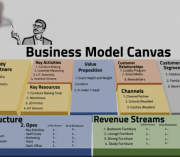
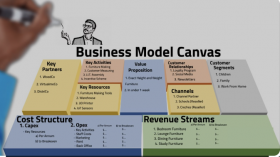
Visualizing Your Business Model – The Business Model Canvas

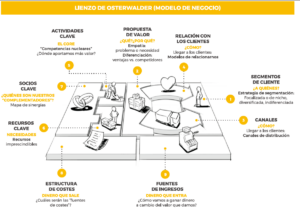
El modelo Canvas te permite concentrarte en tu modelo de negocio segmento por segmento.

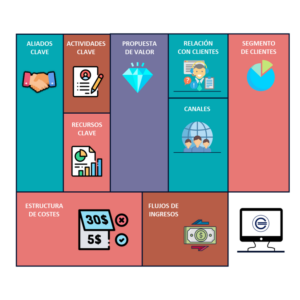
The 9 Elements of the Business Model Canvas.


The starting point for a good discussion about developing a business model is having a shared understanding of what a business model is.

Alex Osterwalder and Yves Pigneur, authors of the best-selling book «Business Model Generation,» define a business model as «the reason why an organization creates, delivers, and captures value.» So, to reiterate, a business model is the reason why an organization creates, delivers, and captures value.

Alex and Yves believe that a business model can be best described through nine basic building blocks, which illustrate the logic of how a company intends to acquire customers and generate revenue. This is why they invented the Business Model Canvas.

1. Customer Segments.


For building block 1, the business model experts at Cavas recommend starting with customer segments. So we’ll need to identify and define our customer segments. Typically, there are between five and seven segments.

2. Value Proposition.


In building block number 2, value propositions, we must determine what value we can create to deliver what will be most important to our chosen customer segment.

How compelling is your value proposition? Why do your customers consume your product? Why do they buy it?

The value proposition is the core of a company’s reason for being and is how you satisfy customer needs.

3. Channels.


In block 3, the question is which channels we will use, and for this, we need to determine how we will communicate and deliver the value propositions to our customer segment.

How are your products or services promoted, sold, and delivered? Why? Are they working?

4. Customer Relationships.


In Block 4, Customer Relationships, we must critically identify how we can build better, more authentic relationships with customers and strategic partners that lead to deep trust and loyalty.

How do you interact with the customer throughout their journey?

5. Revenue Streams.


Block 5, Revenue Streams, focuses on capturing the value we create and deliver. How do we generate a reasonable amount of revenue for our efforts?

How does your value proposition generate revenue?

6. Key Resources.


Block 6, Key Resources, focuses on the assets we need to deliver our value propositions. Key resources are typically divided into four categories: physical, human, intellectual, and financial.

What unique strategic assets does my business possess to compete?

7. Key Activities.


Next, in Block 7, are the key activities, which are the most important actions the company takes to operate successfully. Activities typically include operations, production, sales and marketing, and financial management.

What unique strategies does your business have for delivering its value proposition to the customer?

8. Key Partnerships.


Section 8 comprises Key Partnerships, which are very important and, in many ways, have become the cornerstone of most business models. Alliances typically include strategic alliances between non-competing companies, joint ventures, or, more recently, the co-creation of value with customers.

What activities can the company discontinue to focus on its key activities?

Creating alliances with partners is important for both startups and established organizations.

9. Cost Structure.


Finally, section 9, but certainly not least, is the cost structure. For this, we will need to identify all the costs involved in creating and delivering the customer value proposition that we promise in our business model.

What are the company’s main cost drivers? How do they relate to revenue?

By understanding your cost structure, you’ll know the minimum sales volume required to generate a profit. The cost structure considers economies of scale, fixed costs, variable costs, and profit.

The Starbucks Business Model Canvas, for example, places particular emphasis on different activities related to the company’s performance over the years. As we can see, expansion into new markets is ranked first among the key activities, while the coffee experience is recognized as the primary aspect of the value proposition.

Coca-Cola, on the other hand, focuses much of its Business Model Canvas on product distribution and the…

Bibliografia:

Sistema Universitario de Georgia. (sf). Del curso; «Model Business Canvas: una herramienta para emprendedores e innovadores»

Visualizing Your Business Model – The Business Model Canvas

Project Control: The Strategic Compass for Project Managers

Understanding Control in Project Management

In project management, control is not merely a procedural step—it’s the backbone that ensures objectives are achieved as planned.
Control can be defined as “the process of monitoring activities to ensure they are accomplished as planned and correcting any significant deviations.”

Without control, even the most detailed project plan becomes a wish list. A strong control system allows project managers to evaluate performance, detect variances early, and take corrective action to keep the project aligned with its goals.

An effective control system does more than track progress—it ensures that every activity contributes directly to achieving the organization’s objectives. As management theory states, the real measure of control effectiveness is how well it helps managers meet organizational goals.


Why Control Matters for Project Managers

For project managers, control is both a discipline and a safeguard. Its importance lies in ensuring that strategy turns into tangible results. Some of the key reasons control is indispensable include:

  • Performance Comparison: Control provides a structured way to compare actual performance with what was planned. Without this, managers cannot assess whether progress is on track.

  • Deviation Detection: It helps identify cost overruns, schedule delays, and quality issues before they escalate into major problems.

  • Strategic Alignment: Control mechanisms ensure that every task remains connected to the broader strategic objectives of the organization.

  • Risk Mitigation: Early detection of deviations allows for preventive and corrective measures, reducing the impact of uncertainty and risks.

  • Transparency and Communication: Reliable control data fosters trust and clear communication among stakeholders, enabling informed decision-making.

In short, control transforms uncertainty into actionable insight. It’s what allows managers to steer projects proactively rather than reactively.


Key Methodologies and Tools for Effective Control

Modern project management offers various methodologies and tools to establish strong control mechanisms. The choice depends on the project’s nature, scope, and complexity:

  • Earned Value Management (EVM): Integrates scope, time, and cost to assess project performance and predict future trends.

  • Work Breakdown Structure (WBS): Divides the project into manageable components, allowing control at multiple levels.

  • Gantt Charts and Kanban Boards: Offer visual tracking of timelines, dependencies, and workflow.

  • Critical Path Method (CPM): Identifies key activities that directly impact the project’s completion date.

  • Risk, Change, and Quality Control: Beyond scope and schedule, effective control extends to quality assurance, stakeholder engagement, and change management.

Successful project managers often blend these tools—choosing the right mix that aligns with their organization’s culture and project dynamics.


The Eight Key Steps of Project Control

Implementing a robust control system requires following a structured process. The following steps outline a practical roadmap for project managers:

  1. Define Standards and Baselines: Establish clear performance expectations in scope, schedule, cost, and quality. Without a baseline, there’s no benchmark for comparison.

  2. Monitor Actual Performance: Collect real-time data on progress, costs, resources, and quality metrics.

  3. Compare Actual vs. Planned Results: Identify any discrepancies between expected and actual outcomes.

  4. Analyze Deviations: Determine root causes—planning errors, execution gaps, unforeseen risks, or uncontrolled changes.

  5. Take Corrective or Preventive Actions: Implement measures to realign the project—reallocate resources, adjust schedules, or negotiate scope changes.

  6. Adjust the Control System: A good control system evolves; adapt it to changing project contexts or agile environments.

  7. Communicate Results and Adjustments: Keep stakeholders informed about progress, risks, and mitigation plans to maintain transparency.

  8. Review and Learn: At project closure, document lessons learned and assess control effectiveness to improve future performance.

These steps ensure that control remains dynamic, data-driven, and aligned with strategic priorities.


Conclusion: Control as a Leadership Practice

For project managers, control is not about surveillance—it’s about steering.
When applied with insight and consistency, control transforms management from routine oversight into a leadership tool that ensures value creation.

An effective control system is one that enables goal achievement, not one that merely reports deviations. So the key question every project manager should ask is:

“Does my control system truly help me achieve the project’s and the organization’s objectives?”

If the answer is yes, control becomes not a constraint—but your most powerful lever for success.

References 

Mastering Control: The Art of Keeping Projects on Track

From Idea to Business Model – The Business Model Canvas

Are you interested in starting your own business? Are you an entrepreneur looking to accelerate profitable growth by improving your business model? Are you an intrapreneur within an organization with a new idea that could make your customers smile and your competitors cry?

If so, the Business Model Canvas is the best place to start. It’s a proven tool for creating, evaluating, or reinventing a business model.

According to some estimates, 8 out of 10 businesses fail within the first two years due to flawed business planning. However, there are support tools available to change that. The Business Model Canvas allows you to focus on your business model segment by segment.

What is the Business Model Canvas?

It’s a strategic management tool that allows you to understand the key aspects of your business: how they relate to and compensate for each other. It makes your organization’s infrastructure, value proposition, customers, and financial situation visible so you can identify weaknesses and analyze performance.

It was developed by business consultant Alexander Osterwalder and information systems and management professor Yves Pigneur. They defined nine categories for the model, representing the basic components of an organization.

Importance of the Canvas Model

The Canvas model is an ideal tool for understanding a business model in a more direct and structured way. Using it will help you visualize your customer information, the value propositions you offer, the channels through which you sell, and how your company makes money. Furthermore, you can use the Canvas model not only to understand your own business model but also that of your competitors.

Likewise, it’s a tool that allows you to have a global view of your business, which will facilitate innovation to adapt to market changes. It not only helps you understand who your customers and products are but also ensures that all members of your organization share the same focus.

As a qualitative tool, it should be complemented with quantitative models such as data and numerical analysis, as well as financial, accounting, marketing, and other tools.

Once the Canvas model is structured, it can shape your company, generate new ideas for implementation, and innovate for all the changes you want and need.

What is the Canvas model used for?
The Canvas model is used to identify the essential aspects of a business model, presenting them in a structured way so that you can find relevant activities, areas for improvement, potential alternatives to the existing model, and more.

Let’s look in more detail at what the Canvas model is used for:

1. It allows you to identify the essentials
With the Canvas model, you have an overview of what your business model really is. It also shows which activities are not as relevant or even which ones get in the way of achieving your goals. It focuses your vision on the essentials, and in this way, you can optimize your business model.

2. It provides a foundation for brainstorming
The Canvas model is the perfect starting point to let your ideas and those of your team flow freely. You can also test alternative models to complement your business idea and find new marketing possibilities.

3. It provides a structured presentation
The Canvas model presents your business in a clear and structured way, using a general and visual approach. This allows others to quickly understand and discuss your business model, and ensures that all areas of your project receive the information that is important to them and to the company.

4. It lays the foundation for your business plans
The Canvas model doesn’t replace a detailed business plan, but it provides a framework that will serve as the skeleton of your business plan.

Bibliografia:

Sistema Universitario de Georgia. (sf). Del curso; «Model Business Canvas: una herramienta para emprendedores e innovadores»

Cap 1 Canvas - De la idea al Modelo de Negocio

Business Information Systems: A Strategic Advantage for Entrepreneurs

In today’s competitive environment, entrepreneurs must make fast and accurate decisions to differentiate and grow. This is where information systems become critical tools, turning raw data into valuable insights that support both daily operations and long-term strategies.

What are information systems?

An information system is a structured process that collects, processes, and distributes information to support decision-making within organizations (Gómez Vietes & Suárez Rey, 2007). In simple terms, it transforms data into actionable knowledge that allows entrepreneurs to identify risks, opportunities, and improvement areas.

Types of information systems and their value

Information systems operate at different organizational levels (Proaño, Orellana, & Martillo, 2018):

  • Operational level (TPS): manage daily transactions such as sales, payments, or inventory.
  • Knowledge level (KWS and Office Systems): support professionals who create and manage information, fostering productivity and innovation.
  • Management level (MIS and DSS): provide reports and decision-support tools for managers, helping them analyze alternatives and scenarios.
  • Strategic level (ESS): used by executives for non-routine, complex decision-making.

Additionally, specialized systems offer unique benefits for entrepreneurs:

  • ERP (Enterprise Resource Planning): integrates finance, operations, logistics, and inventory into one system.
  • CRM (Customer Relationship Management): strengthens customer relationships, attracting and retaining valuable clients.
  • SCM (Supply Chain Management): optimizes supply chains, improving efficiency and reducing costs.
  • GIS (Geographic Information Systems): analyze location-based data for strategic decision-making, such as logistics or marketing.

Applications for entrepreneurs

Information systems not only improve efficiency, they also enable growth and innovation. Their value depends on how they are embedded into the company’s culture and how strategically they are used (Stair & Reynolds, 2010).

For entrepreneurs, these systems mean:

  • Better control over operations.
  • Reliable information for faster decision-making.
  • Greater agility to respond to market changes.
  • Competitive advantages in cost efficiency, service, and differentiation.

The internet and ICT (Information and Communication Technologies) have accelerated this transformation, making information systems indispensable for businesses aiming to compete globally.

Conclusion for entrepreneurs

Running a business without information systems is like navigating without a compass: you may move forward, but with a high risk of losing direction. Accurate and timely information is the most valuable resource for making strategic decisions, identifying opportunities, and adapting to market changes.

If you are starting your business, begin with simple solutions—like a CRM or inventory management software—and expand to more comprehensive systems as your business grows. Remember: competitive advantage does not come from having data alone, but from interpreting and using it to create value.

Entrepreneurs who integrate information systems into their strategy not only manage their businesses more effectively but also build a strong foundation to scale, innovate, and sustain long-term success.

References

Gómez Vietes, A., & Suárez Rey, C. (2007). Los sistemas y tecnologías de la información en la empresa. México D.F.: Alfaomega.

Lapiedra, R. A., Devece, C. C., & Guiral, J. H. (2011). Introducción a la gestión de sistemas de información de la empresa. España: Universitat Jaume.

Proaño, M., Orellana, S., & Martillo, I. (2018). Los sistemas de información y su importancia en la transformación digital de la empresa actual. Revista Espacios, 39(1).

Stair, R. M., & Reynolds, G. W. (2010). Principios de sistemas de información: un enfoque administrativo. México D.F.: Cengage Learning Editores S.A. de C.V.

Information Systems for Entrepreneurs

Differences between Plan, Program, Project, Activity, and Task

What do we mean by “Project”?

A project refers to a set of specific, interrelated, and coordinated activities, carried out with the purpose of producing certain goods or services that meet people’s needs or solve problems. For example, a course for senior citizens or an educational initiative.

When the planned action is complex, it may require a program that includes several projects. On the other hand, a simple task may be developed through a single project.


What does it mean to design and develop a project?

There is no rigid standard, but rather a set of guidelines to help organize ideas, define objectives, establish courses of action, identify specific activities, and set evaluation criteria. The general principles to consider include:

  • Defining what is to be achieved.

  • Effectively implementing decisions using both human and non-human resources (e.g., materials, technology, etc.).

  • Following a course of action that leads to specific results or deliverables.

  • Establishing criteria that allow for systematic evaluation of the outcomes.


Differences between: Plan, Program, Project, Activity, and Task

Let’s break down each concept to understand how they differ yet relate to each other:


Plan

Example: Training and Development Plan

A plan involves high-level decisions that express key political or strategic guidelines, priorities derived from those decisions, and the allocation of resources aligned with such priorities. It outlines the action strategies and tools to achieve the proposed goals. A plan defines the desirable and probable course of national or sectoral development (economic, social, or cultural).

Plans generally include multiple programs and projects, and act as the overarching technical and political framework within which programs and projects are developed.


Program

Example: Supervision Program

A program refers to an organized, coherent, and integrated set of activities, services, or processes, usually expressed through multiple interrelated or coordinated projects. Programs translate plans into action by implementing targeted efforts to meet objectives within a specific timeframe.

A program consists of one or more projects of similar nature, grouped under a broader plan.


Project

Example: Park Reforestation Project

A project is the intent or plan to execute a specific work or initiative. It involves forecasting, organizing, and planning a series of activities that combine human, material, financial, and technical resources to achieve a specific goal or result.

These activities are interconnected and coordinated. Every project is designed to produce a defined output or result, within the constraints of time and budget.

Key Features of a Project:

  • Has a defined duration (unlike ongoing services).

  • Combines human, technical, financial, and material resources.

  • Aims to achieve a specific result based on well-defined objectives.


Activity

Example: Conducting a Requirements Survey for Plant Operations

An activity is a means of intervention, consisting of sequential and integrated actions that help achieve the specific goals and objectives of a project. It is the functional unit that connects a project’s strategy to its execution.


Task

Example: Preparing Necessary Equipment

A task is the most concrete and specific element. It operationalizes an activity into actionable steps. A set of tasks makes up an activity.


Summary with Examples

Concept Example
Plan Social Services Plan
Program Childhood and Family Program
Project Organizing a Summer Camp
Activity Planning a Field Trip
Task Packing clothes and shoes

Final Thoughts


Plans, programs, and projects are strategic and administrative tools commonly used by institutions, particularly those involved in research, education, and development. They serve as essential conditions for achieving scientific or social objectives, often from the perspective of institutional planning and execution.

References

  • Chiavenato, I. (2006). Administración de proyectos. McGraw-Hill Interamericana.

  • Kerzner, H. (2017). Project Management: A Systems Approach to Planning, Scheduling, and Controlling (12th ed.). Wiley.

  • PMBOK® Guide. (2021). A Guide to the Project Management Body of Knowledge (7th ed.). Project Management Institute.

  • Zapico, E. (2001). Diseño y Evaluación de Proyectos Sociales. Editorial Trillas.

Differences between Plan, Program, Project, Activity, and Task

10 Steps to Build a Successful Project (Including Starting Your Own Business)

Launching a business is, in essence, a project—a temporary endeavor aimed at delivering a unique result. Applying structured project management principles can significantly increase your chances of success. Here are the 10 essential steps to guide your journey, whether you’re launching a startup or managing an internal project.

1. Identify the business need

Every project starts with a reason. Ask yourself: What problem am I solving? What opportunity am I pursuing? This clarity sets the foundation for focus, team alignment, and funding.

2. Define a SMART goal

Your goal must be: Specific, Measurable, Achievable, Relevant, and Time-bound. Choose a project name that reflects its purpose and can be used for branding and internal alignment.

3. Describe the deliverable

What will you deliver at the end? Be it a product, service, or system, having a well-defined deliverable helps measure project success effectively.

4. Identify stakeholders and communication needs

Stakeholders include clients, investors, team members, and even the community. Define their roles, expectations, and how you’ll communicate with them throughout the project.

5. Define the project scope

Clarify what the project will and will not include. This prevents scope creep and keeps the delicate balance between Scope-Time-Cost.

6. Establish assumptions (premises)

These are the conditions we assume to be true during planning. For example, “the market research will validate demand” or “we will receive permits on time”.

7. Recognize constraints

Time, budget, legal frameworks, resource availability—constraints define your playing field. Identify and document them clearly.

8. Identify and assess risks

What could go wrong? How likely is it? What would be the impact? Design mitigation strategies to deal with high-impact or high-probability risks.

9. Document and communicate the project plan

Your project plan should include a timeline, responsibilities, risks, budget, and progress reports. Maintain a project log and update stakeholders regularly.

10. Build and empower your project team

People are your most important asset. Share your vision, foster healthy communication, maintain work-life balance, and build a resilient, positive culture.


🔚 Final Thought

Entrepreneurship is both an art and a discipline. With the right structure, a collaborative team, and a clear plan, your idea can become a reality.

We invite you to join our community, co-create with passionate professionals, and bring your entrepreneurial spirit to life. Let’s build the future together!


📚 References (APA Format)

  • Project Management Institute. (2017). A Guide to the Project Management Body of Knowledge (PMBOK® Guide) (6th ed.). Project Management Institute.
  • Kerzner, H. (2017). Project Management: A Systems Approach to Planning, Scheduling, and Controlling (12th ed.). Wiley.
  • Ries, E. (2011). The Lean Startup: How Today’s Entrepreneurs Use Continuous Innovation to Create Radically Successful Businesses. Crown Business.

10 steps to Create a Successful Project

Principios Básicos de los Seguros: Fundamentos, Tipos y Regulación

Capacitación esencial para asesores financieros y aseguradores en formación

Introducción

En un mundo donde la incertidumbre es constante, el seguro surge como una herramienta fundamental para la protección financiera. No se trata solo de un contrato legal, sino de un mecanismo mediante el cual las personas transfieren un riesgo económico incierto a una aseguradora, a cambio del pago de una prima. Este intercambio permite al asegurado enfrentar posibles pérdidas futuras sin comprometer su estabilidad económica. Así, los seguros no solo protegen, sino que también actúan como pilares esenciales dentro de la planificación financiera personal y empresarial.


¿Qué papel juegan los seguros en la sociedad?

Los seguros cumplen una función social clave al indemnizar a los asegurados tras una pérdida cubierta. Esta indemnización —que busca restaurar la situación financiera previa al siniestro— ofrece seguridad, tranquilidad y continuidad a familias, negocios y comunidades. Entre sus beneficios más destacados están:

  • La eliminación de los costos inesperados derivados de eventos catastróficos.

  • La creación de una economía más estable y predecible.

  • El respaldo a proyectos personales y empresariales al mitigar el riesgo financiero.

Sin embargo, el seguro también implica costos: administración, regulación, fraudes y mal uso del sistema. Por eso, su operación debe estar cuidadosamente supervisada y estructurada.


Tipos de compañías aseguradoras

El sector de seguros es diverso y comprende múltiples tipos de entidades. Podemos clasificarlas en:

1. Aseguradoras privadas

Pueden ser compañías por acciones (no participantes) o mutuas (participantes).

  • Compañías por acciones: Propiedad de inversionistas; emiten pólizas no participativas; buscan la rentabilidad para sus accionistas.

  • Mutuas: Propiedad de los asegurados; reparten excedentes en forma de dividendos de póliza.

2. Sociedades fraternales y recíprocas

  • Fraternales: Organizaciones sin fines de lucro, que ofrecen seguros a miembros unidos por etnicidad, religión o nacionalidad.

  • Recíprocas: Grupos en los que los asegurados asumen riesgos colectivos sin una entidad aseguradora como tal.

3. Aseguradoras cautivas

Establecidas por una empresa matriz para asegurar sus propios riesgos. Su existencia ha crecido por razones de control y costos.

4. Reaseguradoras

Aseguran a las aseguradoras, permitiendo que estas limiten su exposición al riesgo ante pérdidas significativas. Los contratos pueden ser:

  • Facultativos: Específicos y no automáticos.

  • De tratado: Reparten riesgos bajo acuerdos constantes.


Otros modelos y entidades del mercado asegurador

  • Grupos de Retención de Riesgos (RRG): Compañías creadas para asegurar a miembros con un interés común, reguladas por el estado de origen.

  • Grupos de Compra de Riesgos (RPG): Compran seguros a nombre de sus miembros.

  • Líneas excedentes: Coberturas no disponibles en el mercado autorizado, ofrecidas a través de corredores especializados.

  • Autoaseguradores: Empresas que establecen sus propios fondos de cobertura ante pérdidas.


Distribución y comercialización de seguros

Los seguros pueden venderse a través de:

  • Agentes designados: Representan a una o varias compañías.

  • Corredores: Representan a los asegurados.

  • Sistemas de agencia: Desde agencias de carrera hasta agencias independientes, cada una con sus propias estructuras y objetivos.

  • Marketing directo y digital: Utilizado cada vez más para llegar al consumidor final de manera rápida y eficaz.


Funcionamiento interno de una aseguradora

Una compañía de seguros cuenta con departamentos especializados:

  • Suscripción: Evalúa riesgos y define condiciones.

  • Actuarial: Calcula tarifas, reservas y dividendos.

  • Siniestros: Procesa y paga reclamaciones.

  • Ventas y marketing: Contacto directo con el cliente.

Además, figuras como los productores, ajustadores y suscriptores juegan un papel esencial en la operación y servicio al cliente.


Marco regulatorio de los seguros

La regulación del sector busca proteger al consumidor y garantizar la solvencia del sistema. En EE. UU., la supervisión está descentralizada a nivel estatal, aunque con respaldo federal cuando es necesario. Casos emblemáticos y leyes como la Ley McCarran-Ferguson, la Ley de Informes de Crédito Justos o la Ley USA PATRIOT han moldeado esta estructura.

Organismos como la NAIC (National Association of Insurance Commissioners) y la NCOIL (National Conference of Insurance Legislators) elaboran modelos normativos y estándares éticos para asegurar la transparencia y eficiencia del sector.


Ética, calificación y responsabilidad profesional

El comportamiento ético de los productores incluye:

  • Vender productos adecuados a las necesidades del cliente.

  • Divulgación clara y precisa.

  • Servicio continuo post-venta.

  • Documentación y seguimiento.

Además, agencias como A.M. Best califican la solidez financiera de las aseguradoras, ayudando a los consumidores y reguladores a tomar decisiones informadas.


Conclusión

Los seguros son más que contratos: son una red de seguridad, una herramienta de estabilidad financiera y un motor de confianza en el desarrollo económico. Comprender sus principios, actores y regulación es esencial no solo para quienes trabajan en el sector, sino también para cualquier ciudadano que desee tomar decisiones financieras responsables.

Bibliografía

National Association of Insurance Commissioners (NAIC). (2024). NAIC Model Laws, Regulations, Guidelines and Other Resources. https://content.naic.org

McCarran-Ferguson Act, 15 U.S.C. §§ 1011–1015 (1945).

U.S. Department of the Treasury. (2023). Insurance Sector Profile. https://home.treasury.gov

Insurance Information Institute. (2024). How Insurance Works. https://www.iii.org

Best, A. M. (2024). Insurance Ratings and Financial Strength. https://www.ambest.com

Proteccion para cuando la vida cambia

Basic Principles of Insurance: Foundations, Types, and Regulation

Essential knowledge for financial advisors and insurance professionals in training

Introduction

In a world filled with uncertainty, insurance emerges as a vital financial protection tool. It is more than a legal contract—insurance is a mechanism by which individuals transfer economic risk to an insurer in exchange for a premium. This transfer allows policyholders to face potential future losses without jeopardizing their financial stability. As such, insurance plays a central role in both personal and business financial planning.


The Role of Insurance in Society

Insurance fulfills a key social role by indemnifying policyholders after a covered loss. Indemnification aims to restore the financial position held before the incident occurred. Its most significant benefits include:

  • Elimination of unpredictable, potentially devastating costs.

  • Stability and continuity for families, businesses, and communities.

  • Support for economic development by managing risk exposure.

Insurance also entails costs: administration, regulation, fraud, and potential misuse. Therefore, a strong regulatory framework is essential for its effective operation.


Types of Insurance Companies

Insurance entities vary widely and can be grouped as follows:

1. Private Insurers

These include stock (non-participating) and mutual (participating) companies.

  • Stock companies: Owned by shareholders; issue non-participating policies; seek profits for investors.

  • Mutual companies: Owned by policyholders; share surplus through dividends.

2. Fraternal and Reciprocal Insurers

  • Fraternals: Nonprofit organizations serving members with common traits such as religion or ethnicity.

  • Reciprocals: Members collectively insure each other without a central corporate insurer.

3. Captive Insurers

Created and owned by a parent company to cover internal risk exposure. Common for risk control and cost efficiency.

4. Reinsurers

Insure primary insurers, allowing them to manage large risk exposures. They operate through:

  • Facultative reinsurance: Case-by-case agreements.

  • Treaty reinsurance: Ongoing automatic agreements.


Other Market Models and Participants

  • Risk Retention Groups (RRGs): Provide liability insurance to members with a shared interest.

  • Risk Purchasing Groups (RPGs): Buy insurance on behalf of members.

  • Surplus lines insurers: Offer coverage unavailable in the standard market through specialized brokers.

  • Self-insurers: Companies that fund their own risk pools.


Distribution and Sales of Insurance

Insurance products reach consumers through:

  • Appointed agents: Represent one or multiple insurers.

  • Brokers: Represent policyholders.

  • Agency systems: From career to independent models, each with specific structures and goals.

  • Direct and digital marketing: Increasingly used for wider reach and efficiency.


Internal Operations of Insurance Companies

Insurers operate through specialized departments:

  • Underwriting: Assesses risks and policy conditions.

  • Actuarial: Calculates rates, reserves, and dividends.

  • Claims: Handles investigations and payments.

  • Sales and marketing: Interfaces with clients and markets.

Key personnel includes producers, adjusters, and underwriters—each with critical roles in client relations and risk evaluation.


Insurance Regulation and Oversight

Insurance is primarily state-regulated in the U.S., though federal laws complement oversight. Landmark rulings and acts like the McCarran-Ferguson Act and the Fair Credit Reporting Act shape the landscape. Regulatory aims include consumer protection and market solvency.

Organizations like the NAIC and NCOIL promote uniform standards and ethics, guiding legislation and regulatory practices.


Ethics, Ratings, and Producer Responsibilities

Ethical sales practices involve:

  • Matching products with client needs.

  • Transparent communication.

  • Post-sale service and documentation.

  • Long-term relationship building.

Rating agencies like A.M. Best evaluate insurer financial strength, offering transparency and helping regulators and customers make informed decisions.


Conclusion

Insurance is more than a contract—it is a safety net, a planning tool, and a key to financial stability. Understanding its principles, structures, and regulations is essential for professionals and consumers alike, empowering better decisions and greater peace of mind.

References

National Association of Insurance Commissioners (NAIC). (2024). NAIC Model Laws, Regulations, Guidelines and Other Resources. https://content.naic.org

McCarran-Ferguson Act, 15 U.S.C. §§ 1011–1015 (1945).

U.S. Department of the Treasury. (2023). Insurance Sector Profile. https://home.treasury.gov

Insurance Information Institute. (2024). How Insurance Works. https://www.iii.org

Best, A. M. (2024). Insurance Ratings and Financial Strength. https://www.ambest.com

Protection for when life changes - Life insurance with lifetime benefits